Tag Archives: Exhibition in the Vault
CAIUS KULL
MARIA IZABELLA LEHTSAAR
TARVO PORROSON
MIRJAM AUN
HENRY MARDISALU
Sensitive Topics. Retreat
“Sensitive Topics” speaks of the things that it might be better or perhaps more polite not to dwell on. Things considered too sensitive to discuss. Nature itself, however, knows no sensitive subjects and of nothing that deserves to be silenced. In nature, there is honesty. A desire to touch the heart and the conscience.
What once felt like a gentle catastrophe has carried us into the eye of the storm. To keep floating forward, to calm oneself, even to enjoy it, requires the ability to control one’s thoughts and restrain one’s actions. To be able to forget …I had something to say, but I no longer remember exactly what it was. It is good that we are capable of forgetting… To step back into the role of observer. Yet sensitivity repeatedly breaks free from suppression and refuses to let us settle.
Once again, I am inspired by confusion itself, even though I always wish for a different kind of inspiration.
I gather fragments of overheard conversations, experienced places, and familiar emotions. Childhood memories. Memories from the past year. It is as though I have withdrawn and am waiting to see what is offered from somewhere beyond. A place where one cannot place orders or reject what is sent. With this offering, I continue to play, manipulate, and shape fragments of thought into jewelry.
Found materials and accidental forms. Amoebic and sponge-like, dried and cracking. The naturalness and beauty of life cycles. Duality. Disgust and false aesthetics.
Organic materials contrasted with metal that creates structure generate a sense of sensitivity. If a simple found material becomes jewelry through silver findings, is that what gives the material value? These jewelry materials can exist equally as aesthetically beautiful objects or as contemptible remains. We simply live with the understanding that one does not speak about shit and death. Yet walking on tiptoe, avoiding mistakes, and keeping one’s hands clean has never been as compelling as real life and real nature with everything that comes with it. Nature is exploited with boldness, while the natural and elemental are feared.
Eilve Manglus graduated from the Estonian Academy of Arts with a degree in jewelry art (MA 2014, BA 2005) and is currently a lecturer and head of the metalwork department at the Viljandi Culture Academy of the University of Tartu. Her primary field of research is the use of photography in jewelry. In her artistic practice, Manglus combines traditional jewelry-making techniques with contemporary technological means of expression.
Exhibitions at A-Galerii are supported by Cultural Endowment of Estonia
RITUAL
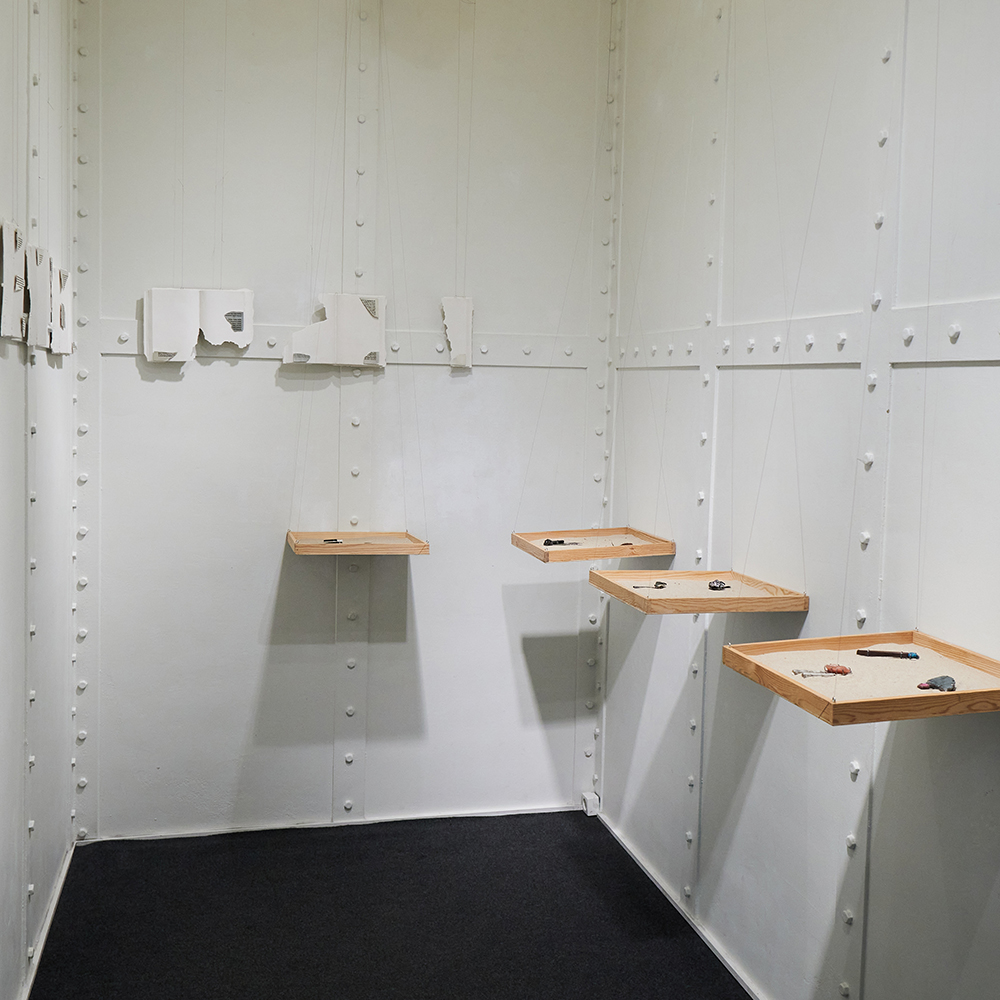
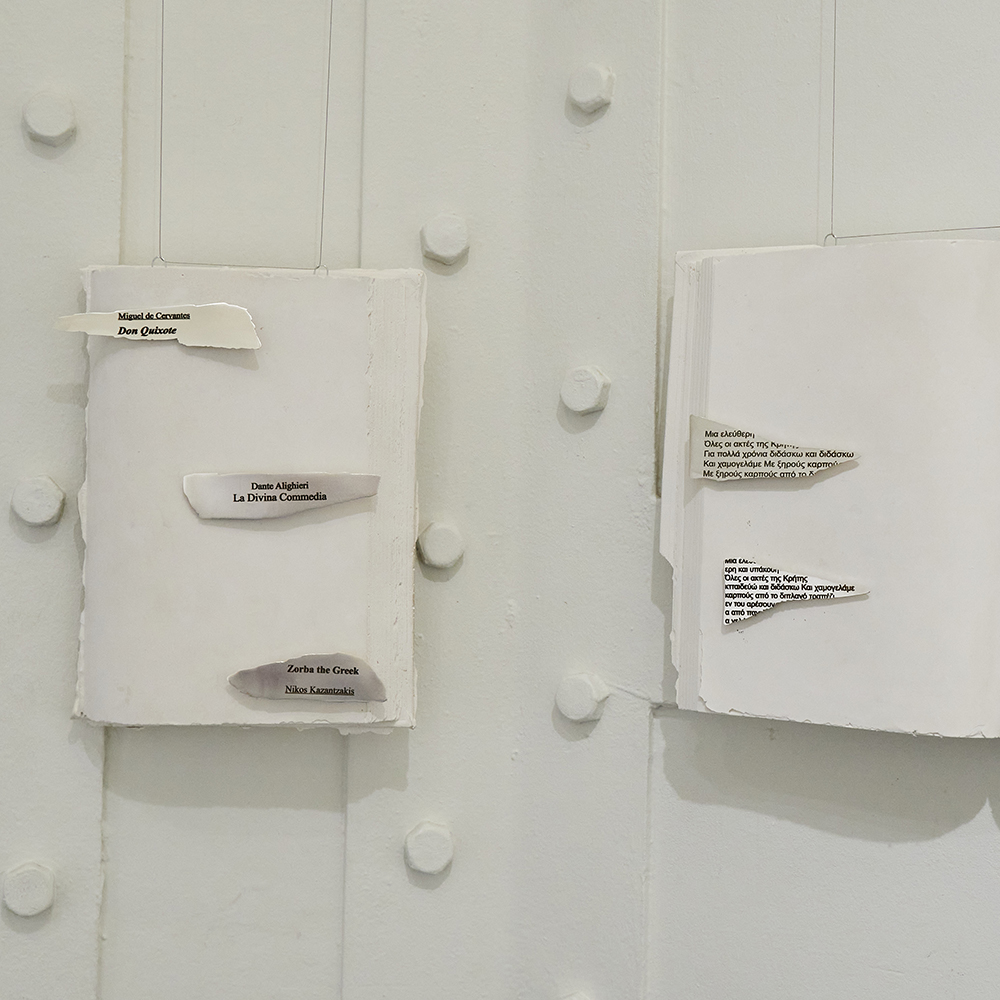
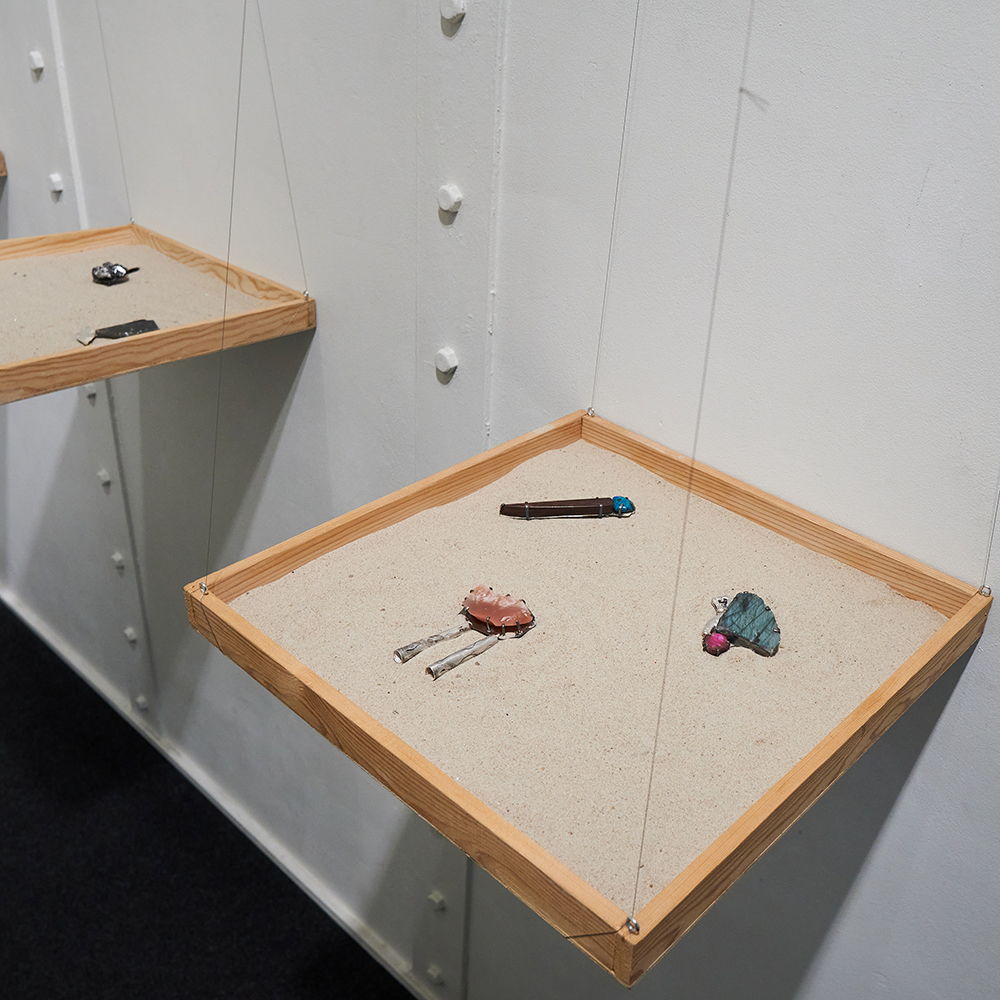
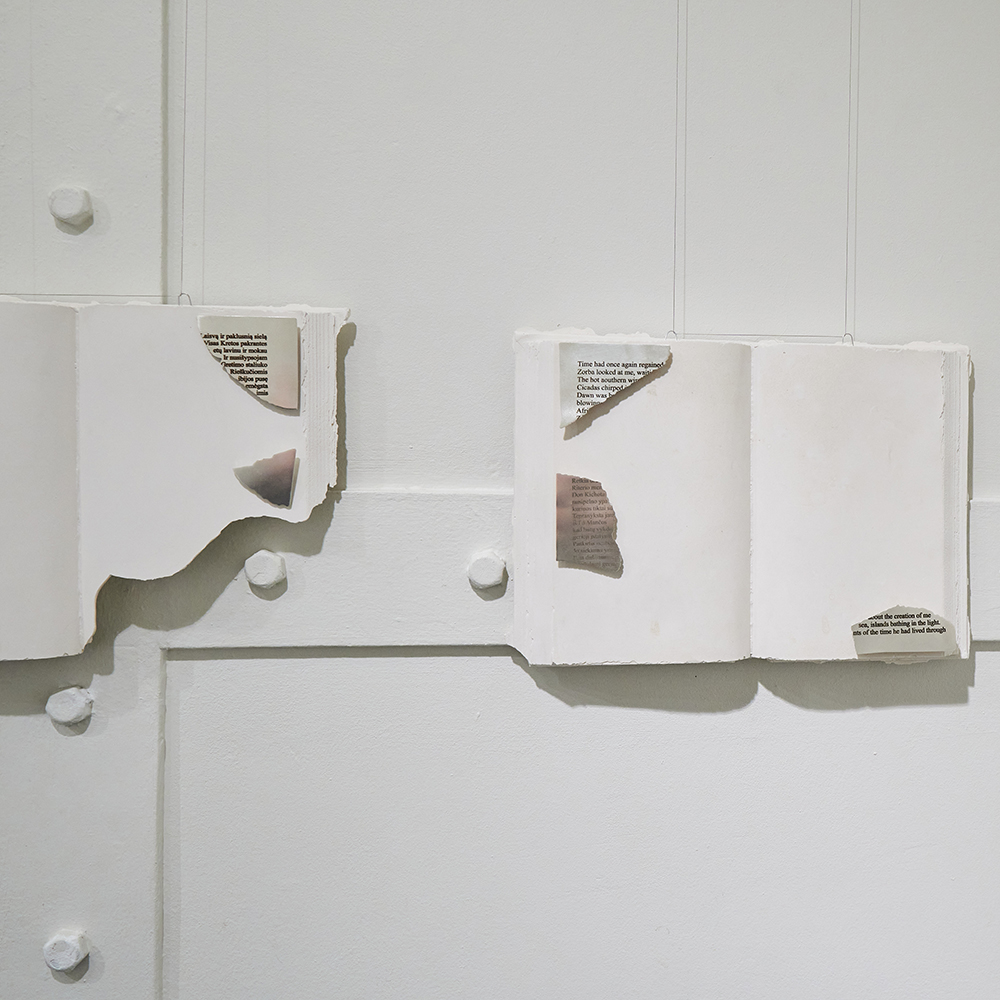
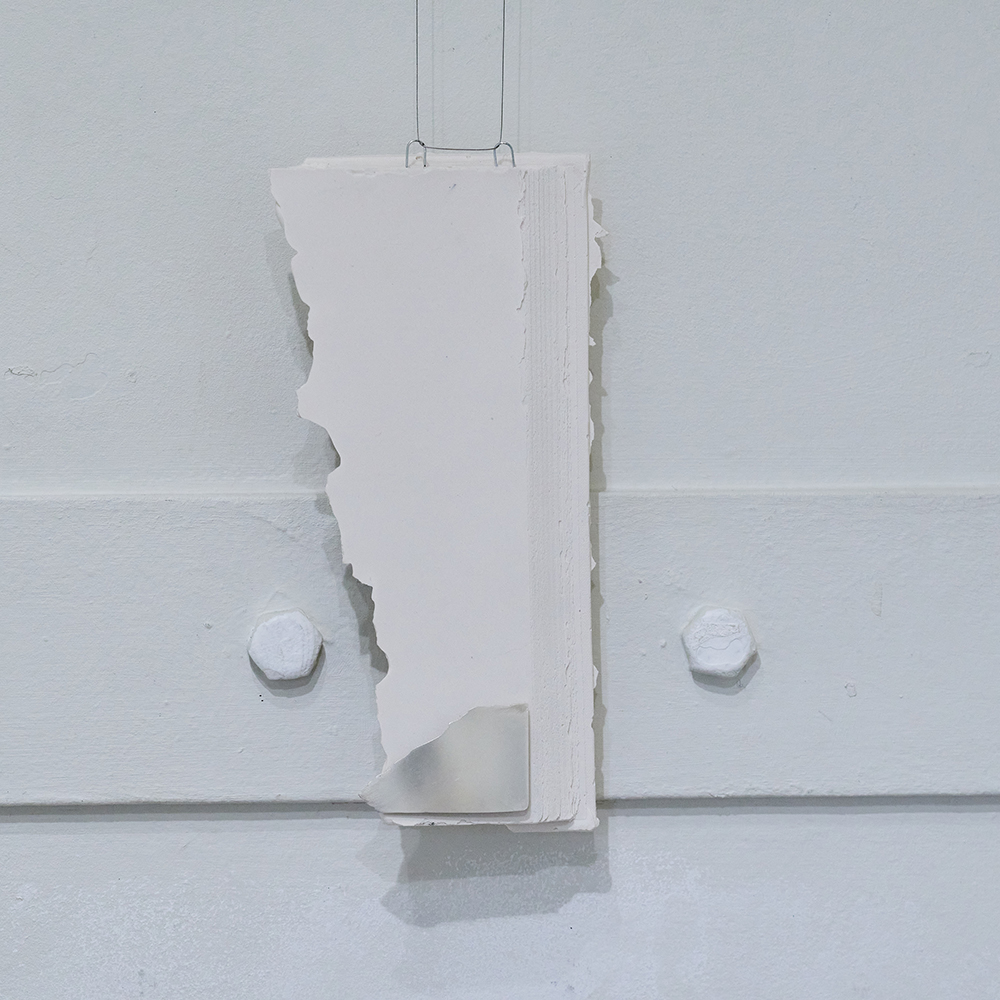
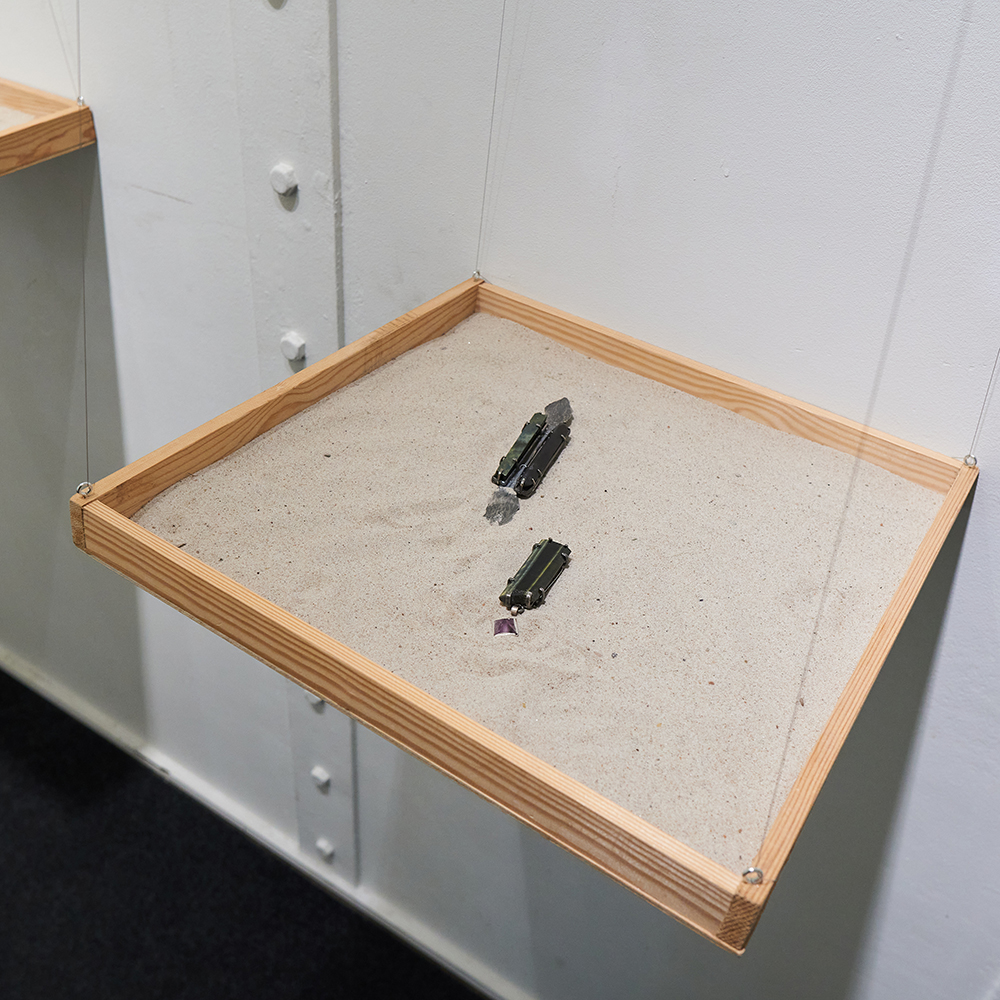
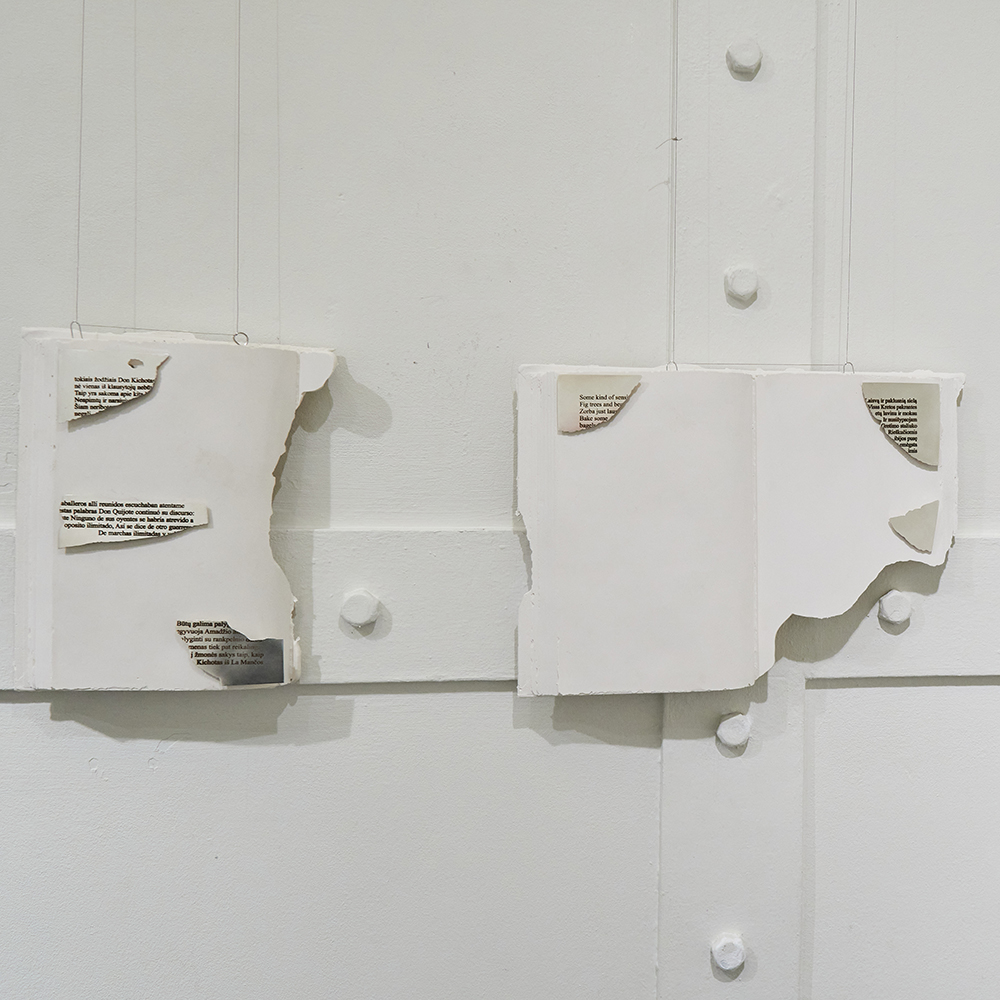
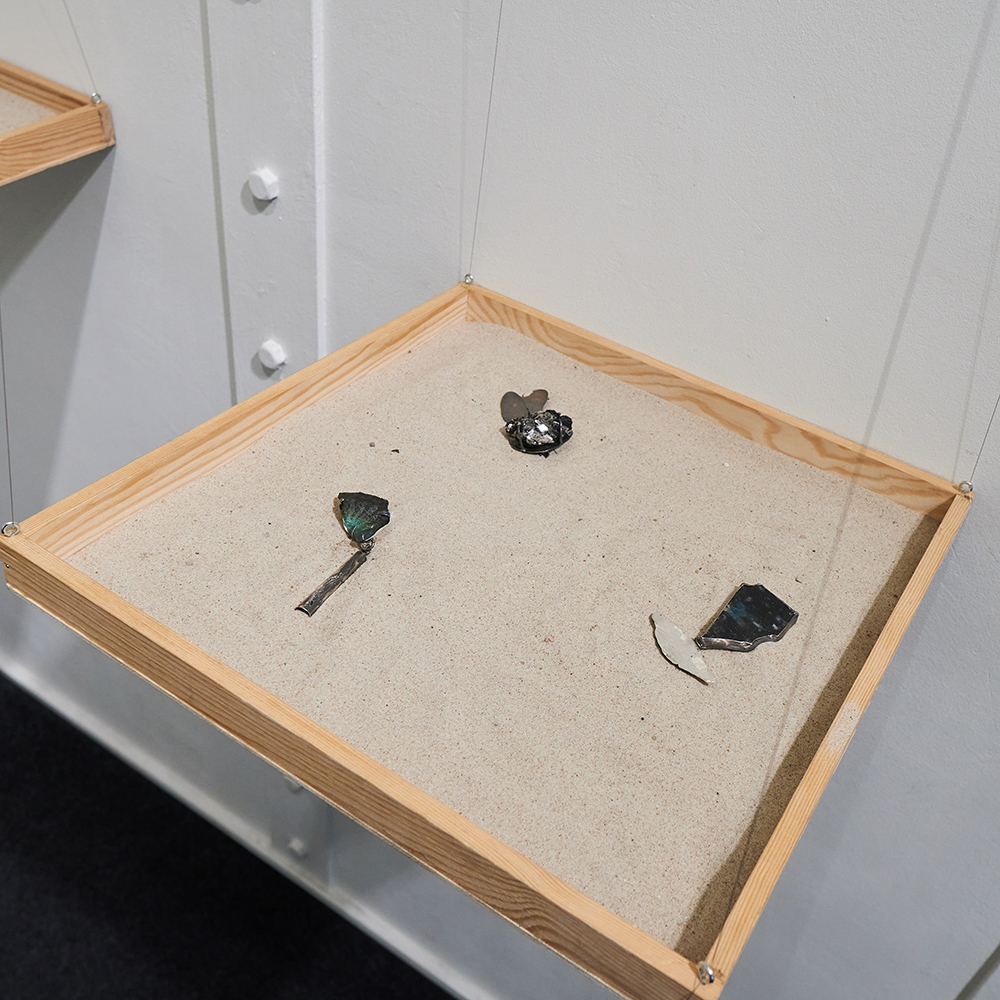
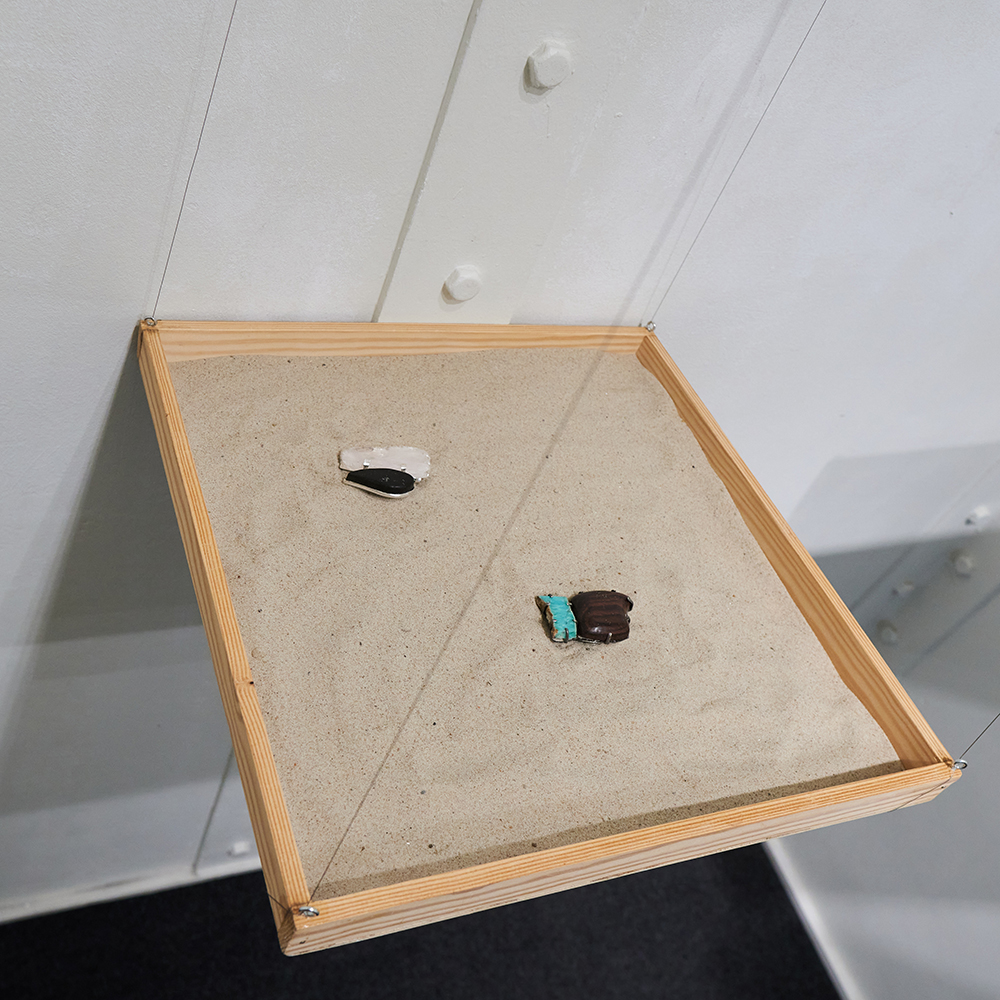
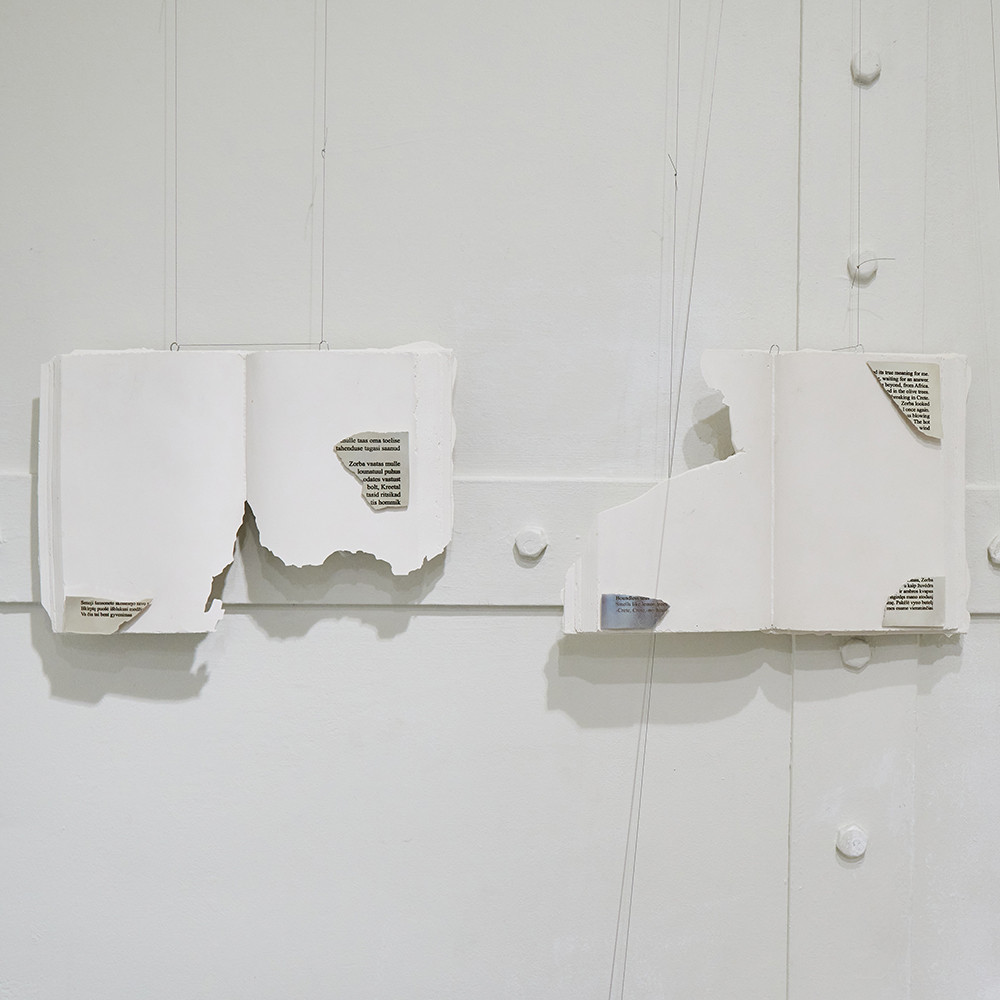
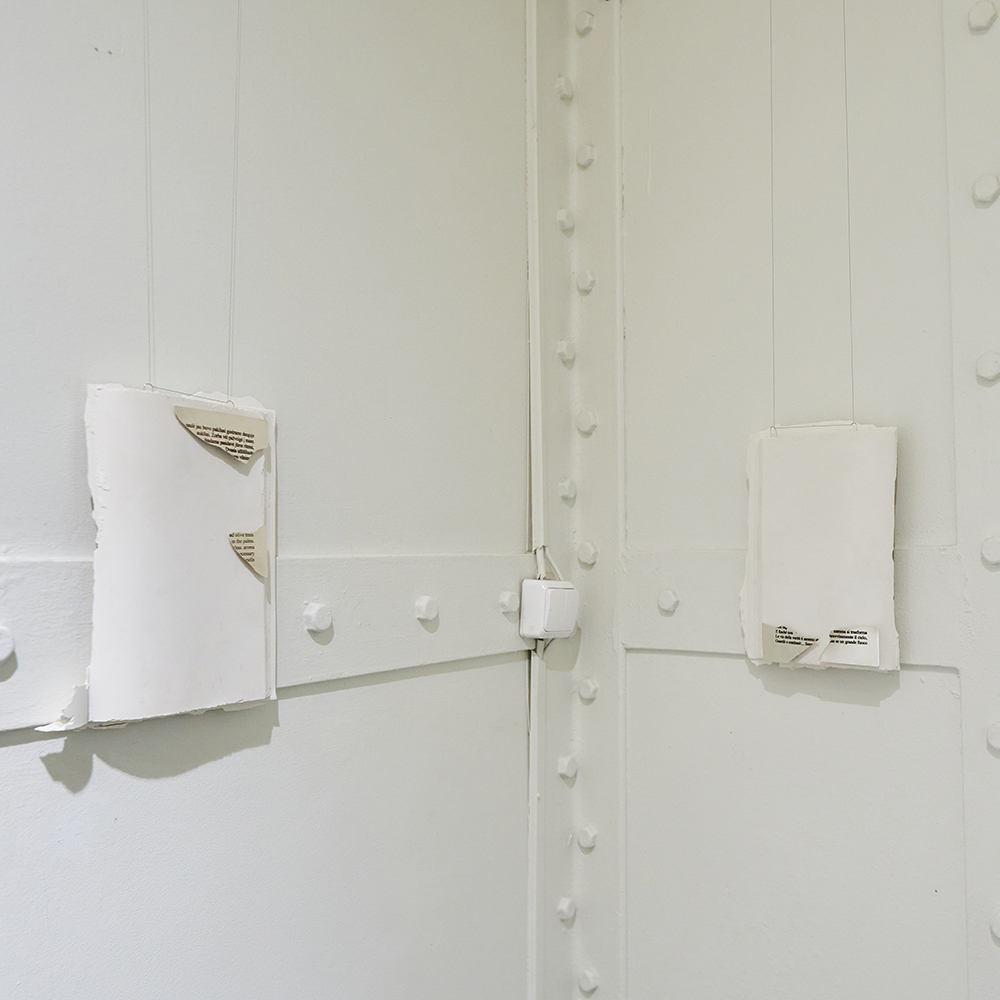
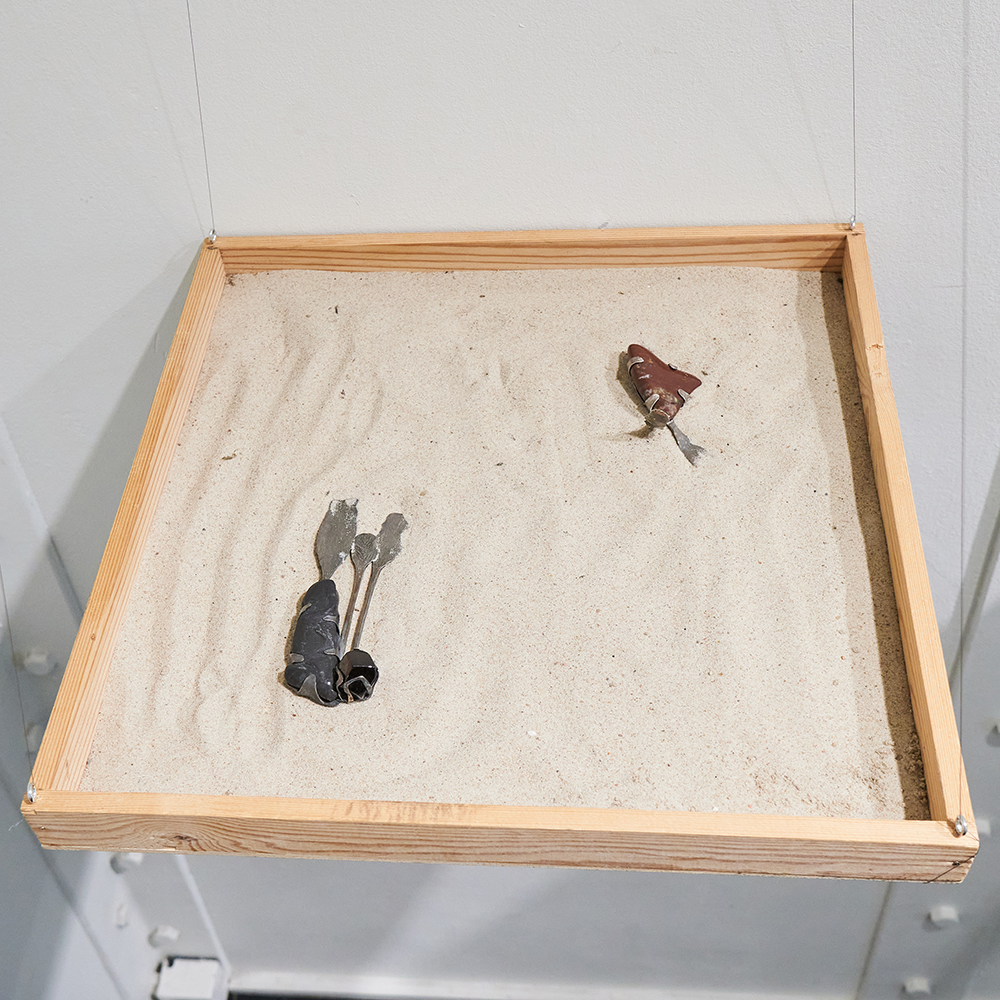
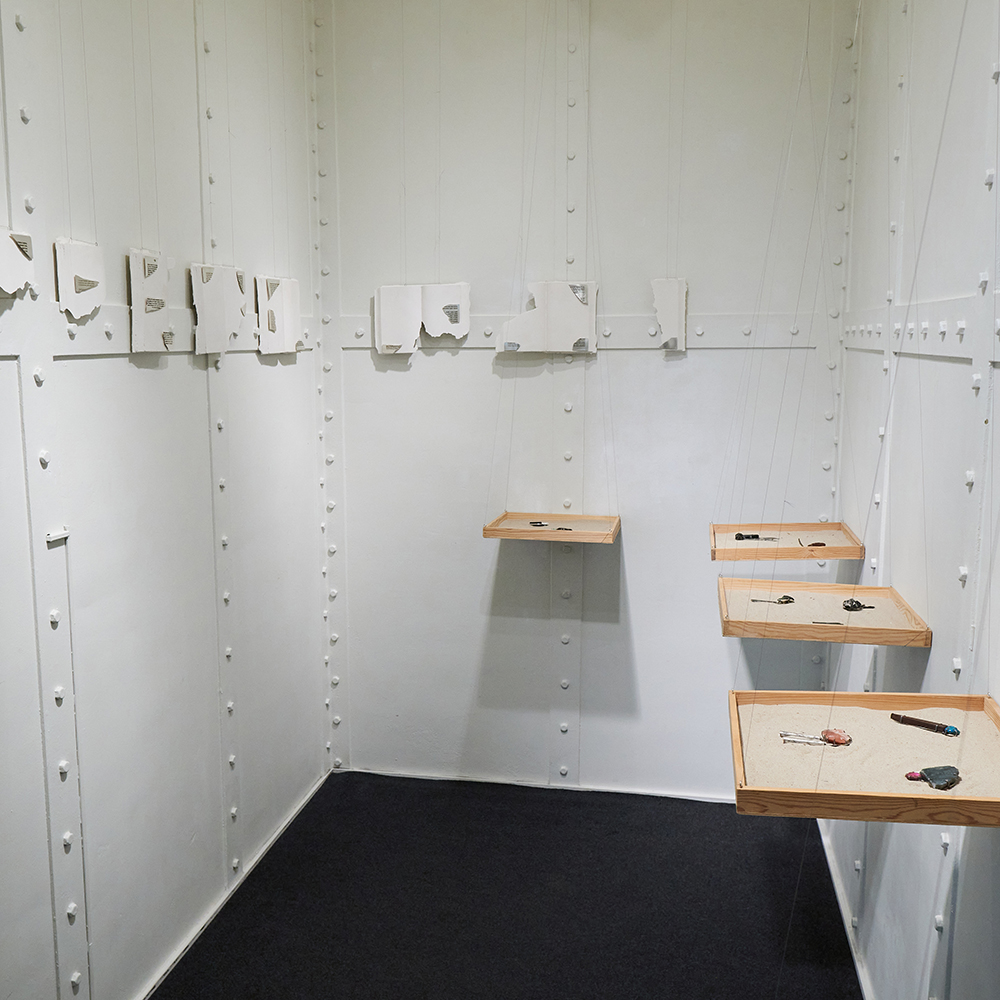
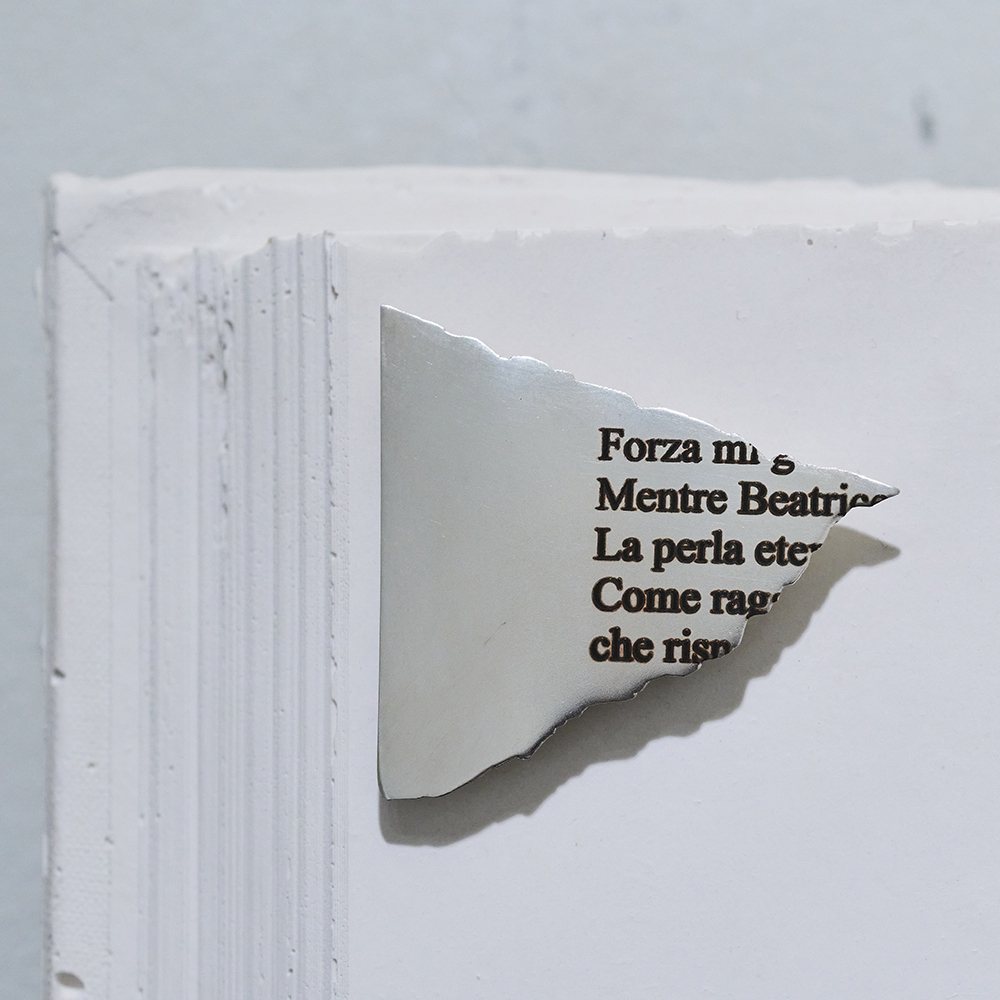
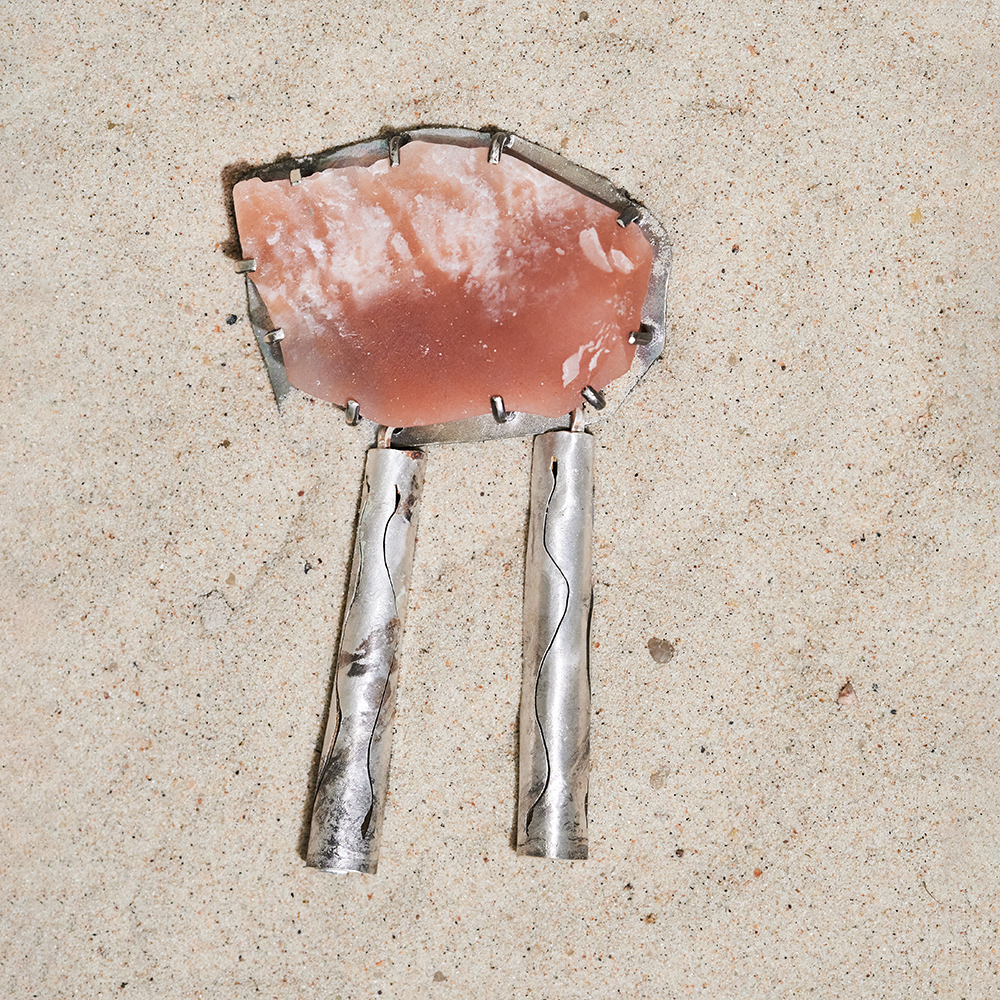
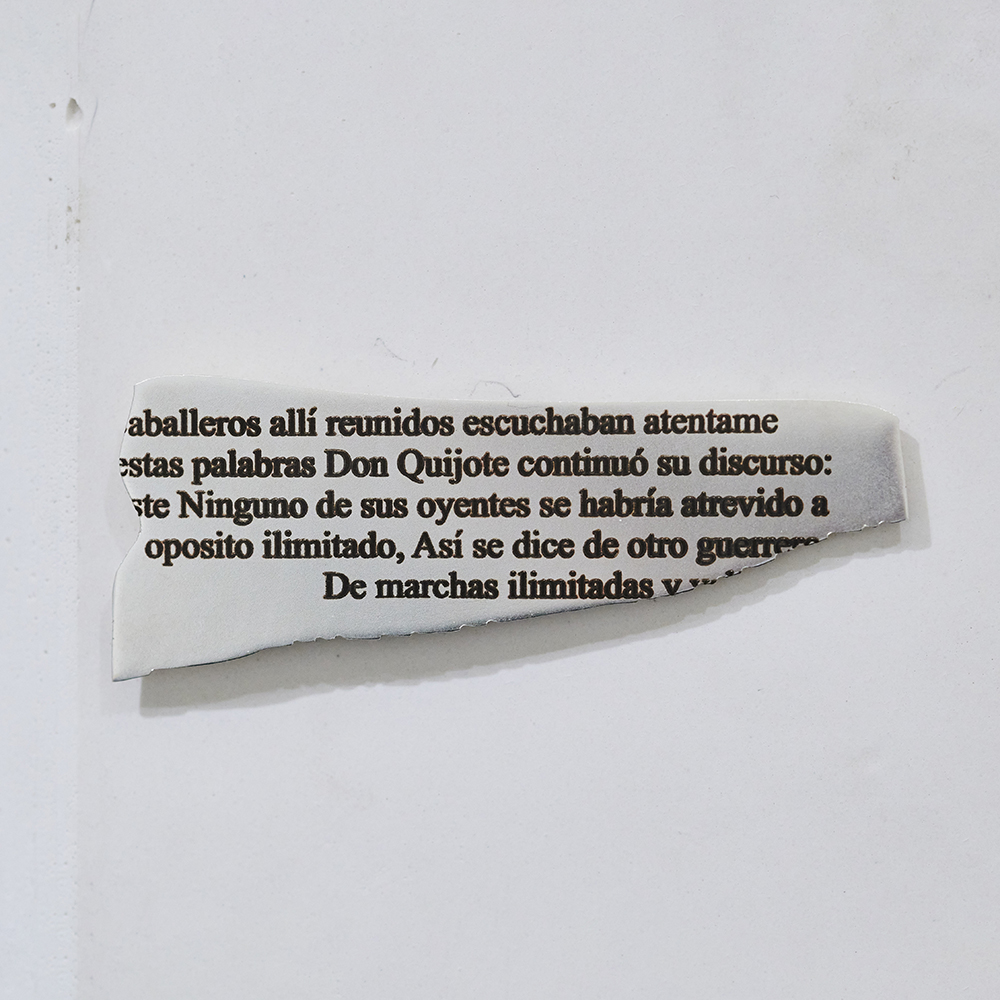
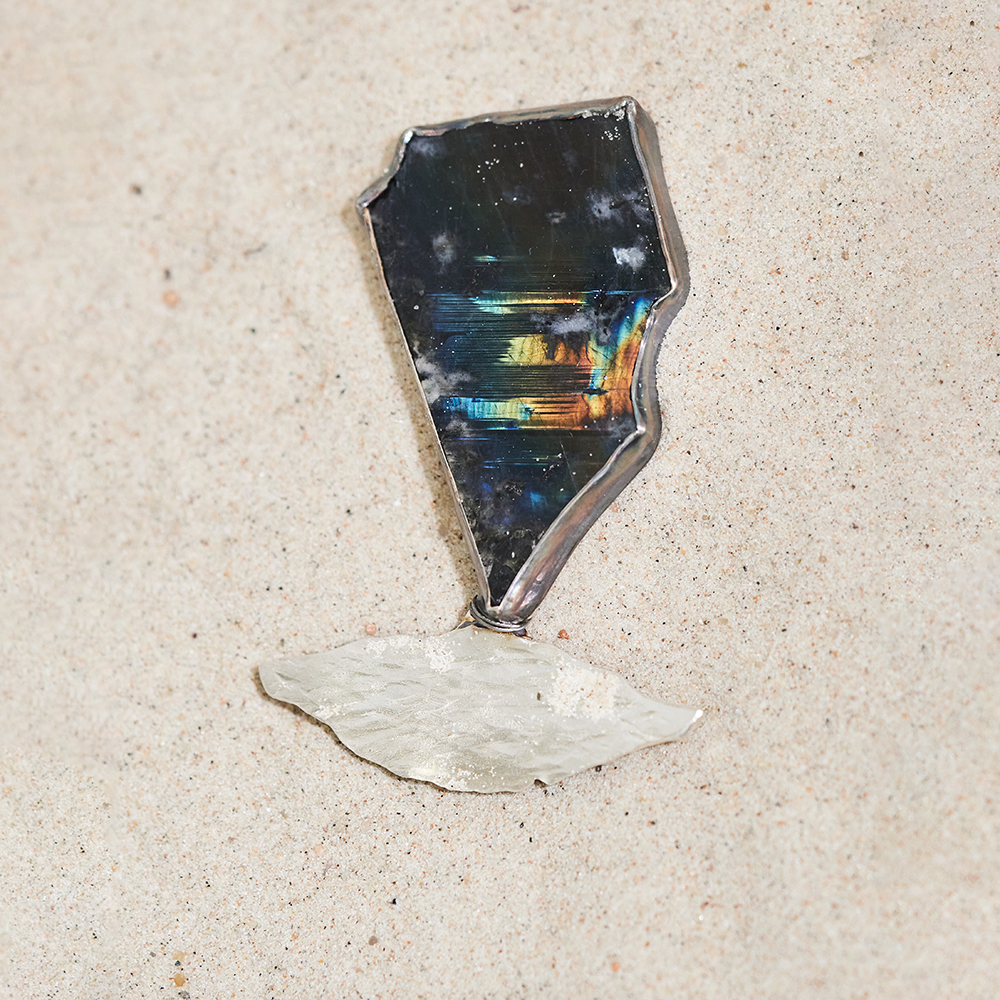
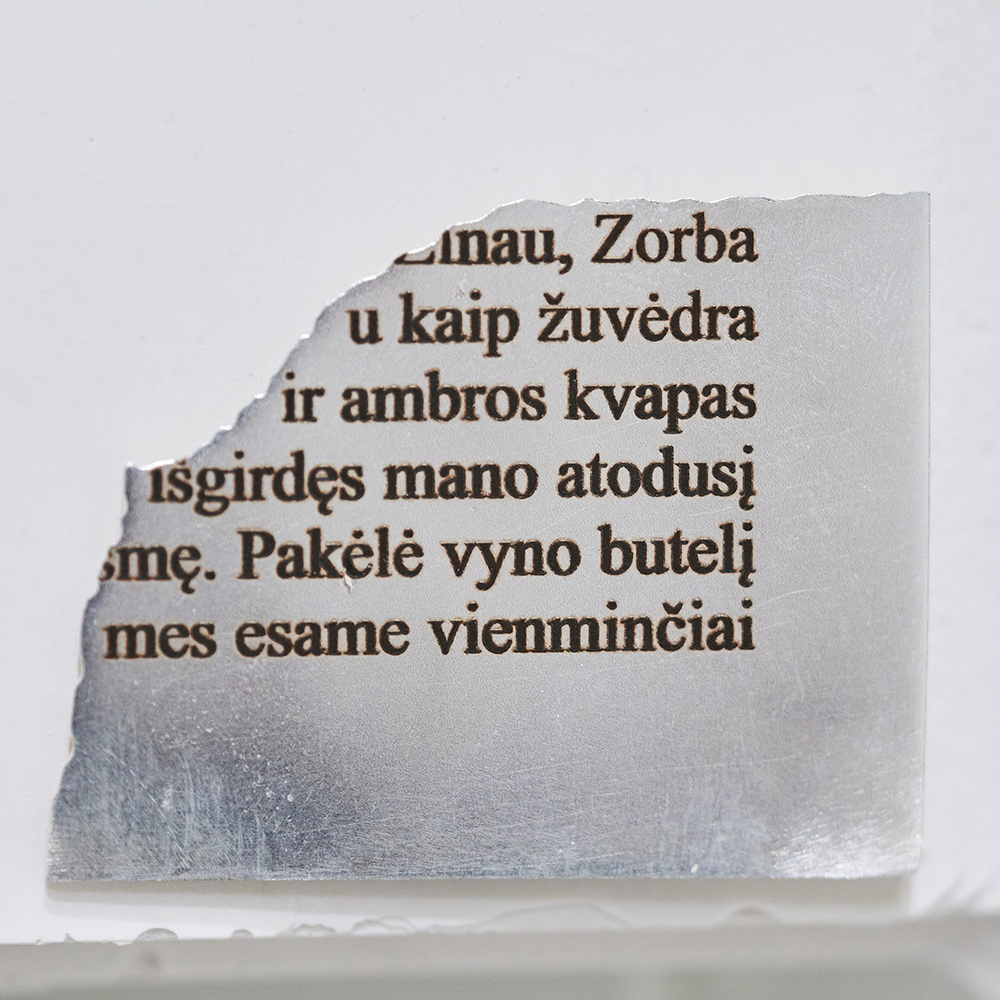
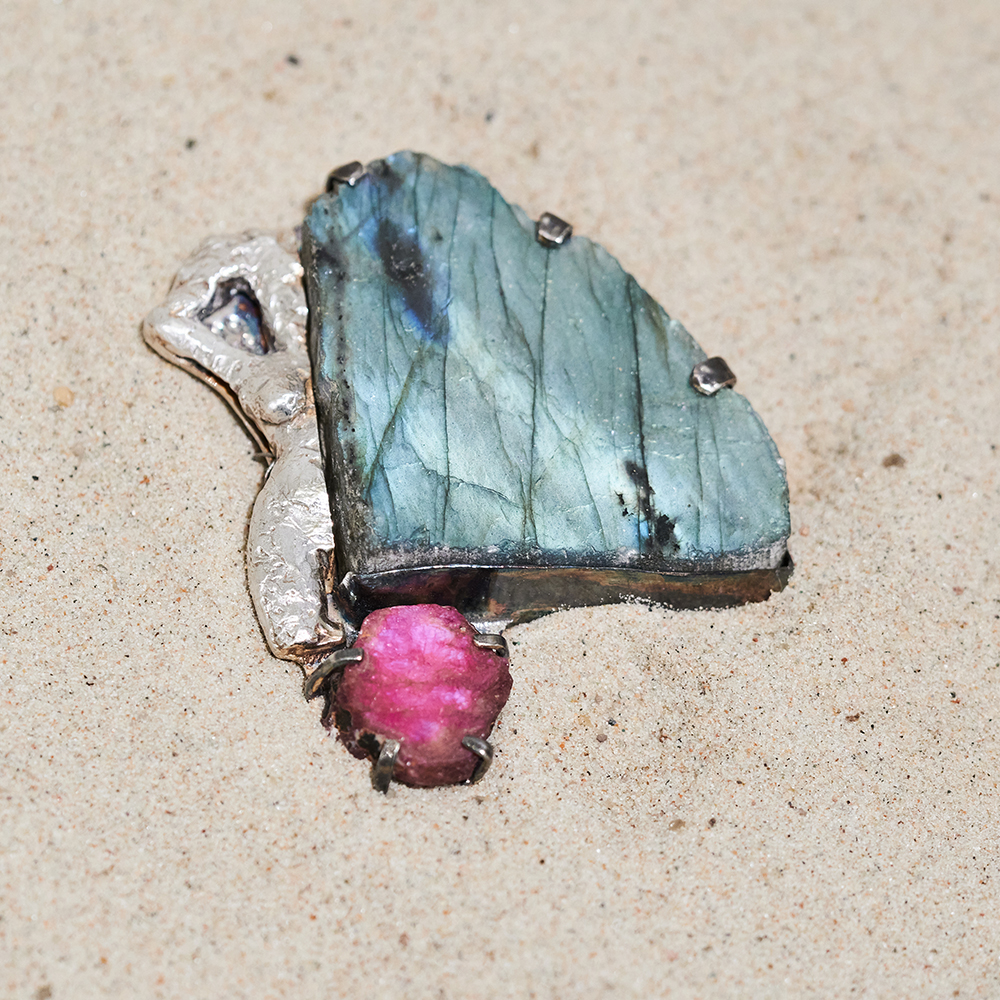
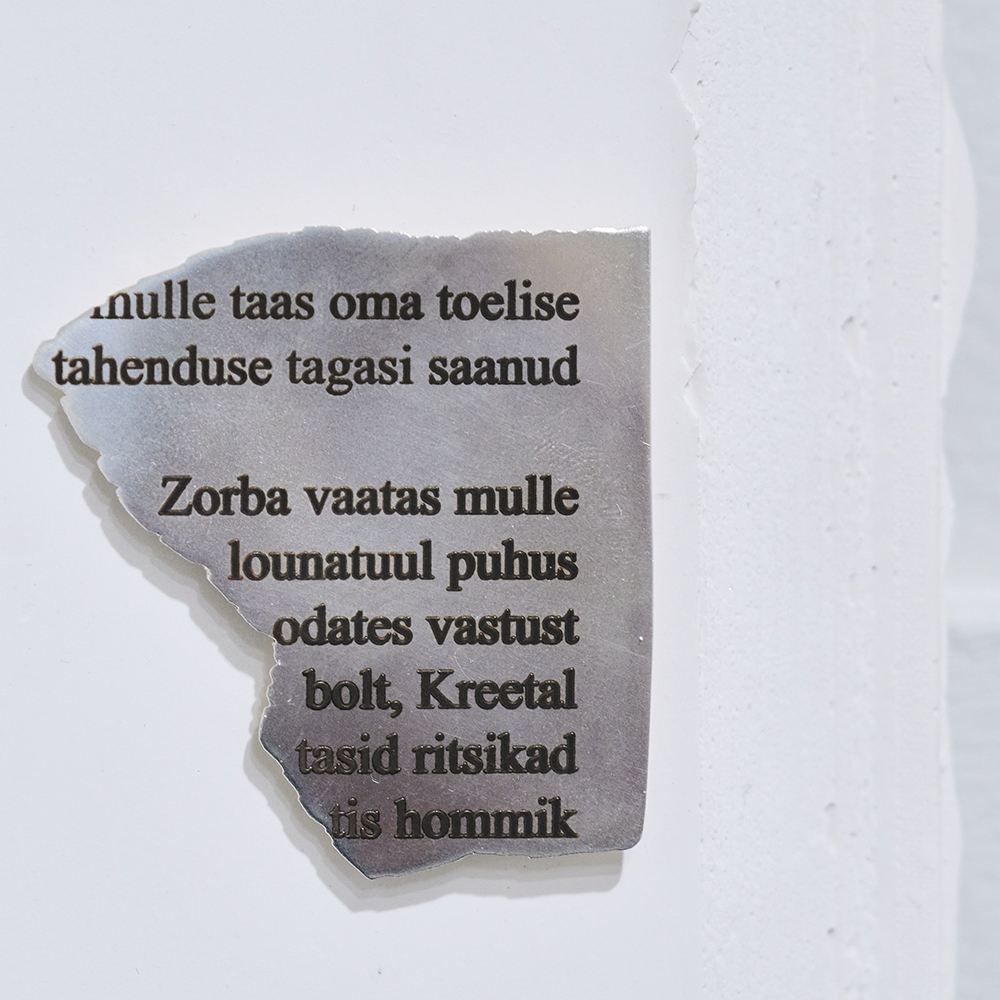
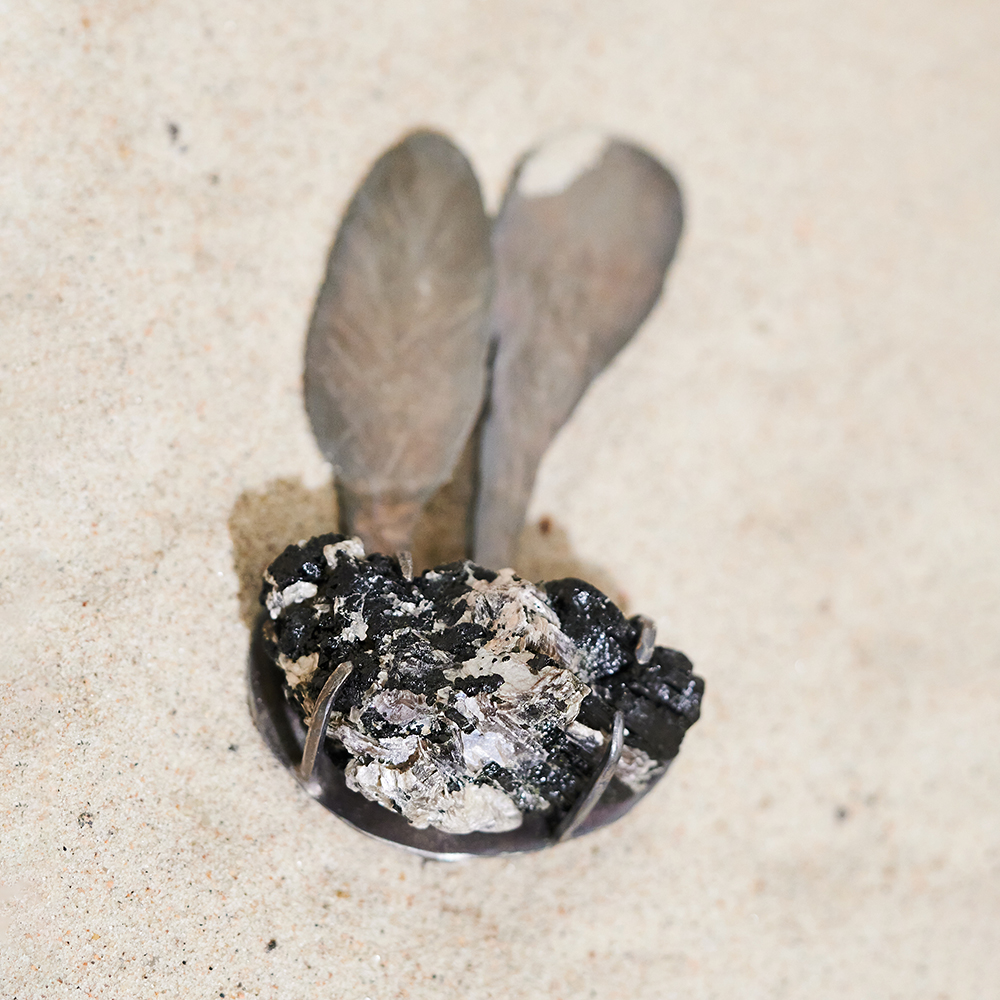
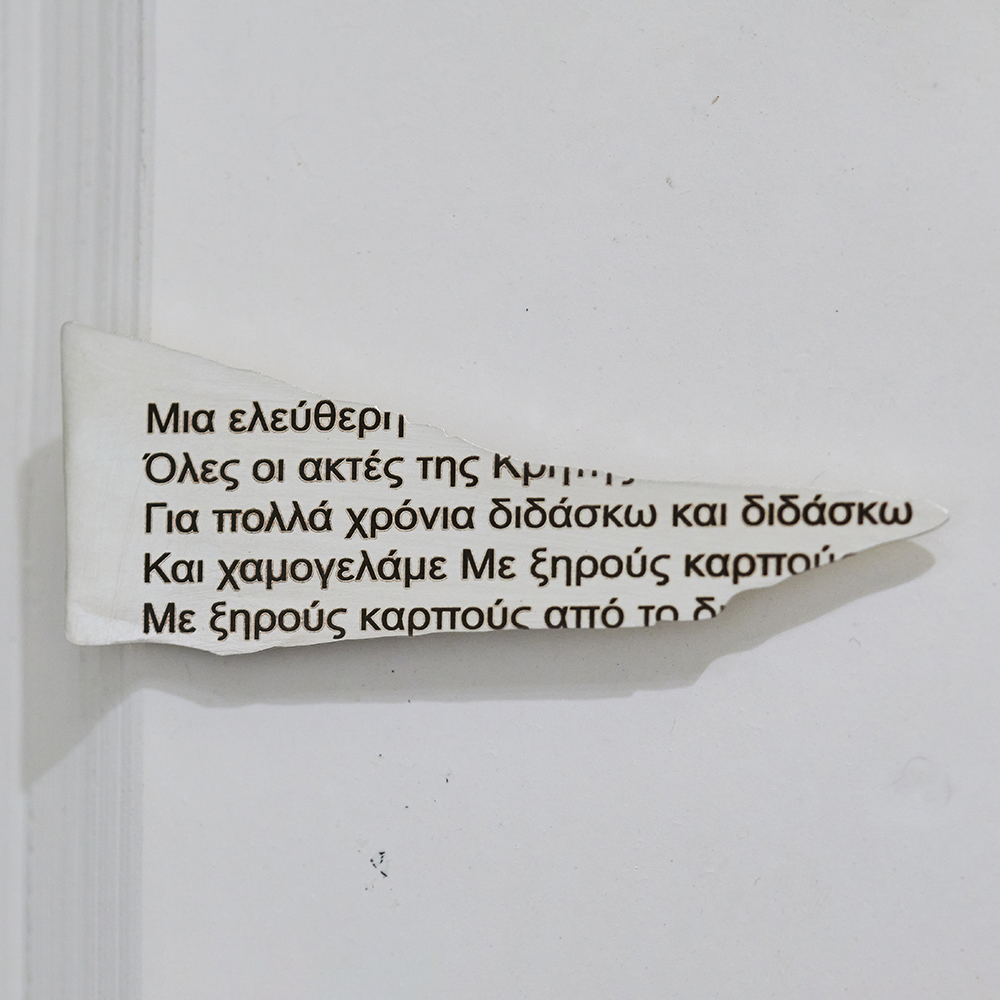
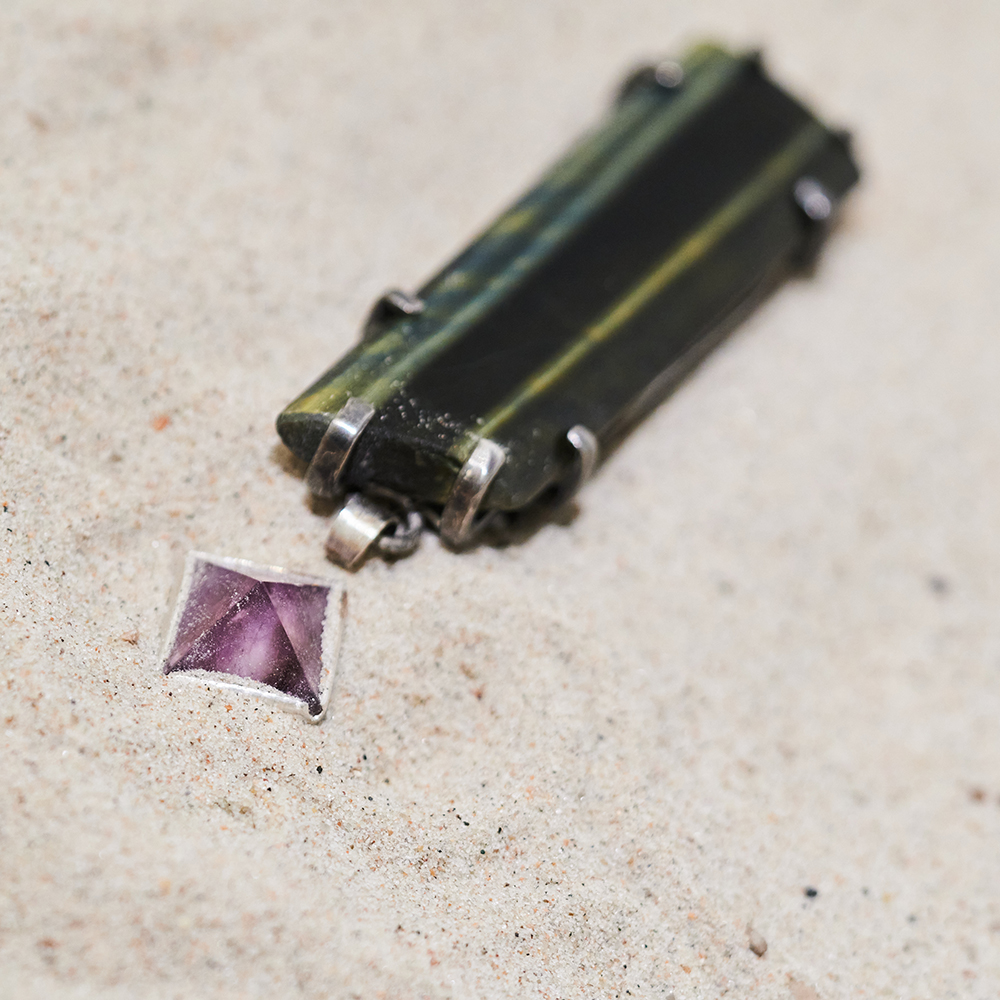
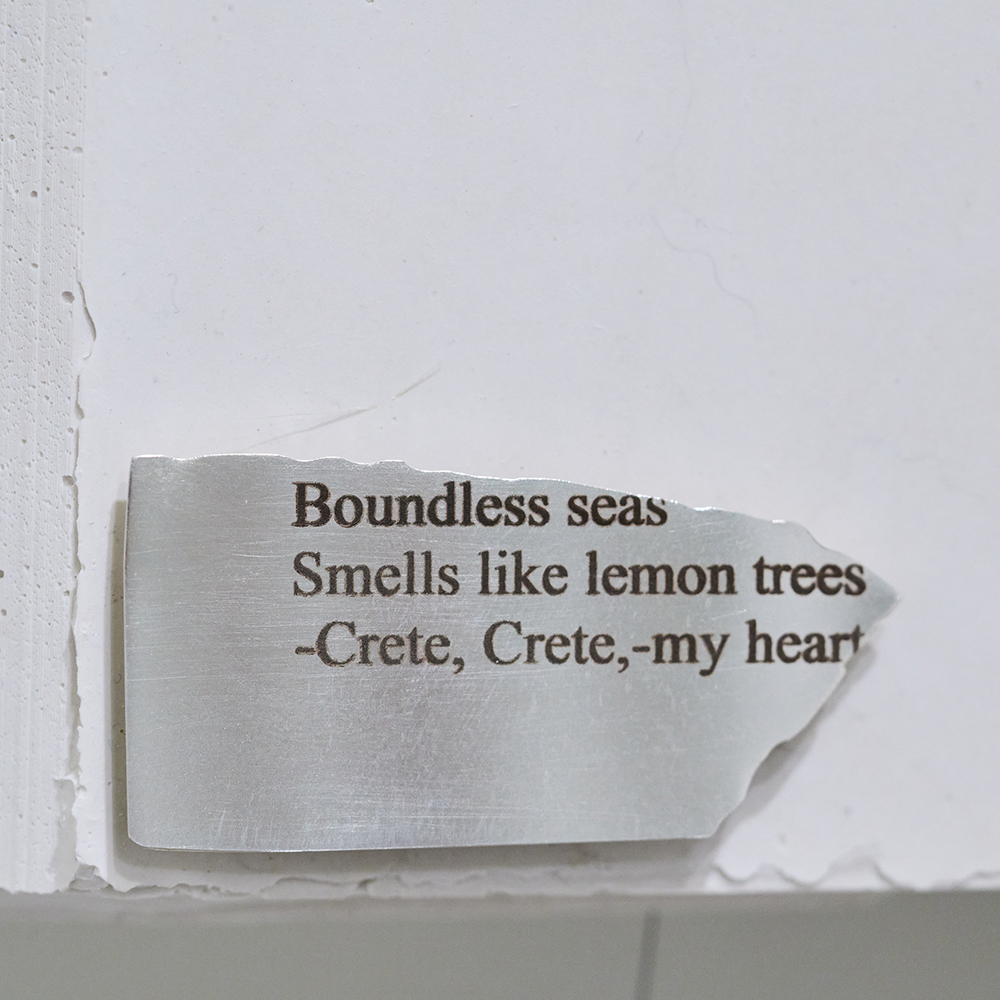
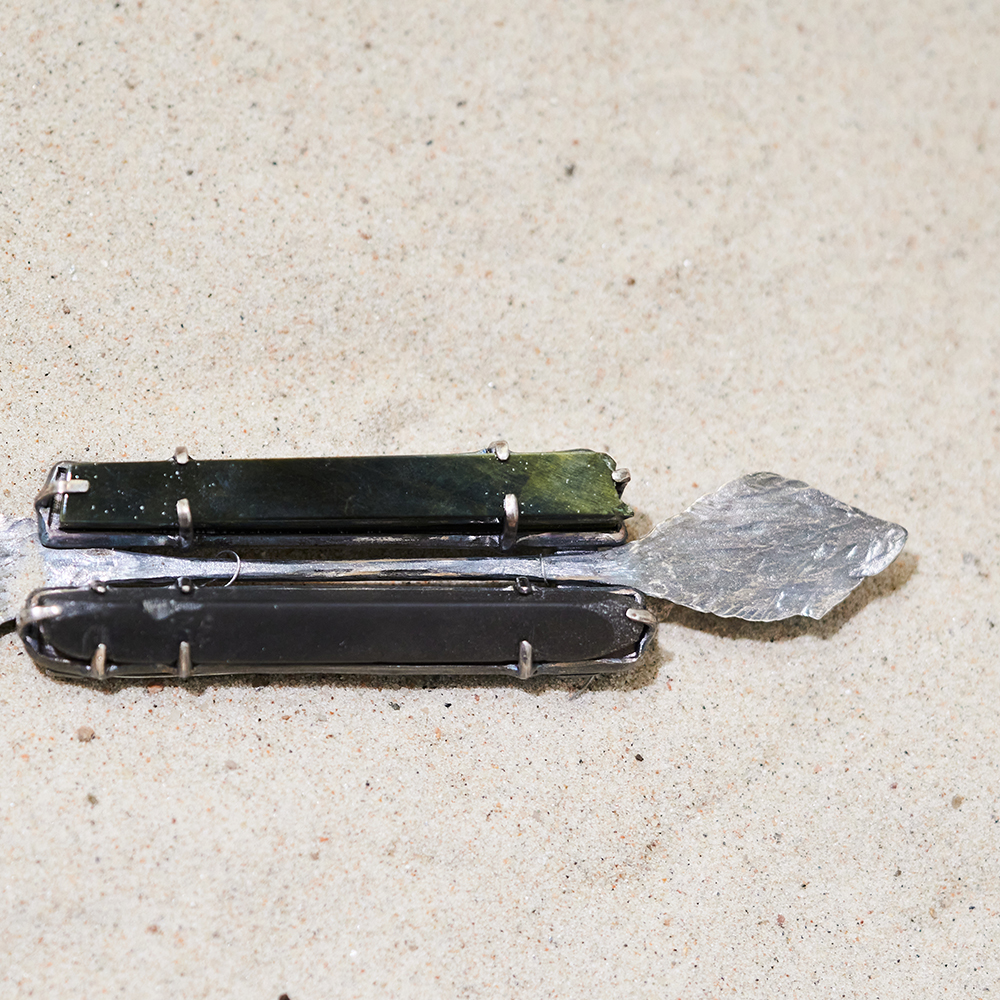
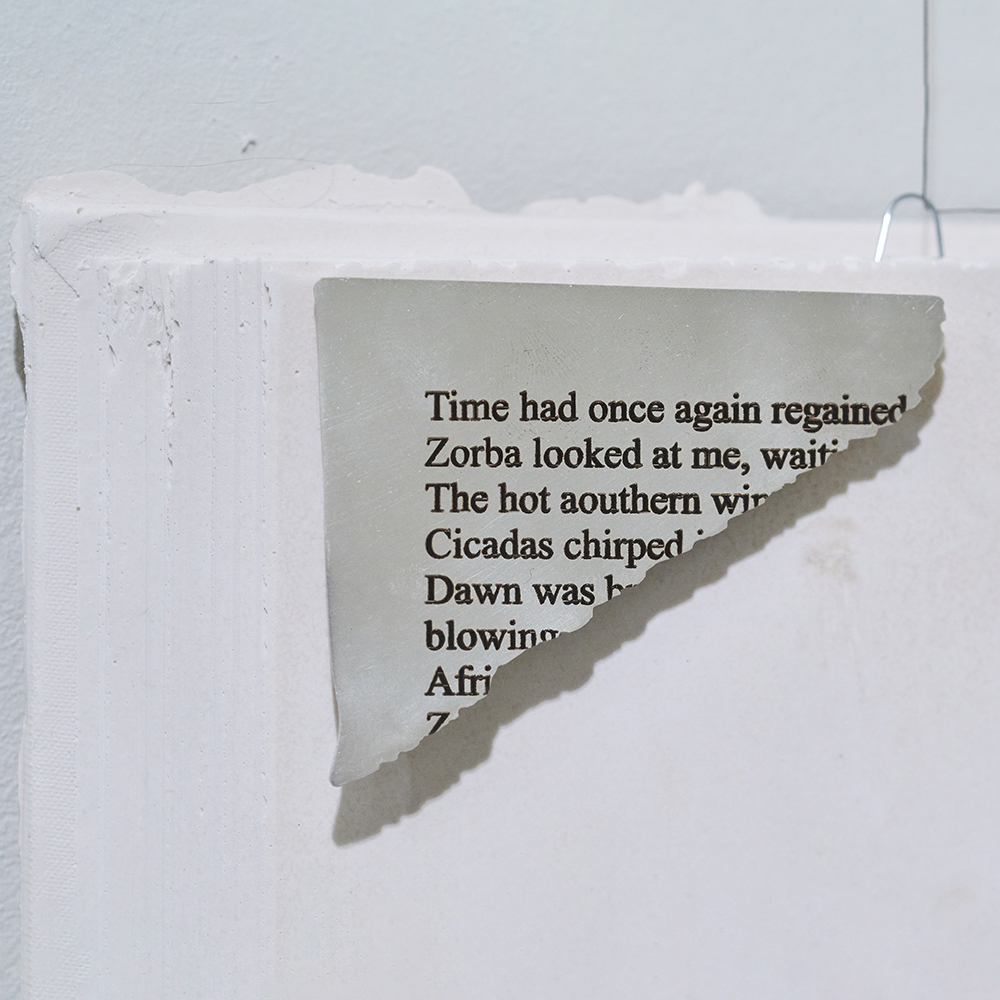
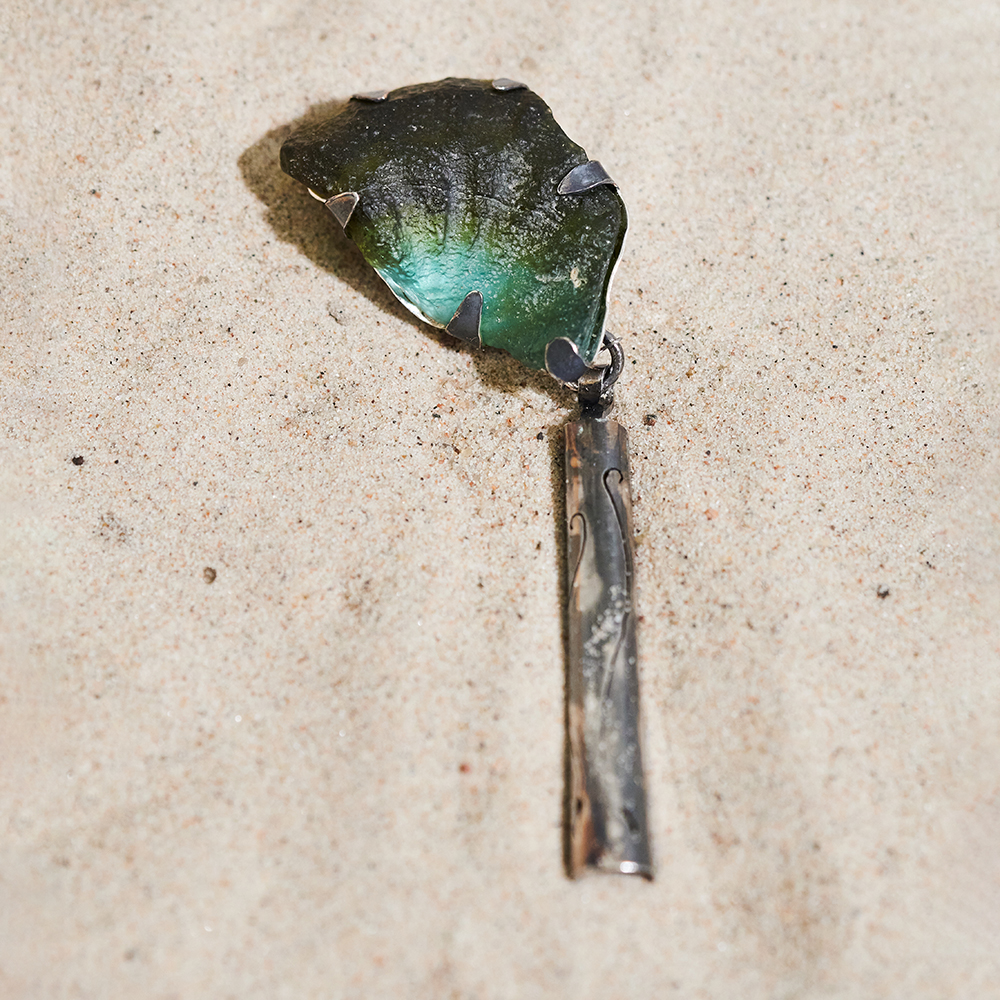
The exhibition RITUAL brings together the works of Lithuanian and Estonian jewellery artists Remigija Vaitkuté and Anne Roolaht, highlighting slow and quiet actions, seeing them as a valuable form of contemporary resistance.
A stone is the touch of time, and a book is a trace of thought.
Some collect fragments of the earth, others traces of thought. In one case, pieces of the universe and time; in the other, words and experiences. In a fast and noisy world, reading a book or bending down to pick up a stone becomes almost an act of rebellion. These are calming and deeply necessary rituals that speak of a desire to touch what remains when everything around us is in constant change.
In the process of reading, a person quietly encounters another world and, at the same time, oneself. Each page becomes more than text: a mirror for thoughts, fears, dreams, and hopes.
Through collecting stones, one refuses to submit to the dictate of constant noise. While gathering stones, a person forms a quiet connection with the universe, with time, and with the immeasurable. By consciously collecting moments, one may come to understand, even if only slightly, the nature of life.
True transformation occurs when a stone and a read text become a piece of jewellery and a part of oneself. Then collecting becomes ritual, and ritual becomes creation: collecting evolves into not only a means of preservation, but also a way of creating new worlds.
Anne Roolaht (1959) is an Estonian jewellery artist who graduated from the Estonian State Art Institute (later the Estonian Academy of Arts) in metalwork. She works as a freelance artist and is a member of the Estonian Artists’ Association and the Estonian Association of Metal Artists, while also teaching art at Viimsi Art School. Roolaht has been exhibiting since the late 1980s both in Estonia and internationally, including in Finland, Sweden, Iceland, England, and Ireland.
Remigija Vaitkuté (1962) is a Lithuanian metal artist and lecturer who studied at the Telšiai School of Applied Arts and graduated in metal art from the Estonian State Art Institute (now the Estonian Academy of Arts). Since the 1990s, she has been working as a professor at the Vilnius Academy of Arts. Vaitkutė has been exhibiting since the late 1980s and has participated internationally in both group and solo exhibitions.
Exhibition is supported by the Cultural Endowment of Estonia
PART-TIME
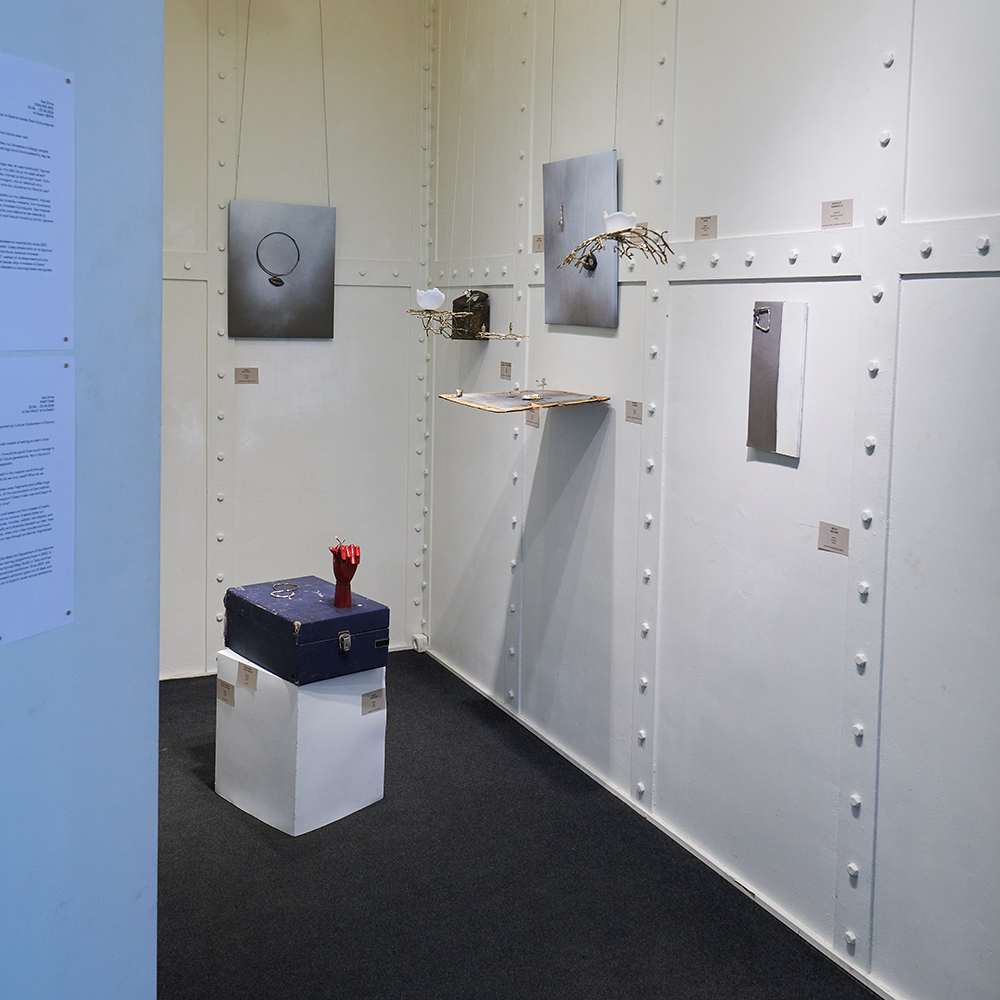
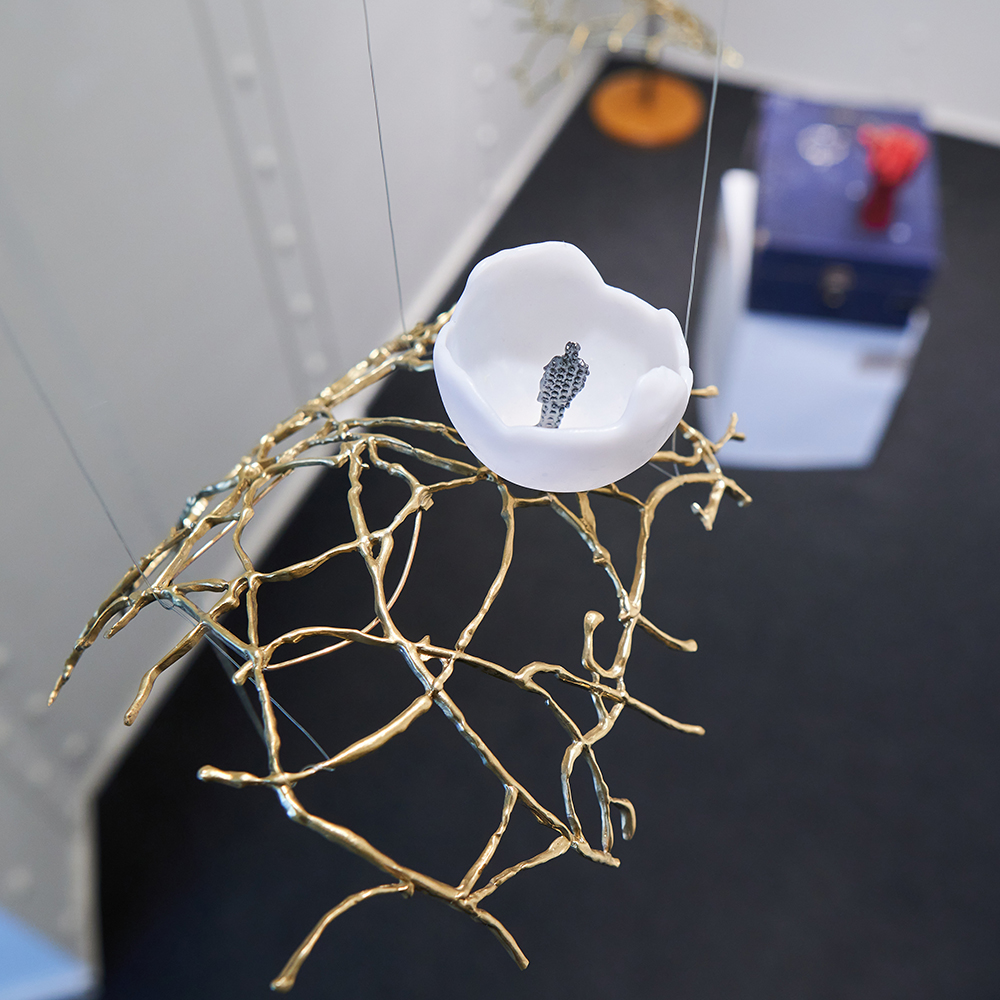
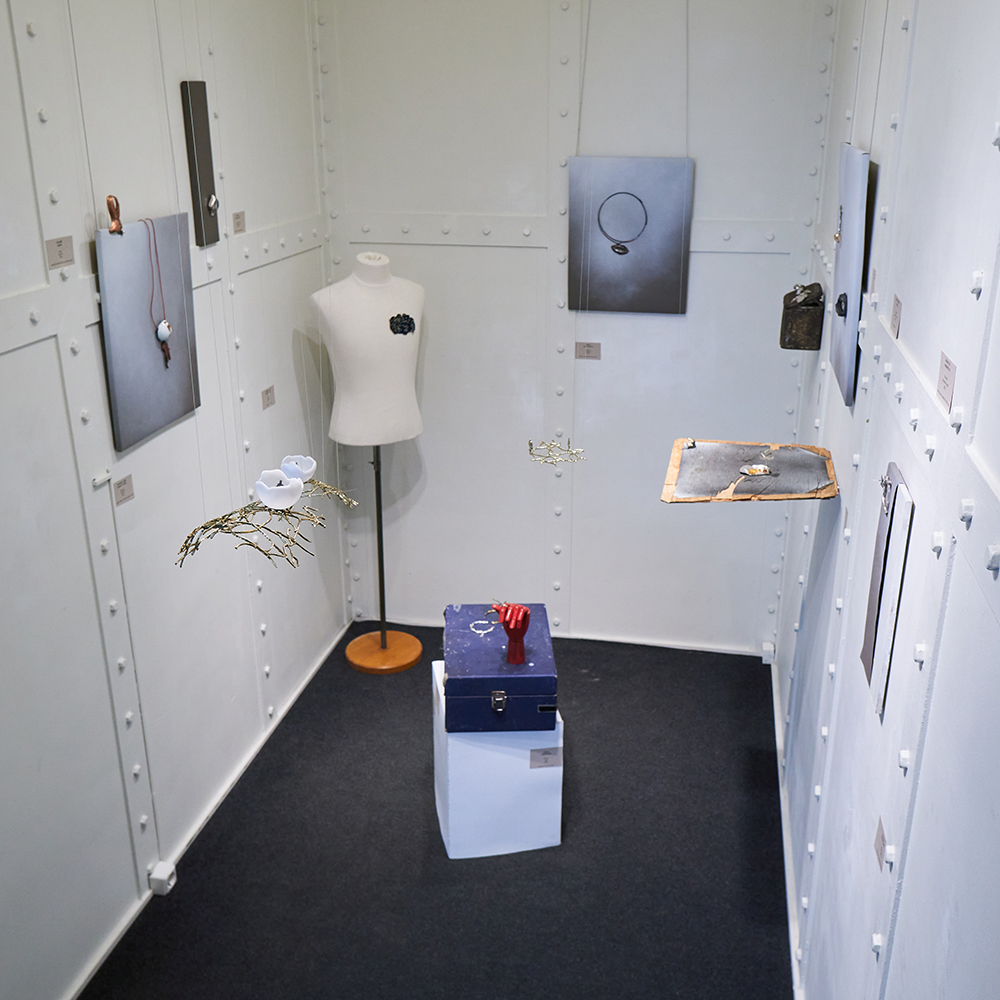
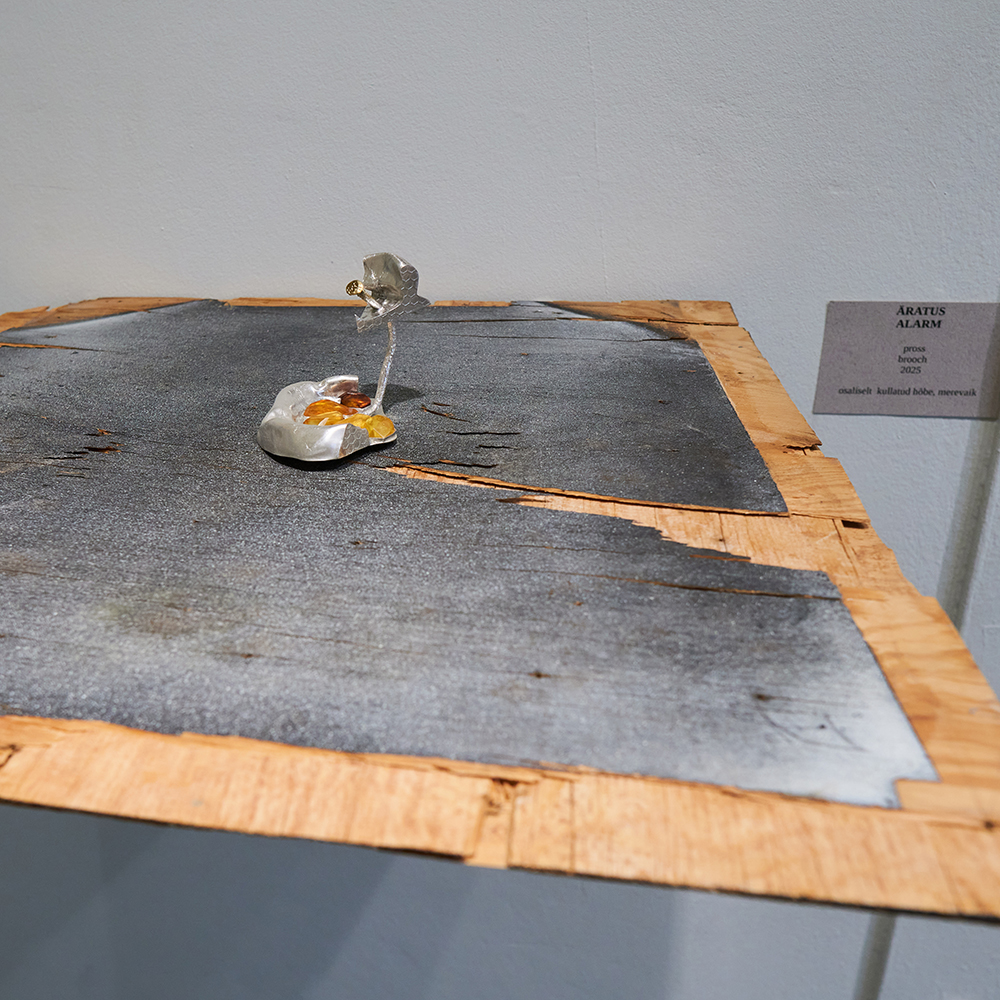
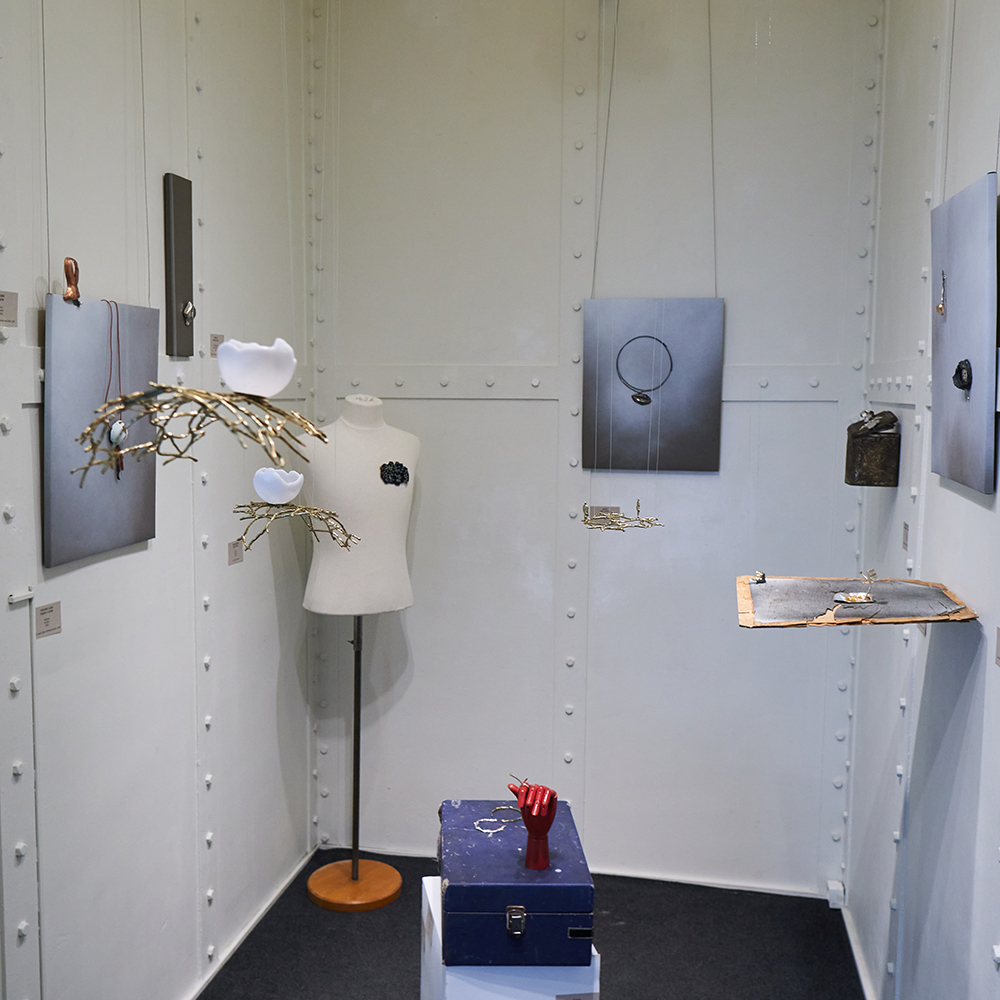
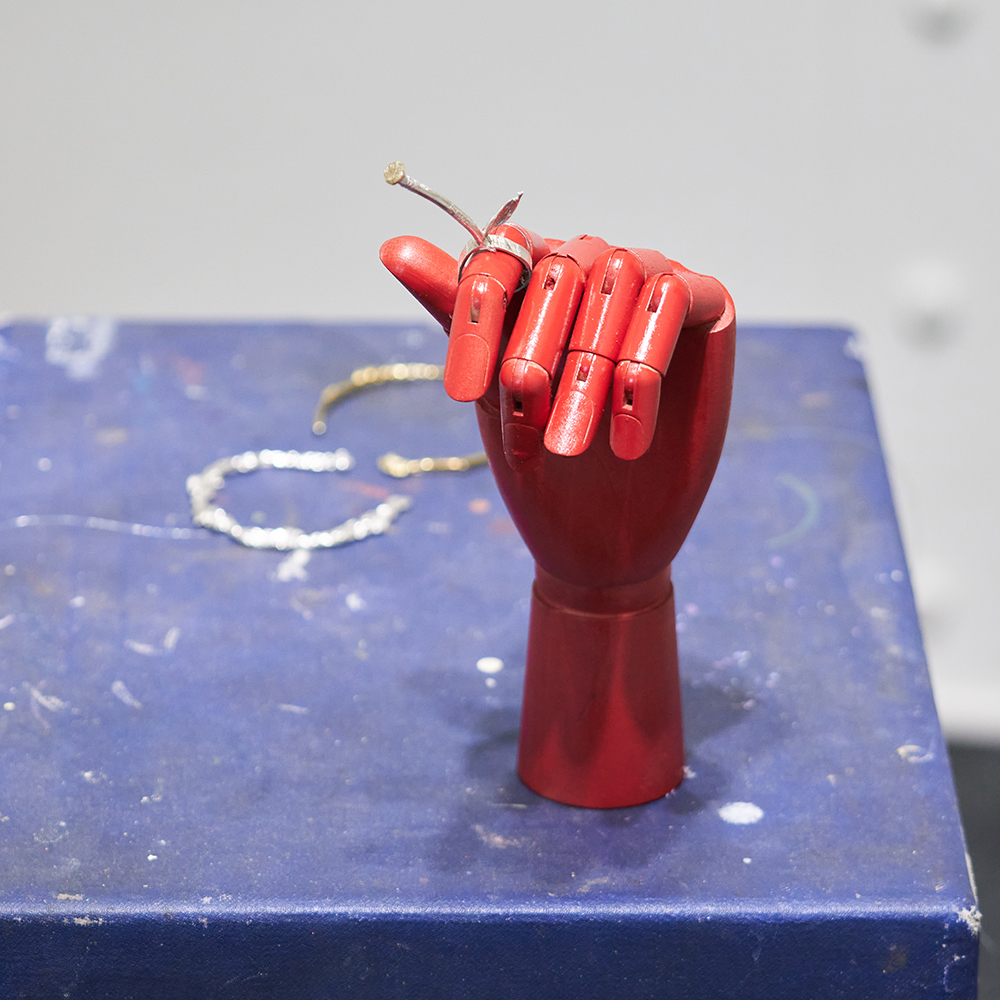
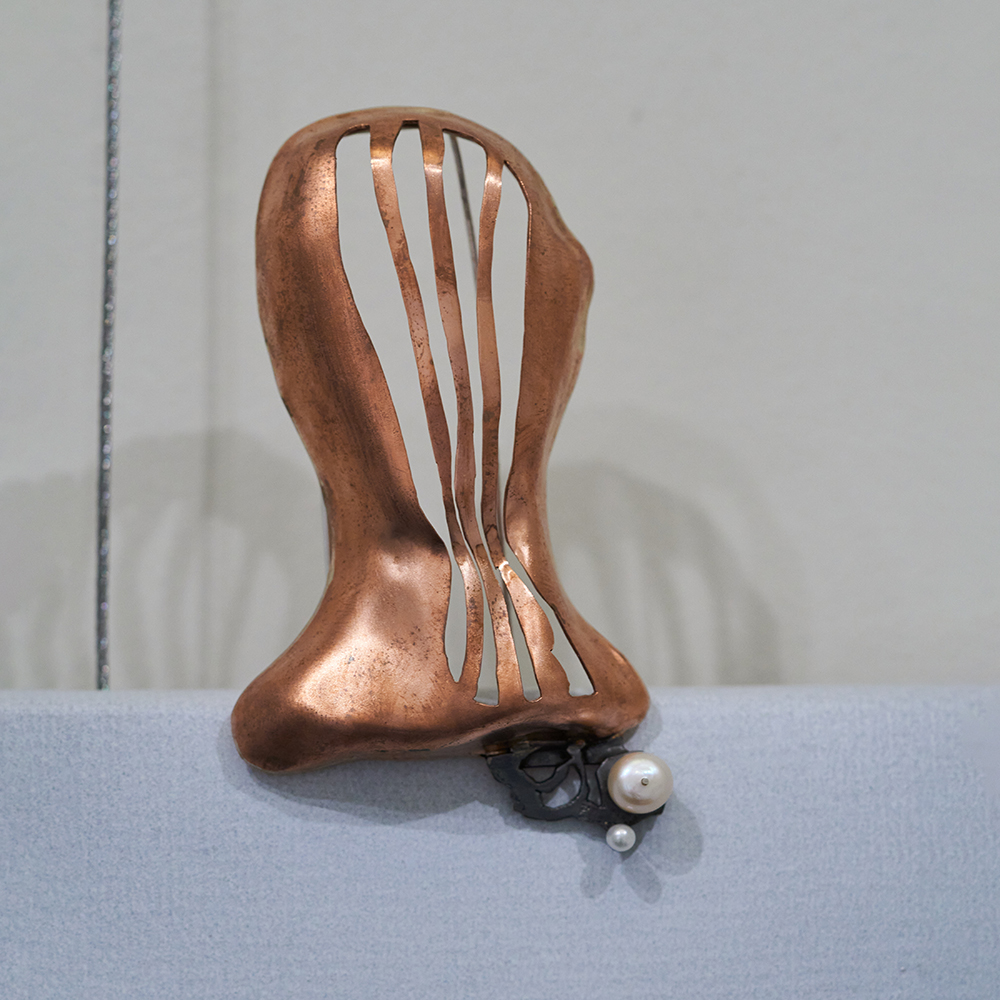
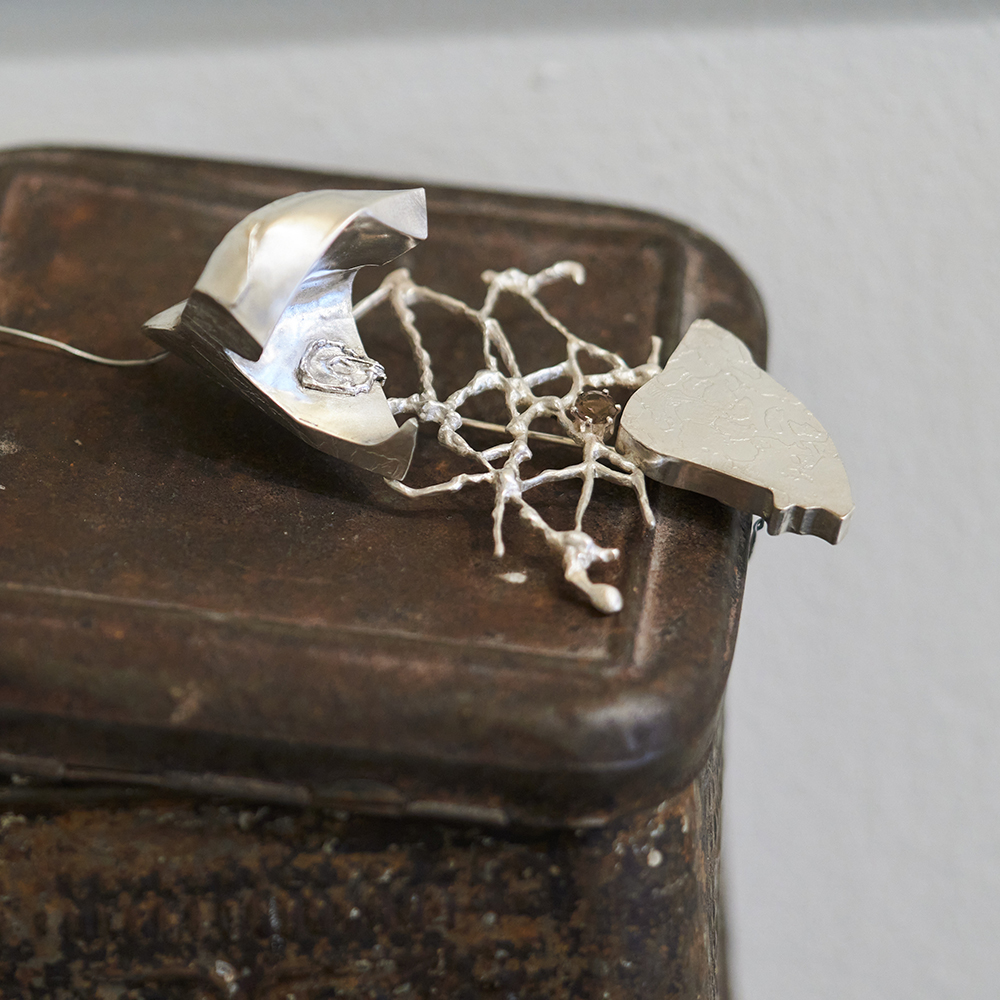
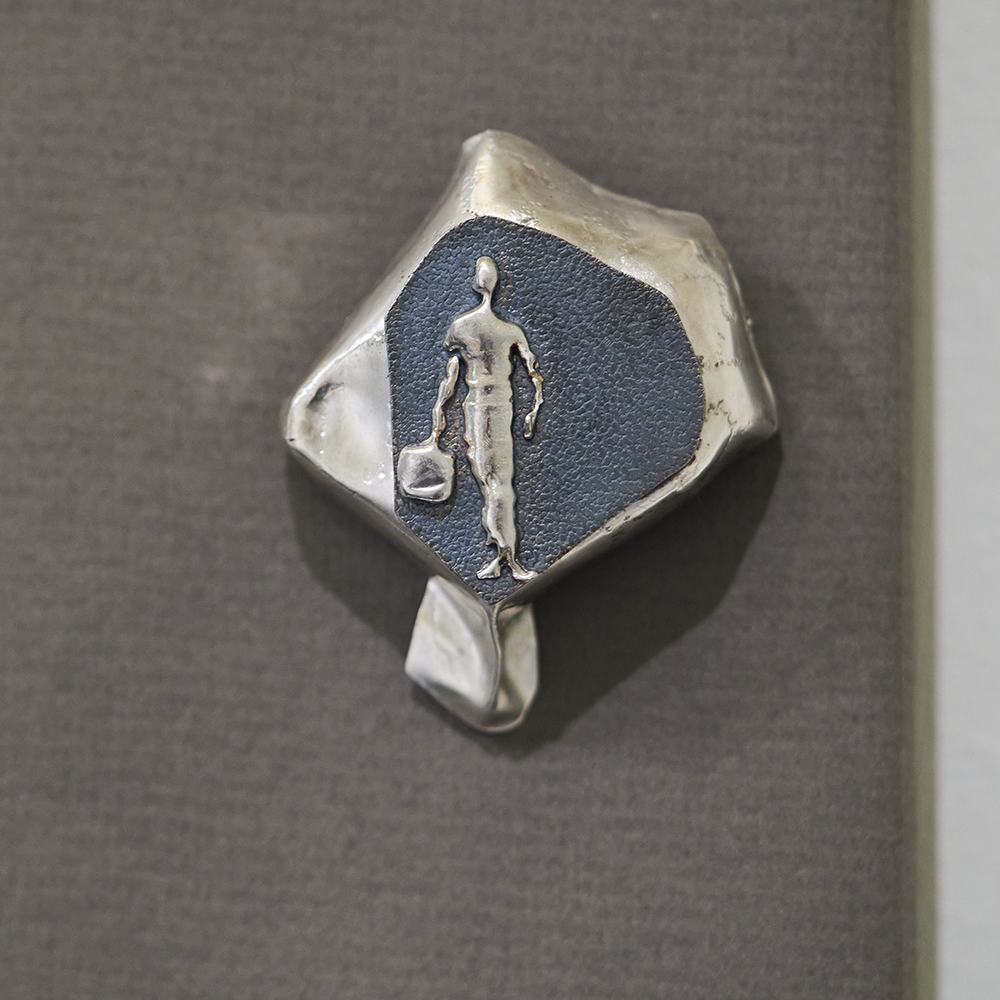
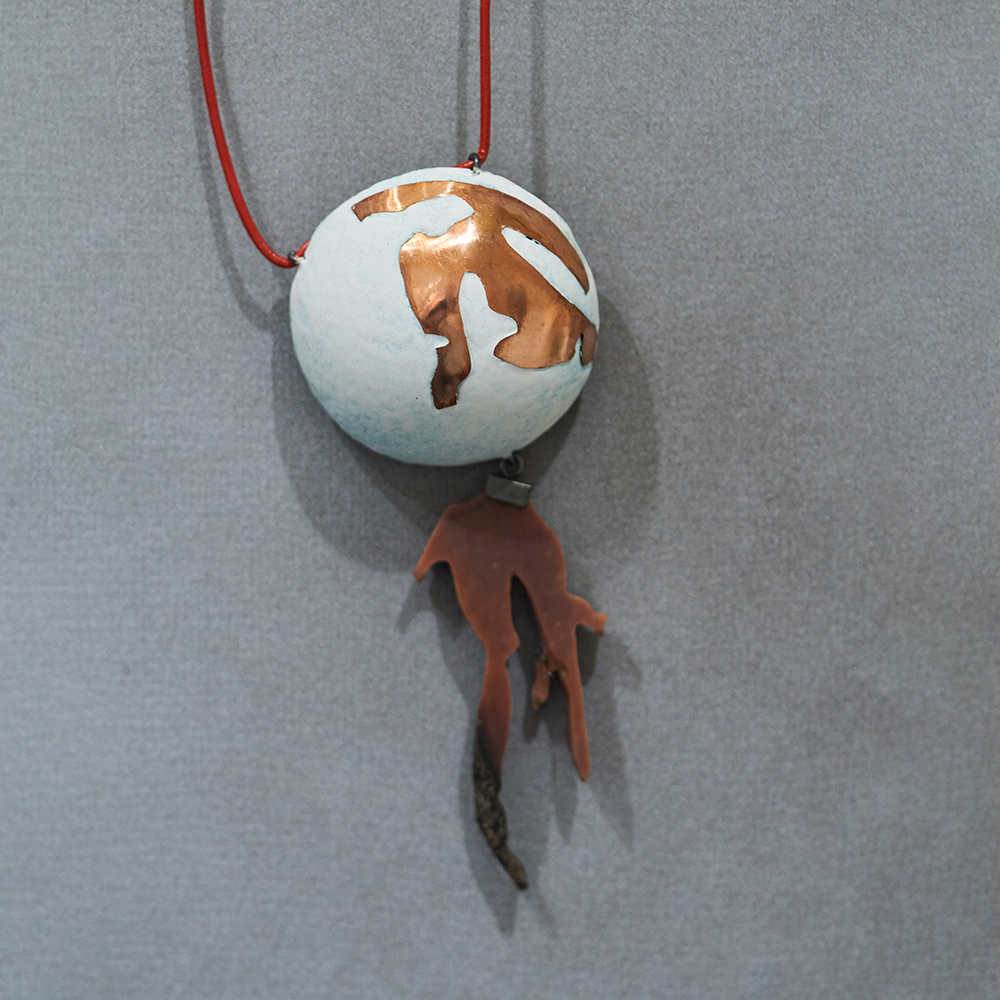
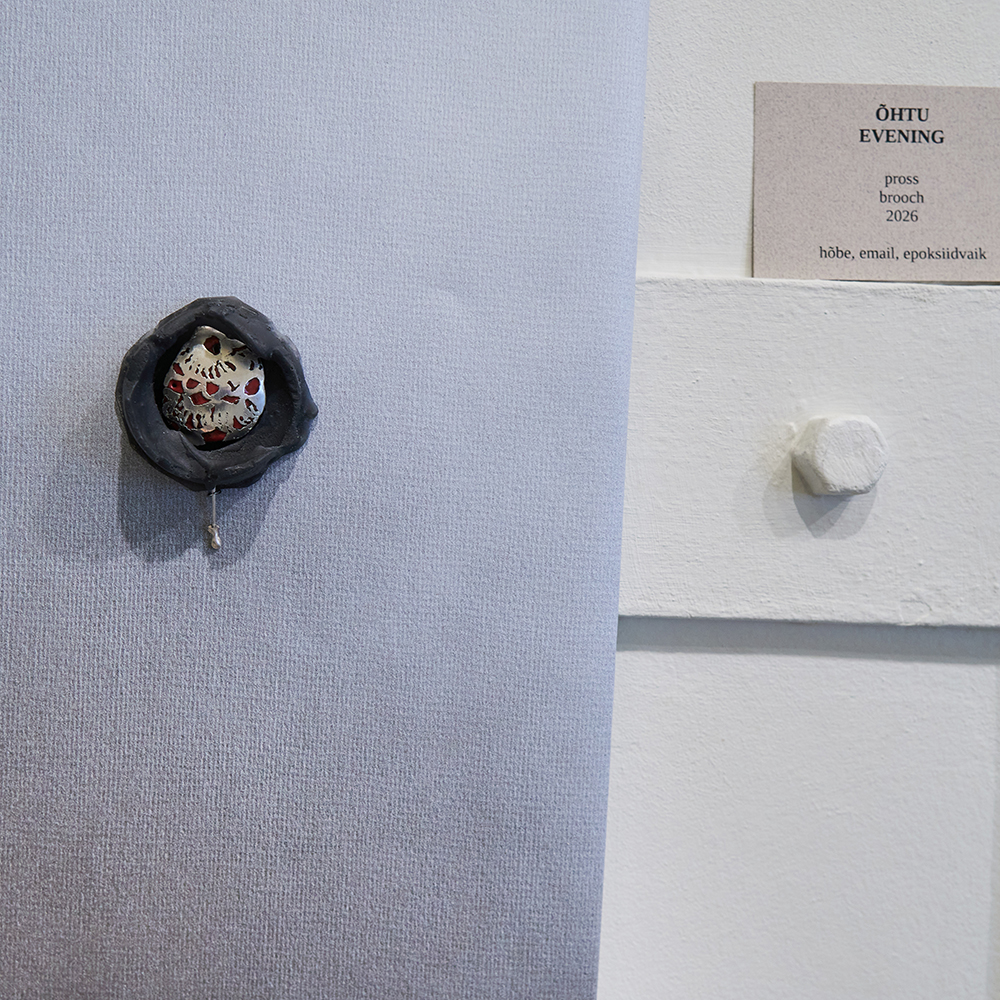
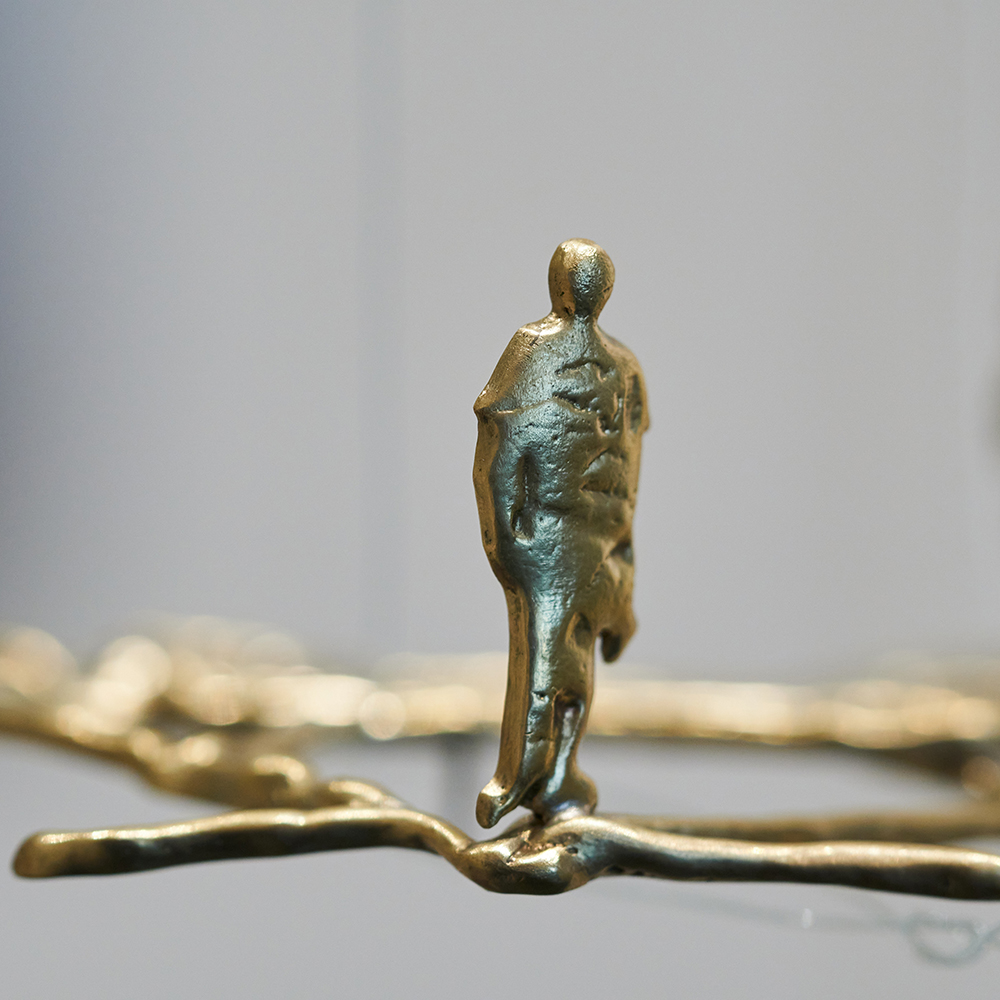
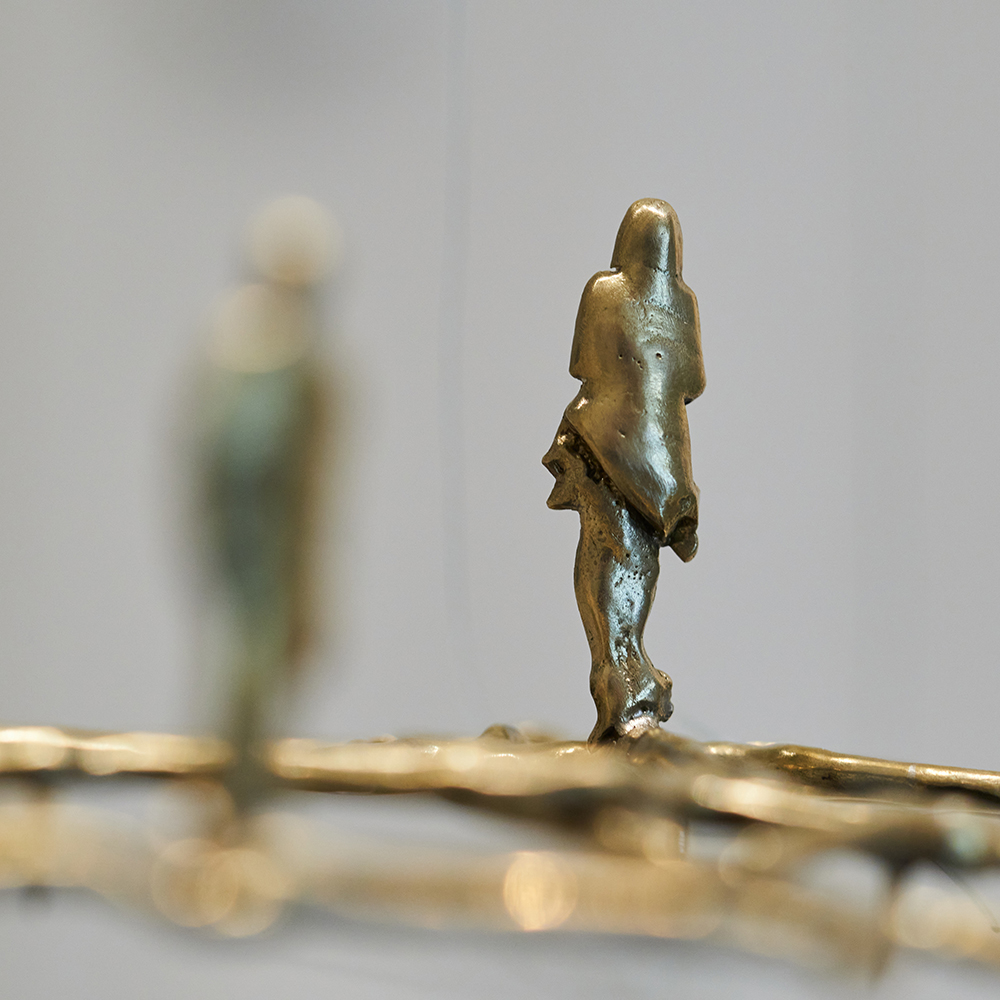
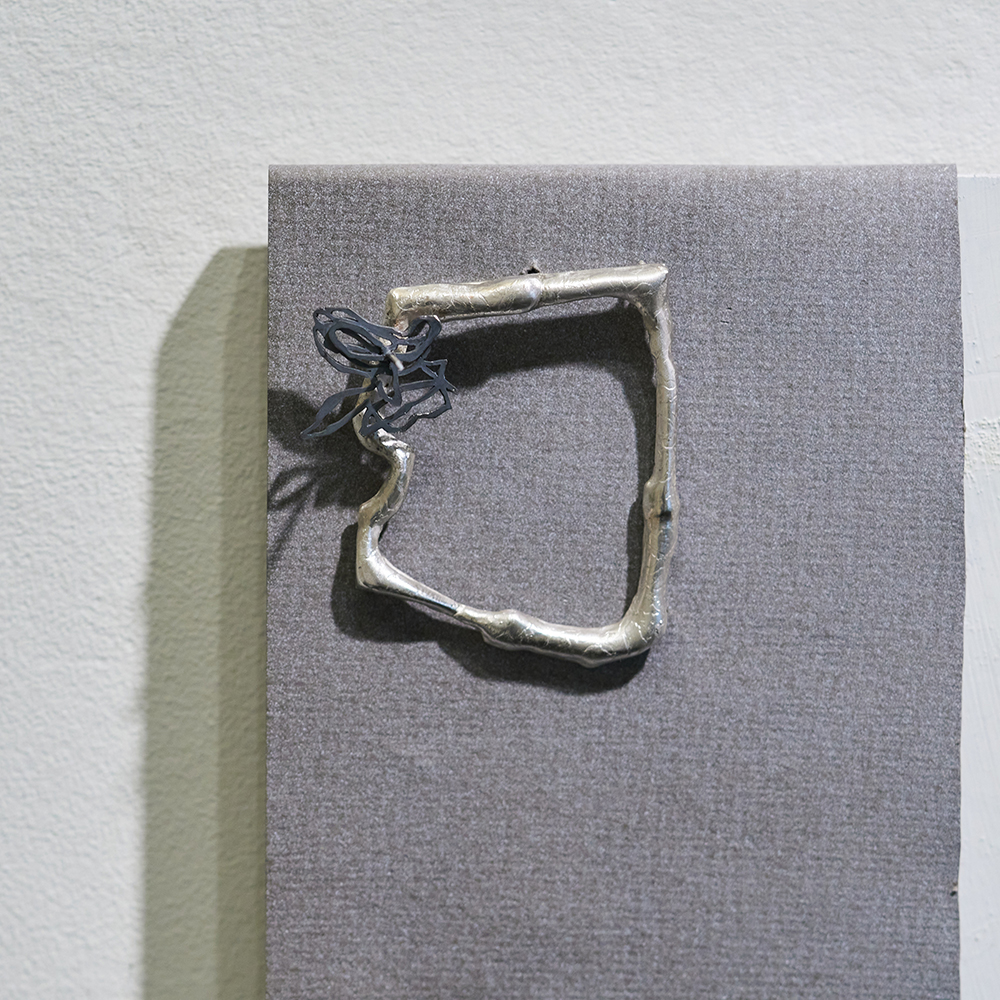
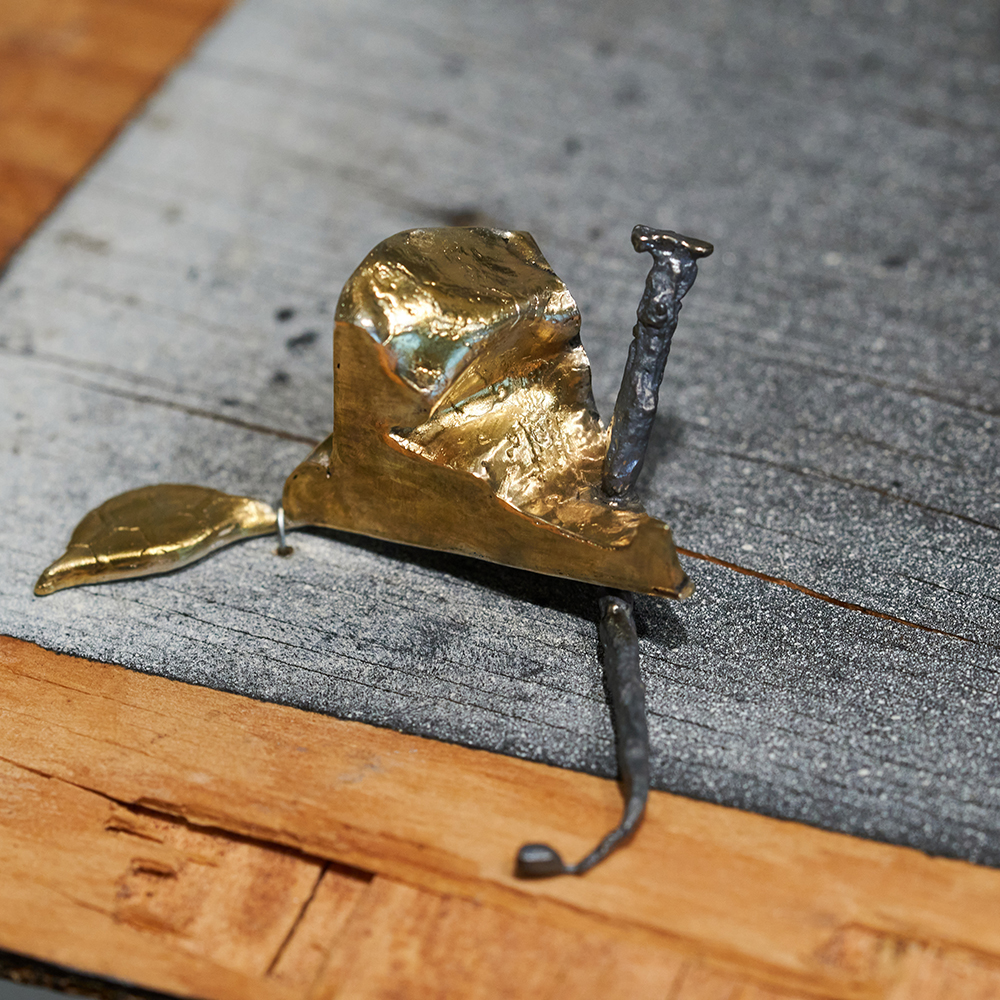
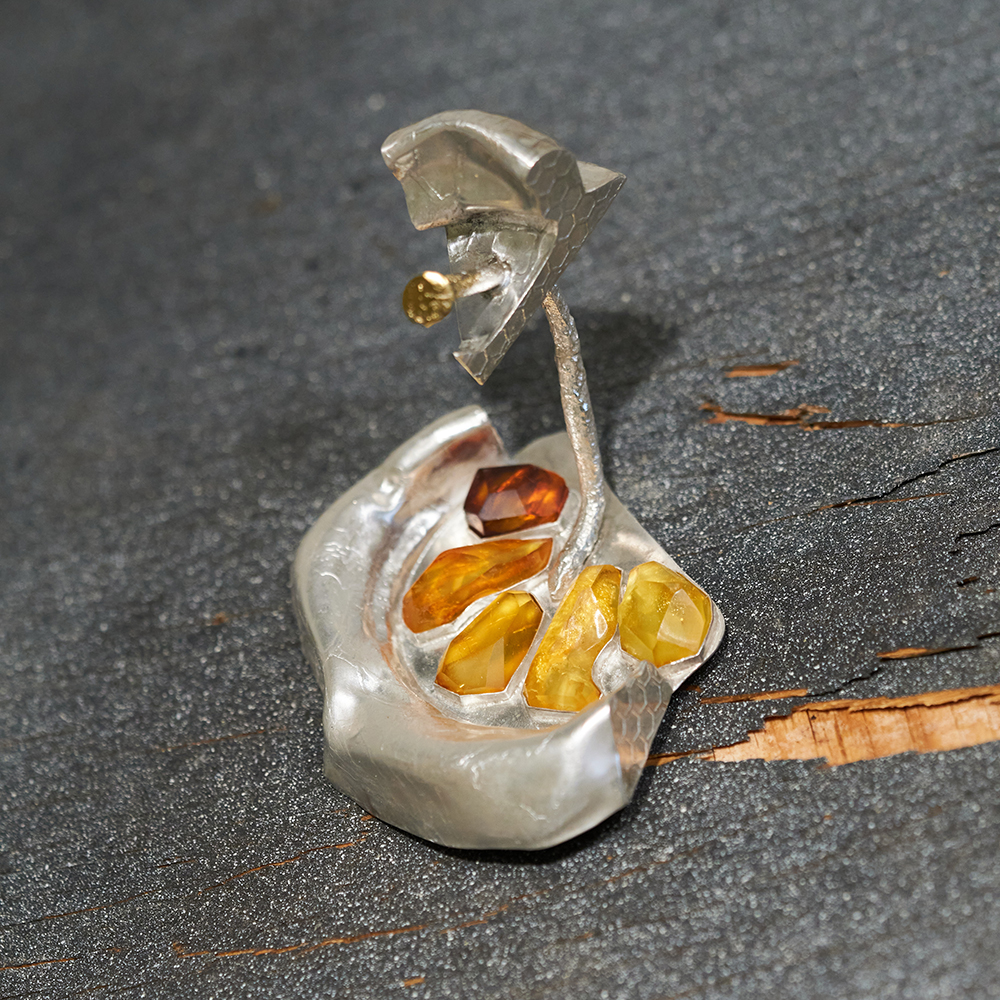
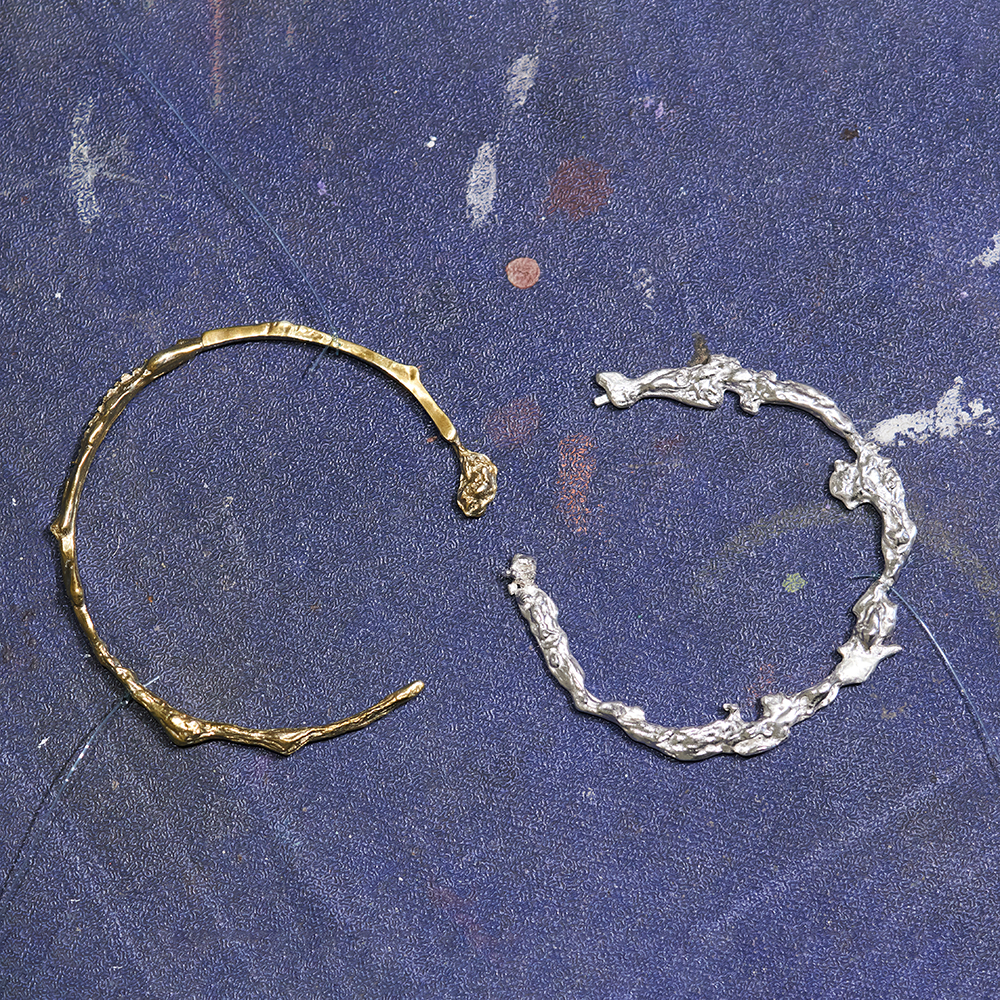
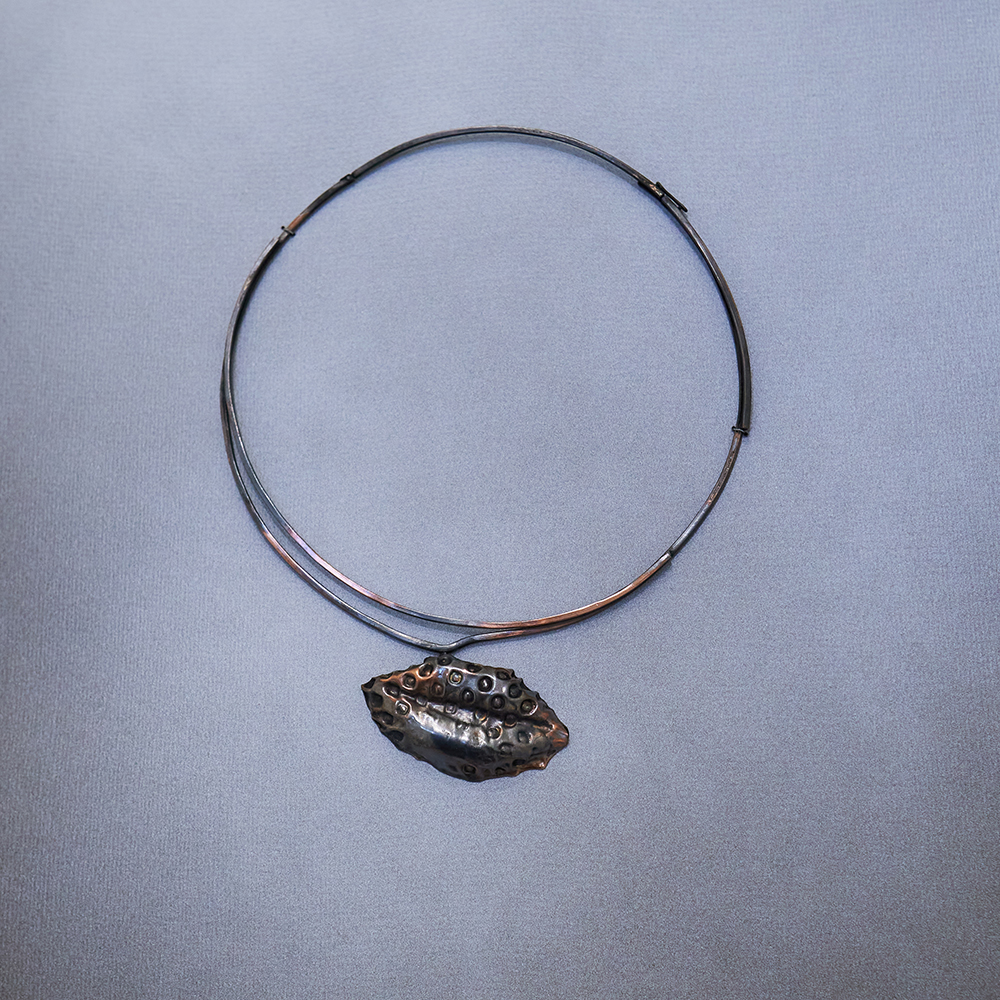
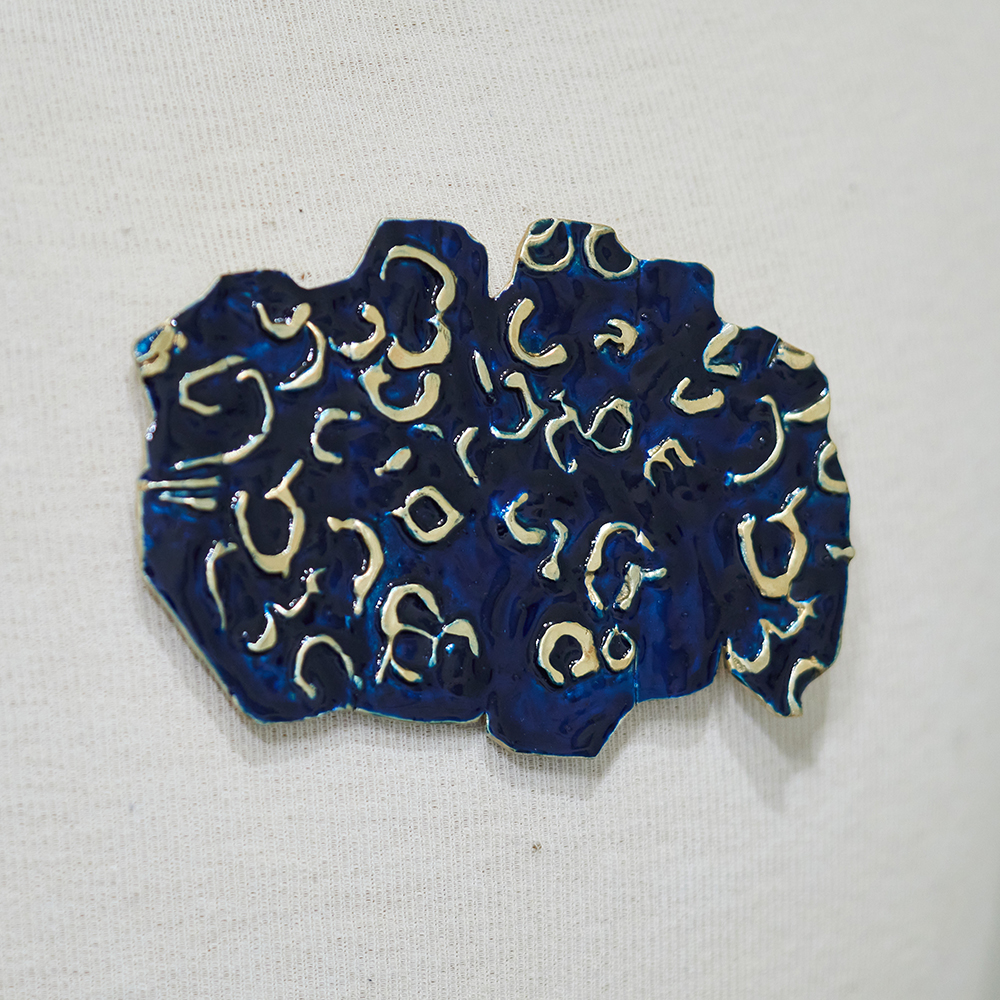
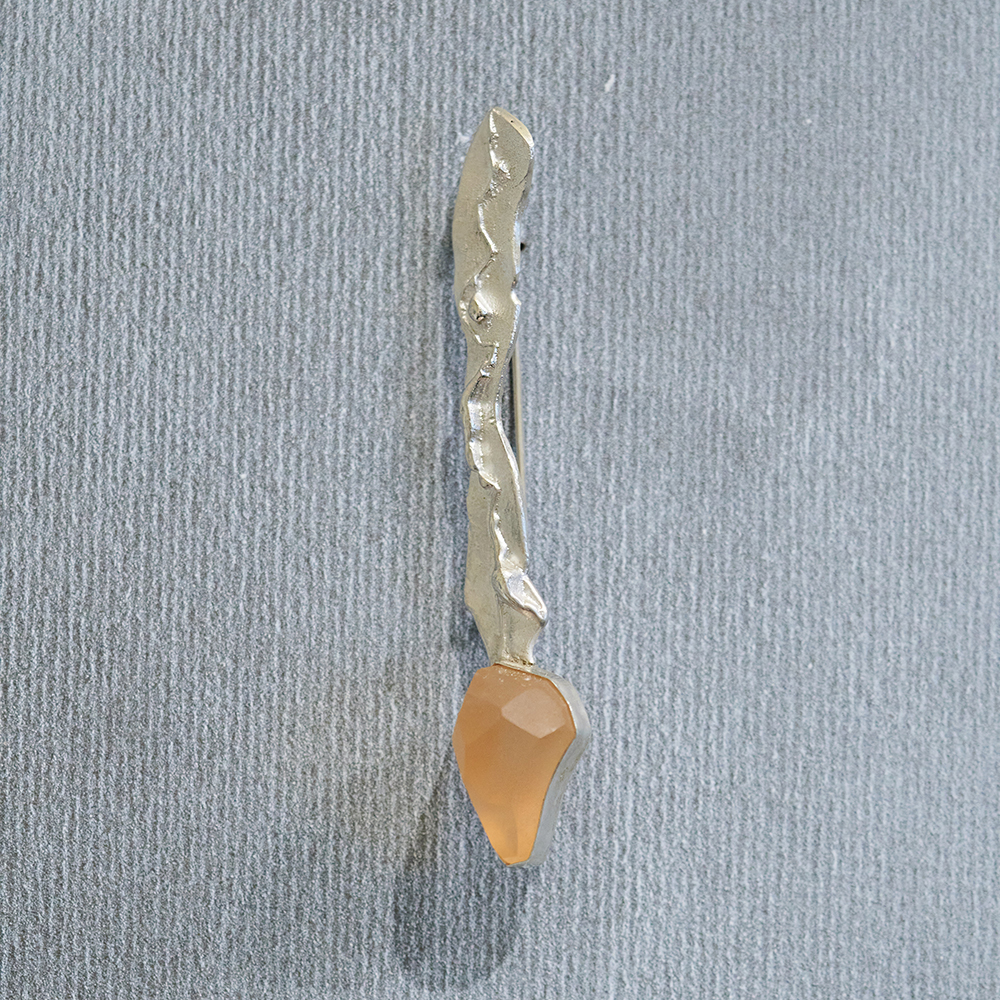
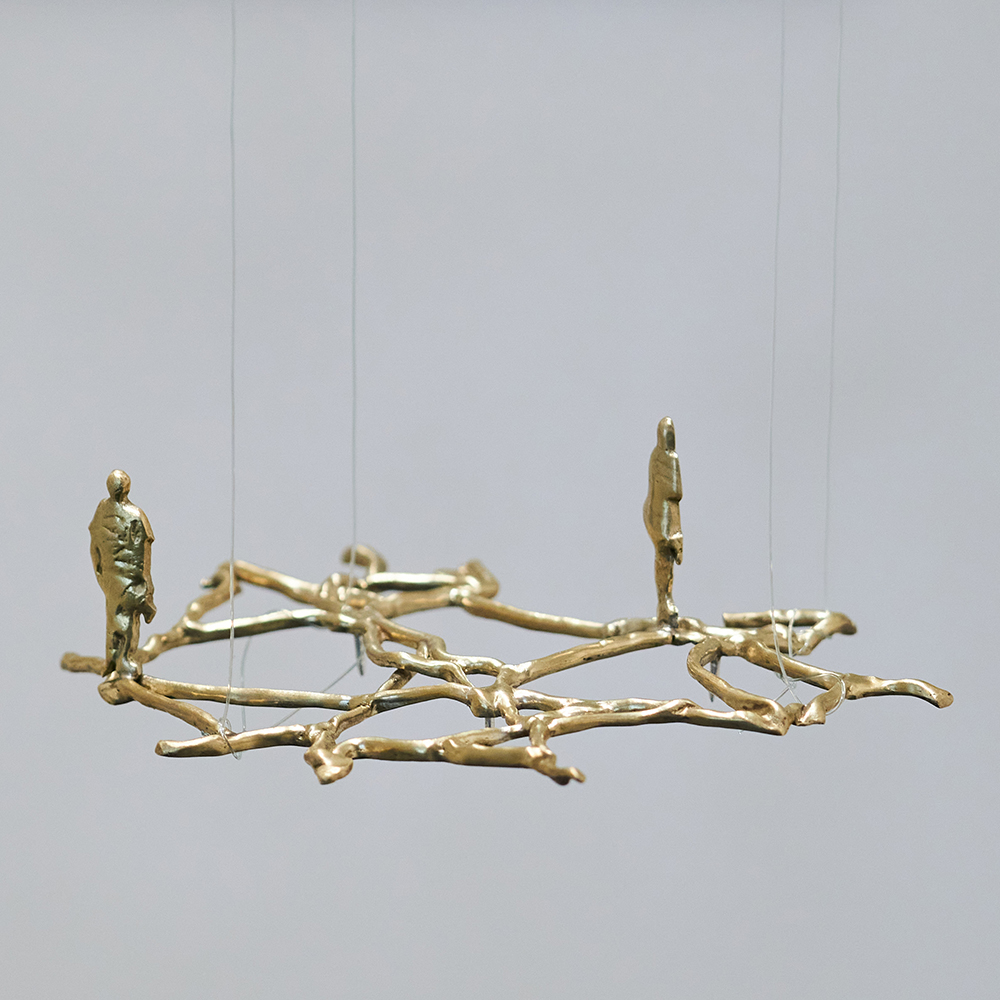
In the past, people used to place a nail inside a candle instead of setting an alarm clock.
We still try to measure time and divide it into parts. It would be good if we could manage to nail something – anything – down and preserve it for future generations. Yet in the end it seems that only the fasteners remain, time itself disappears.
Among other things, the passage of time reveals itself in the material world through separation: parts detach and move elsewhere. What do we truly need? What do we consume? What remains, and what becomes of it?
In everyday life, I erase the traces of my actions, sweep away fragments and coffee rings from the table. But where do the other leftovers go, all the accumulation of lost material and discarded objects produced by my own consumption? Does it take over and begin to live a life of its own, guiding my movement through time?
The heat generated by human activity accumulates and seeps out from masses of plastic and other waste, affecting both our environment and our actions. It seems there is a materiality to the past, a matter formed from memories, minutes, rubbish, lost objects, and the final stub of a candle. It unfolds both conceptually and physically beneath our feet. How can one find a winding path to oneself and to others, when only a few minutes and hours have been cast and pushed outward for us to find our way through an eternal, fragmented time.
Kati Erme is a jewellery artist who graduated from the Metal Art Department of the Estonian Academy of Arts in 2001 and completed the teacher training programme there in 2003. In addition to jewellery, she has studied painting at the Konrad Mägi Studio in Tartu and has participated as a painter in several national and international exhibitions. Since 2007, she has exhibited her jewellery work at A-Galerii. The present exhibition grew out of ideas and artistic inquiries that emerged while creating works for A-Galerii’s recent annual exhibitions.
Exhibitions at A-Galerii are supported by Cultural Endowment of Estonia.
RAW BLOCKS OF BLACK IRON
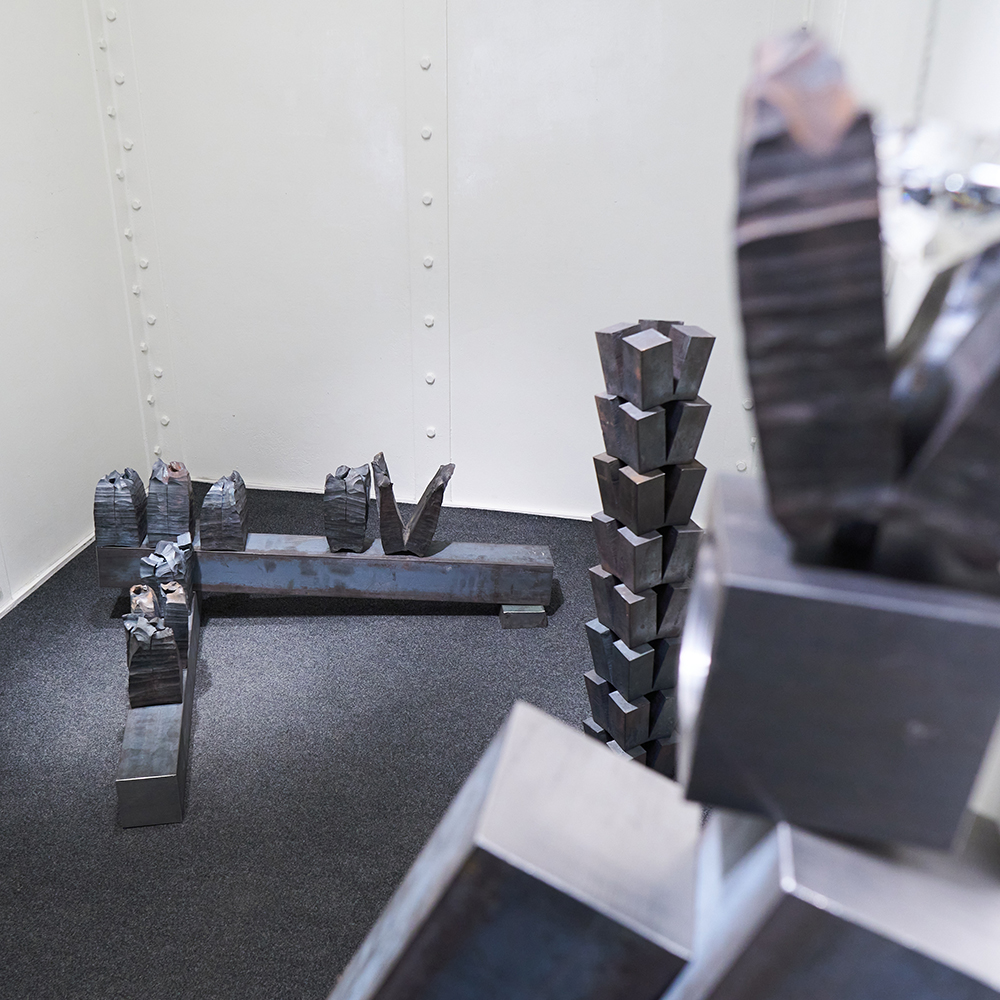
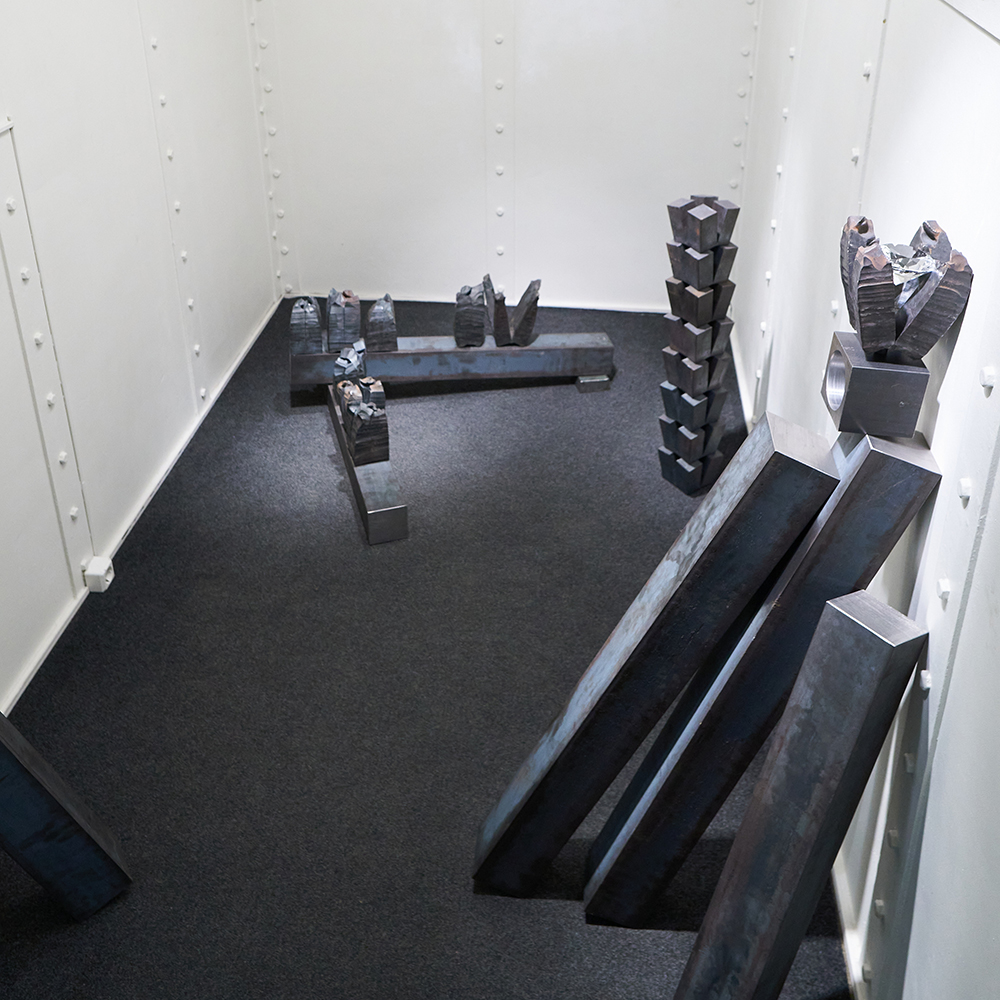
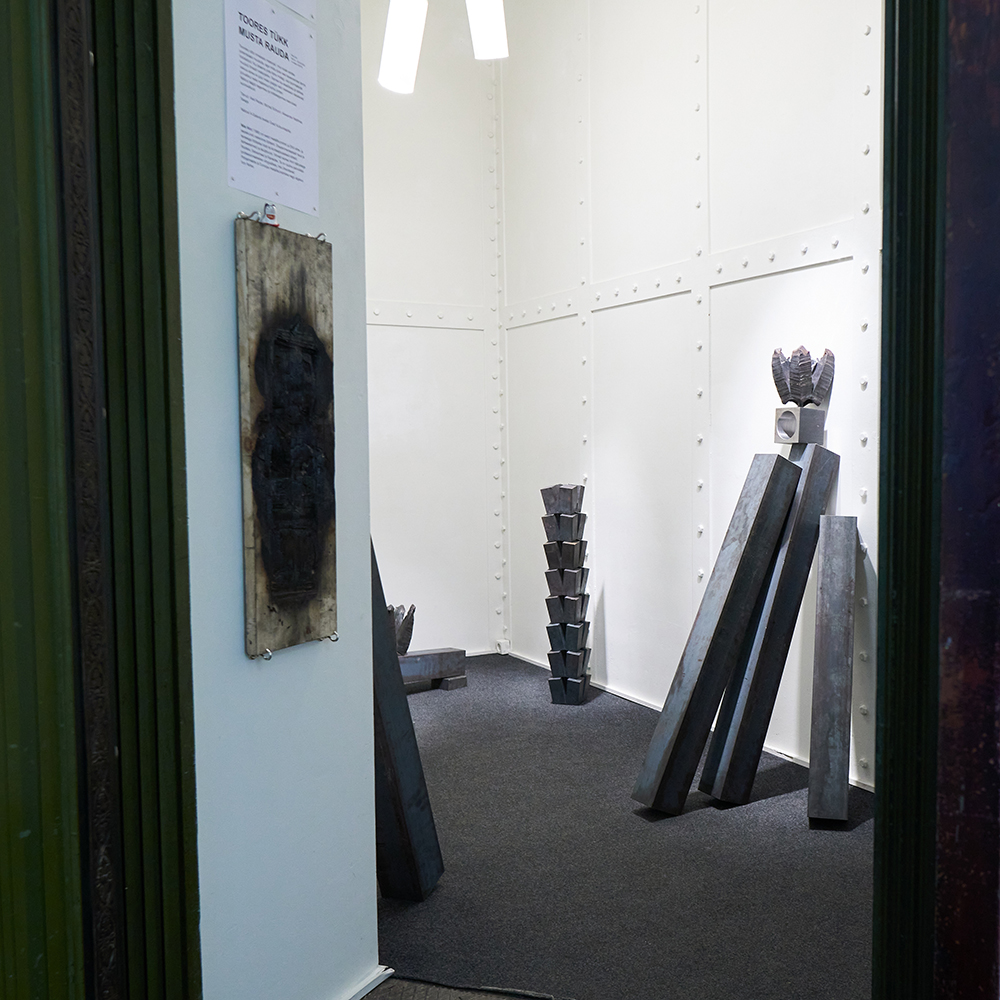
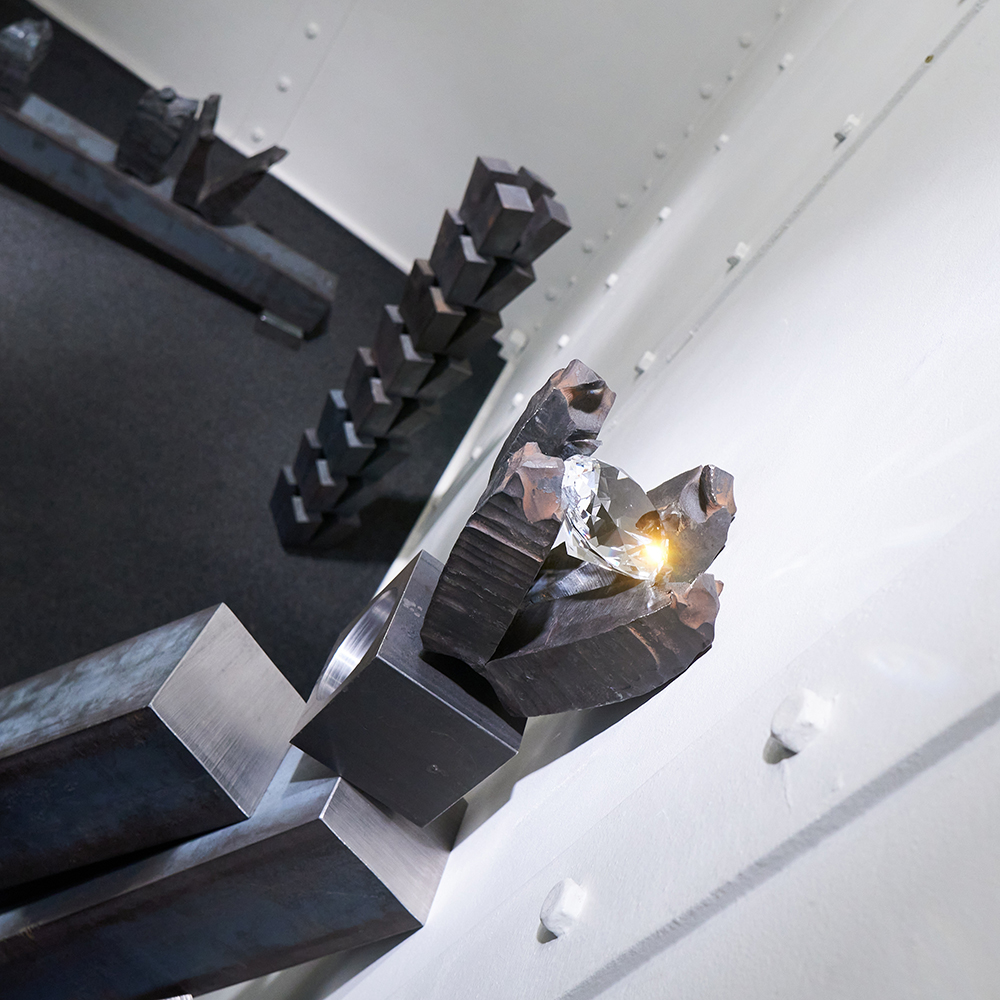
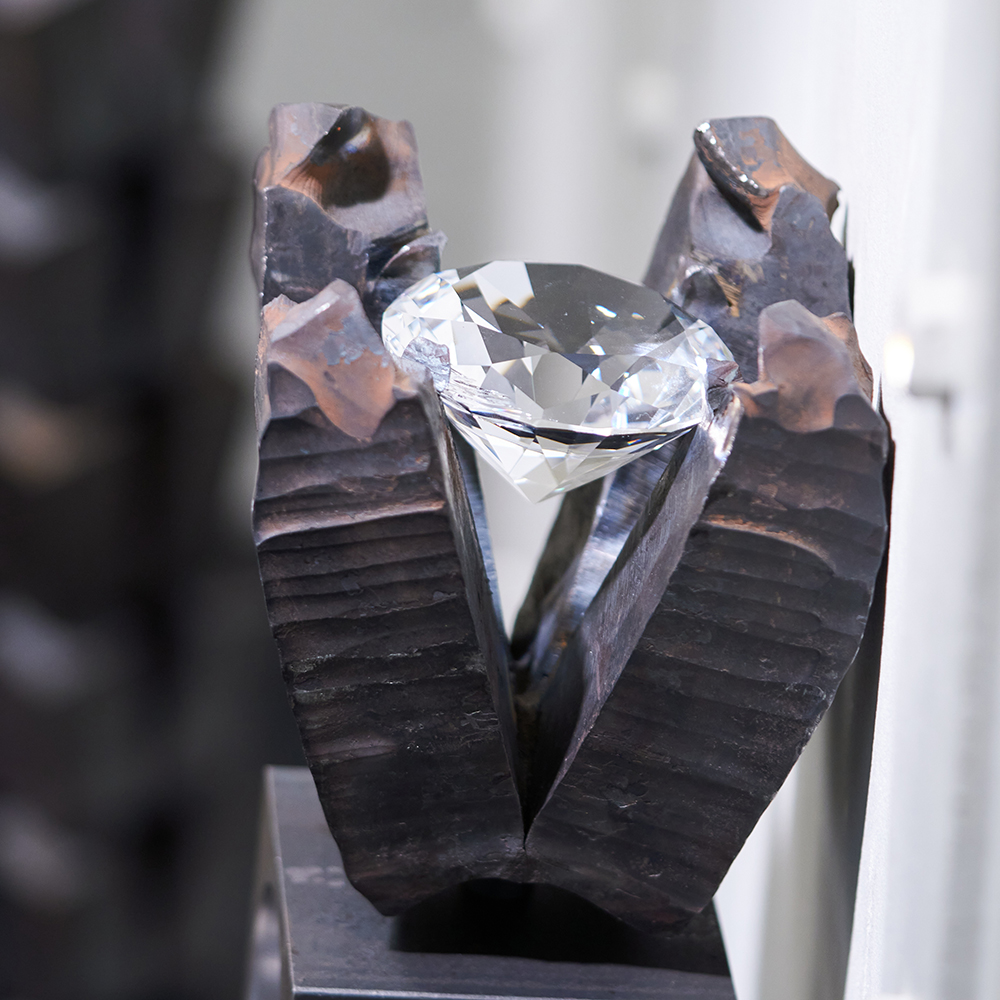
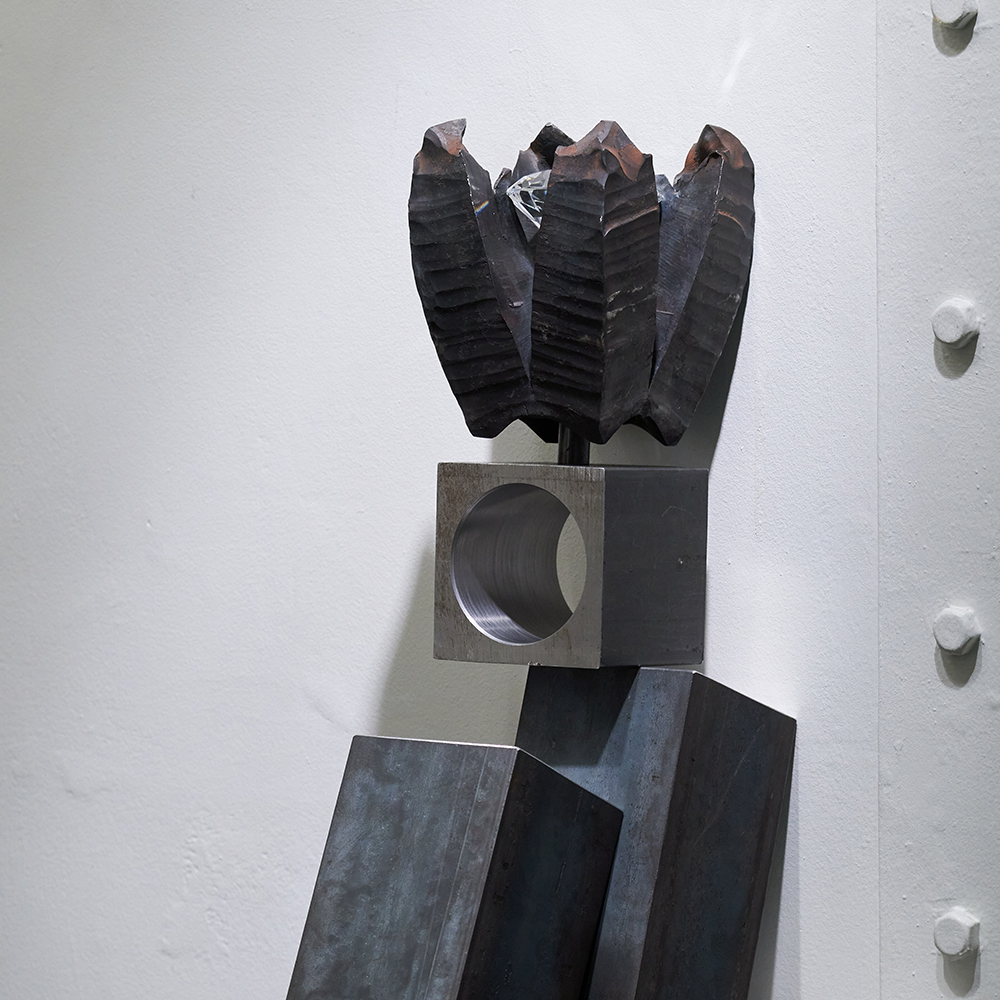
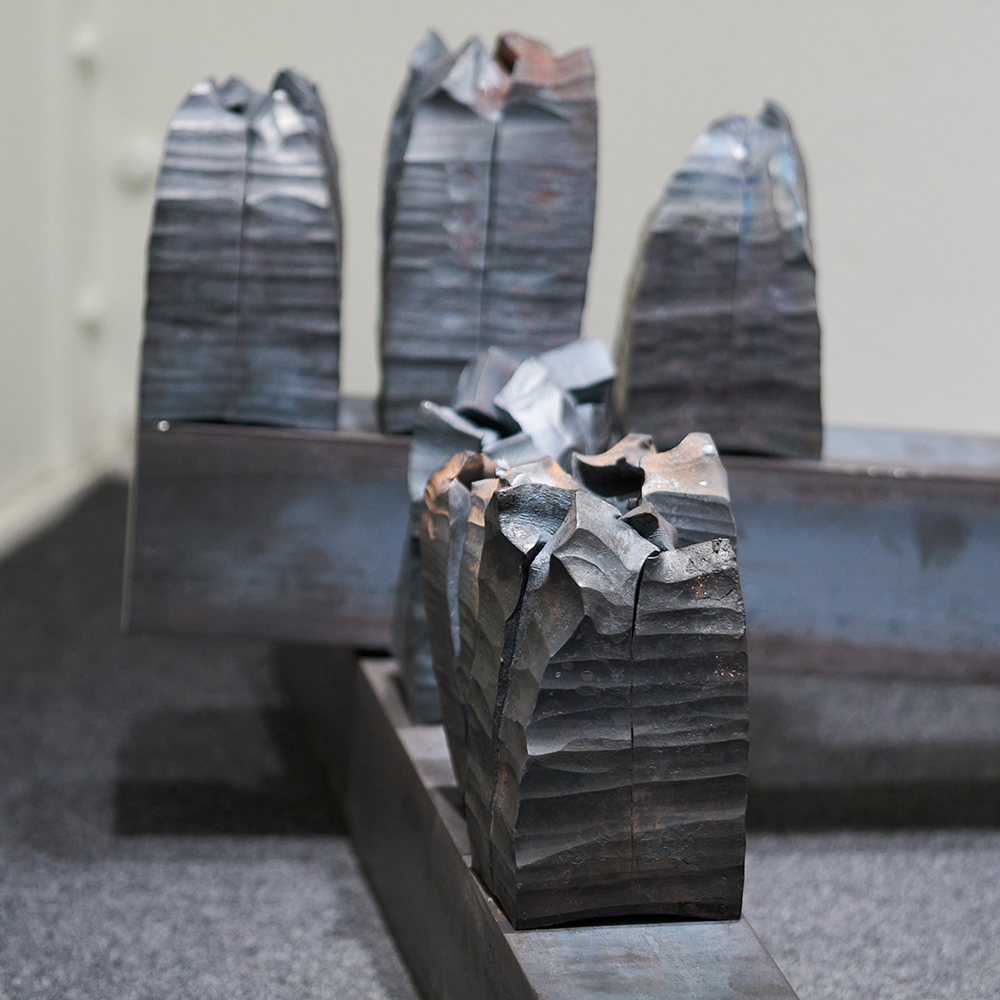
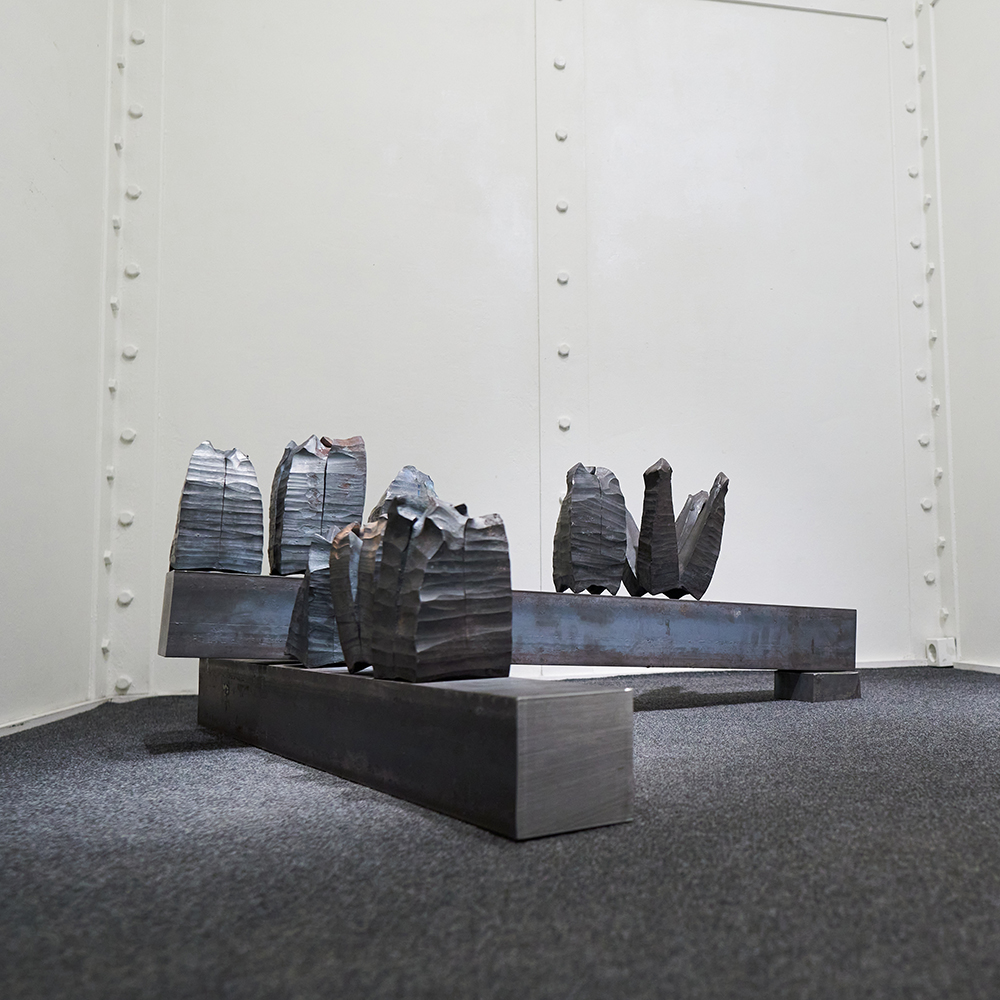
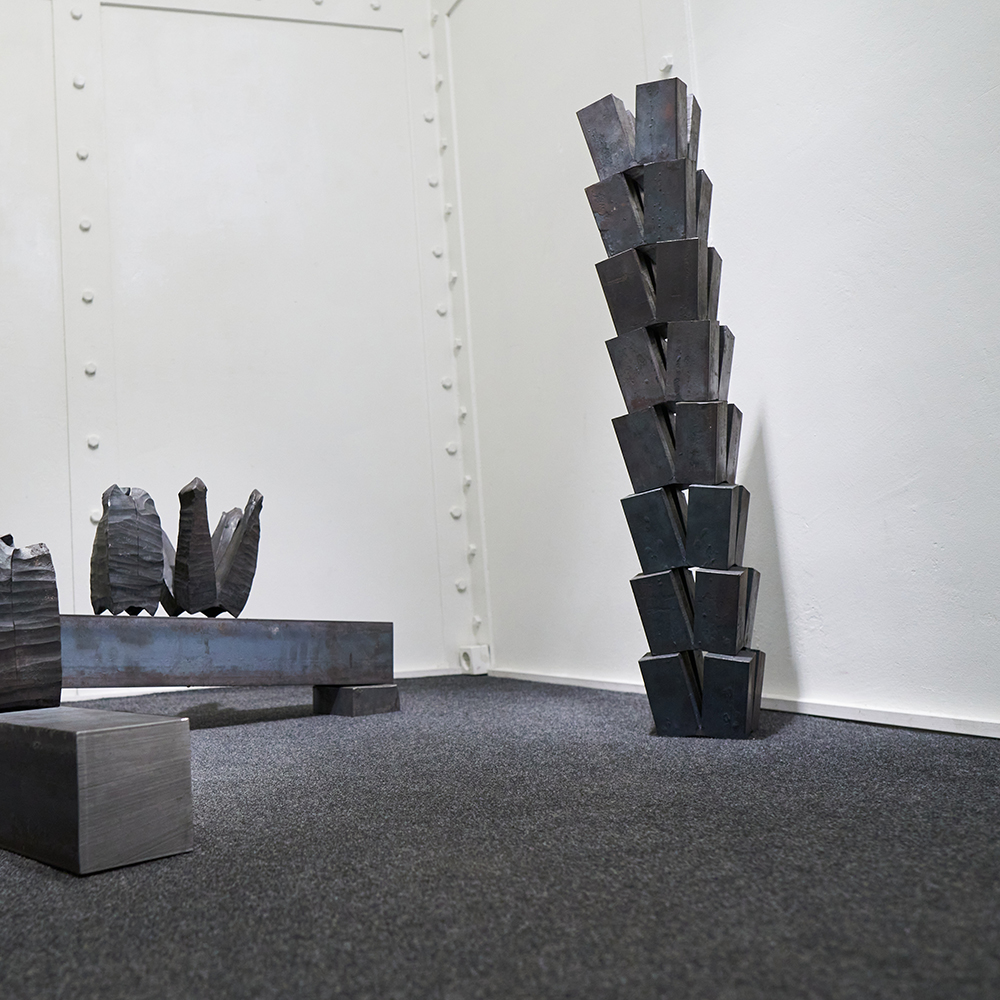
A material that holds the potential to transform but has not yet been processed for that change could be described as raw. If there is no intention to make anything, raw material stays simply material. At the same time, even in a static and solid state, nothing in matter truly stands still as the particles randomly vibrate around the positions assigned to them.
The exhibition speaks about the complex forced choice between making and not making.
Thanks to: Aleš Rezler, Michal Schoorl, Alexander Matthias Saage, Estonian Cultural Endowmen
Nils Hint (1986) is an Estonian metal artist and Associate Professor in the Department of Jewellery and Blacksmithing at the Estonian Academy of Arts. Working experimentally with iron and steel, he creates contemporary jewellery, objects, and sculptural forms. Most recently, Hint has exhibited in Sweden, Germany, and Canada. He is an important contributor to professional networks connecting Nordic and European metal artists, such as the initiative Iron Notes.