


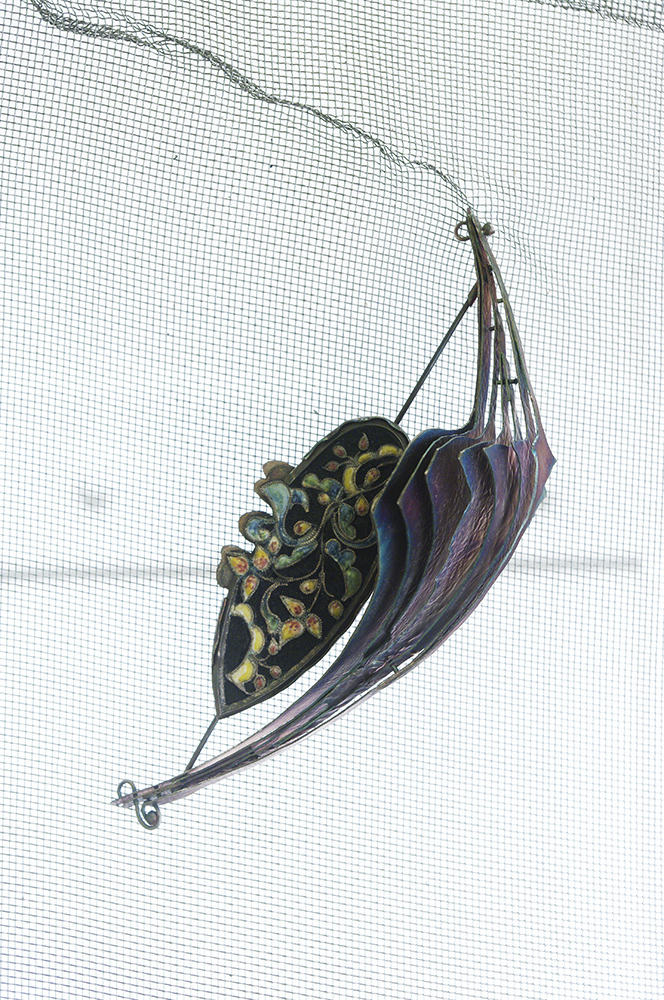


I do not know what I do not know.
Each piece in this exhibition speaks about mindfulness, and represents the occupation and reflection of my thoughts on compassion, suffering, and joy. I think about how we as humans either distance ourselves from one another or connect with one another.
I often use motifs and themes of boats, the sea, and water to construct objects and jewellery that describe a concept of memory: what is left behind when a phenomena is past, when one moment gives way to the next. The first thing I ever knew about Estonia was a tragic story about a boat, the MS Estonia. One of the most controversial issues concerning refugees in Australia, and in other parts of the world, is that some arrive by boat. Some of these boats sink, lives are lost and some people this fate is deserved.
What memories and artefacts now lie on the ocean floor, and in what state of being are they? What can they now say about these past events, how has the sea given and taken away?
We ourselves are determined by these memories. Long after the event has passed we are left with our recollection of them, they subconsciously guide our actions, but they are themselves filtered and created into a fiction. Memory is not truth. This idea of residual memory highlights cause and effect, of how our actions produce connections and consequences far reaching and beyond our imagination. A moment has flown, a phenomena is erased from existence but somehow its memory, its consequences, continue on in ways multifarious and unknown.
I do not know what I do not know.