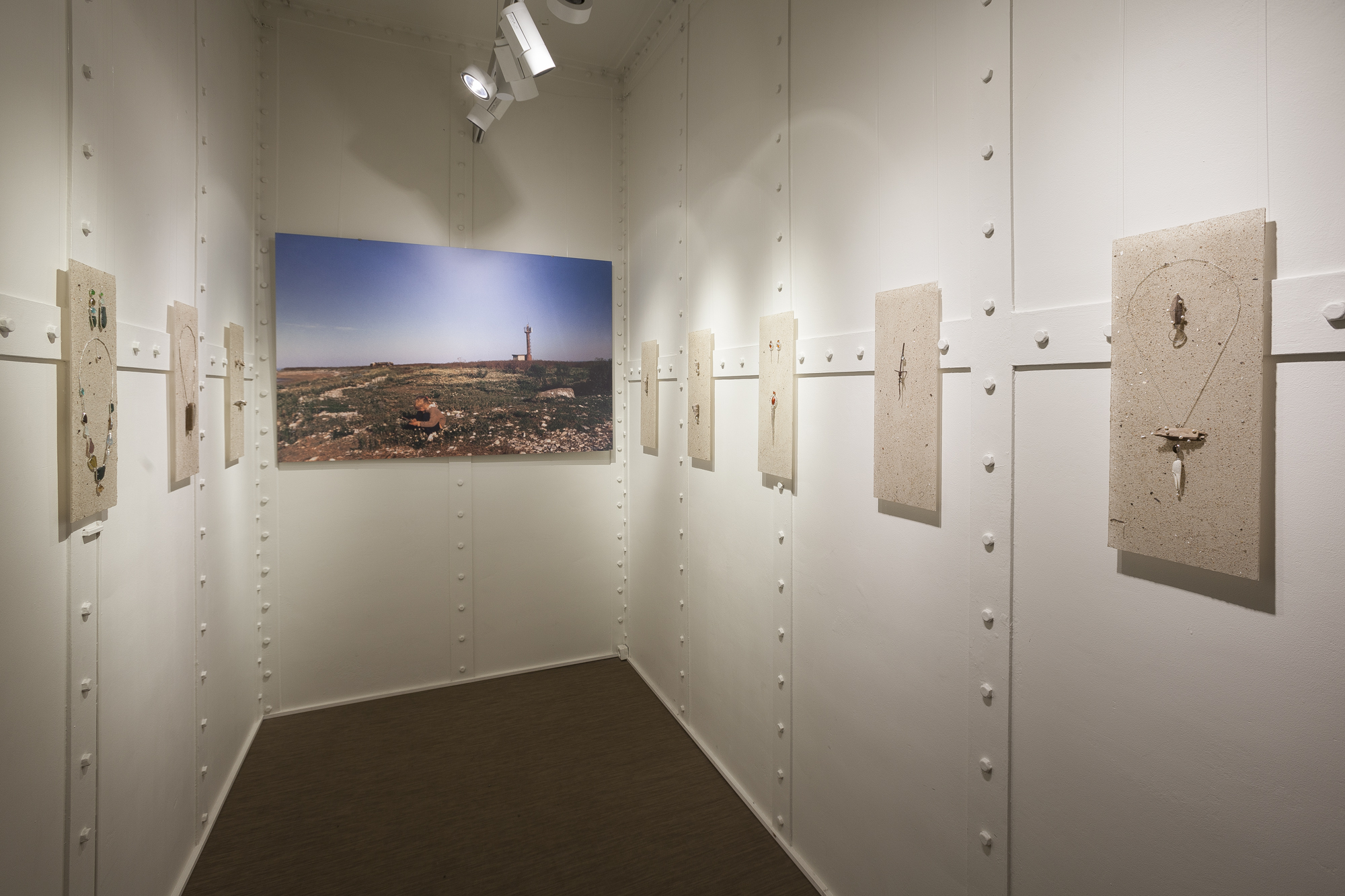
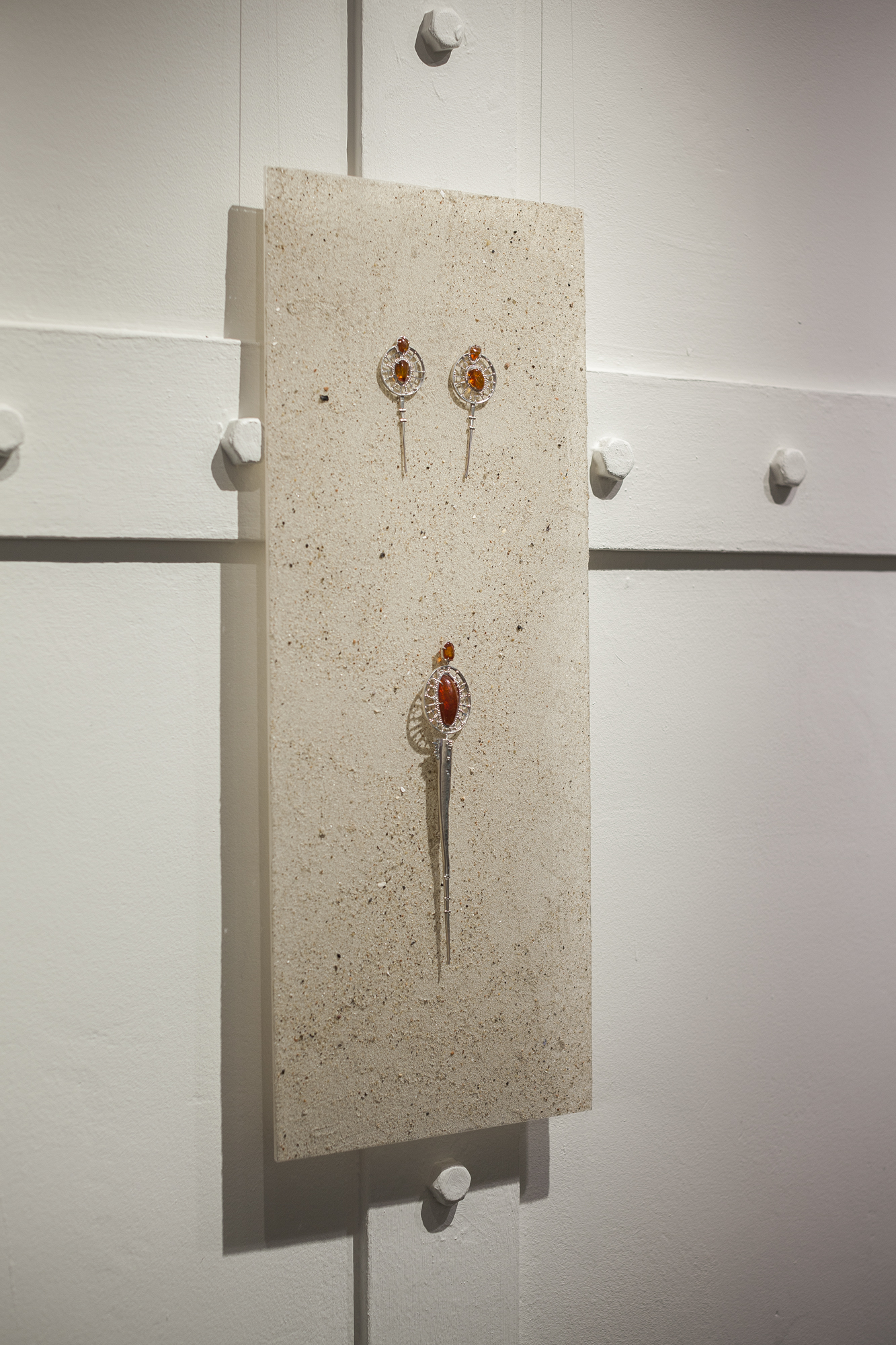
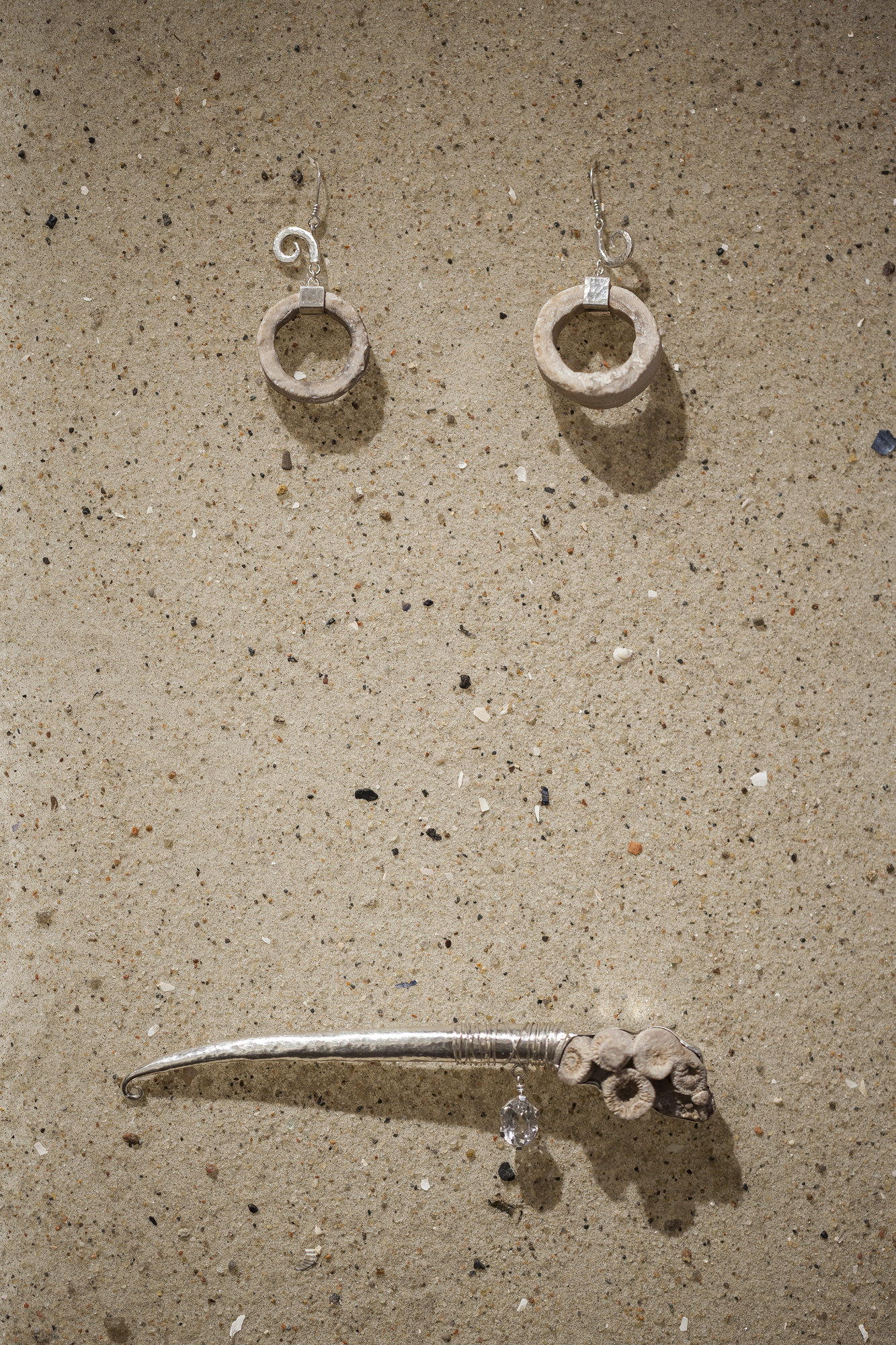
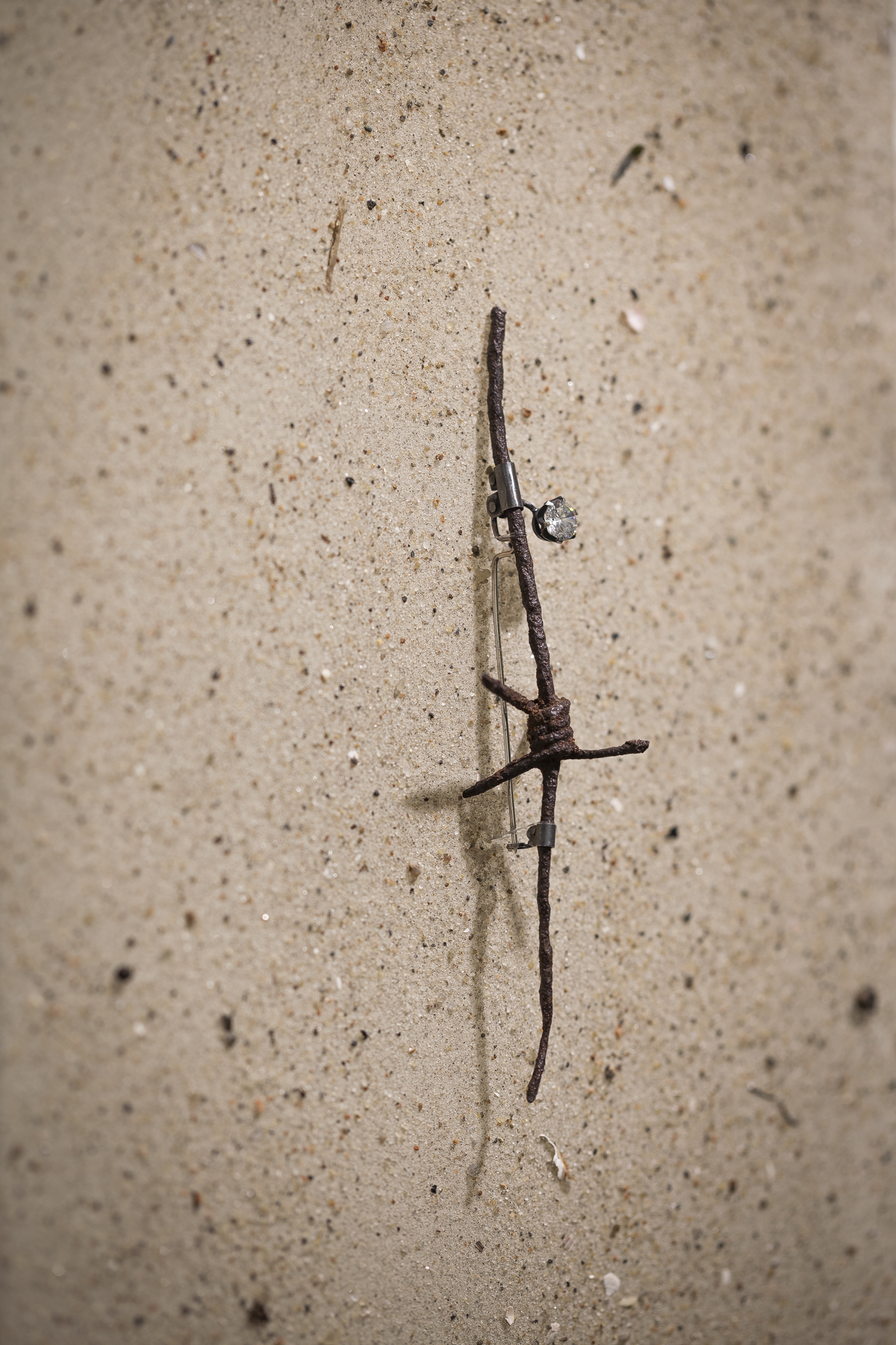
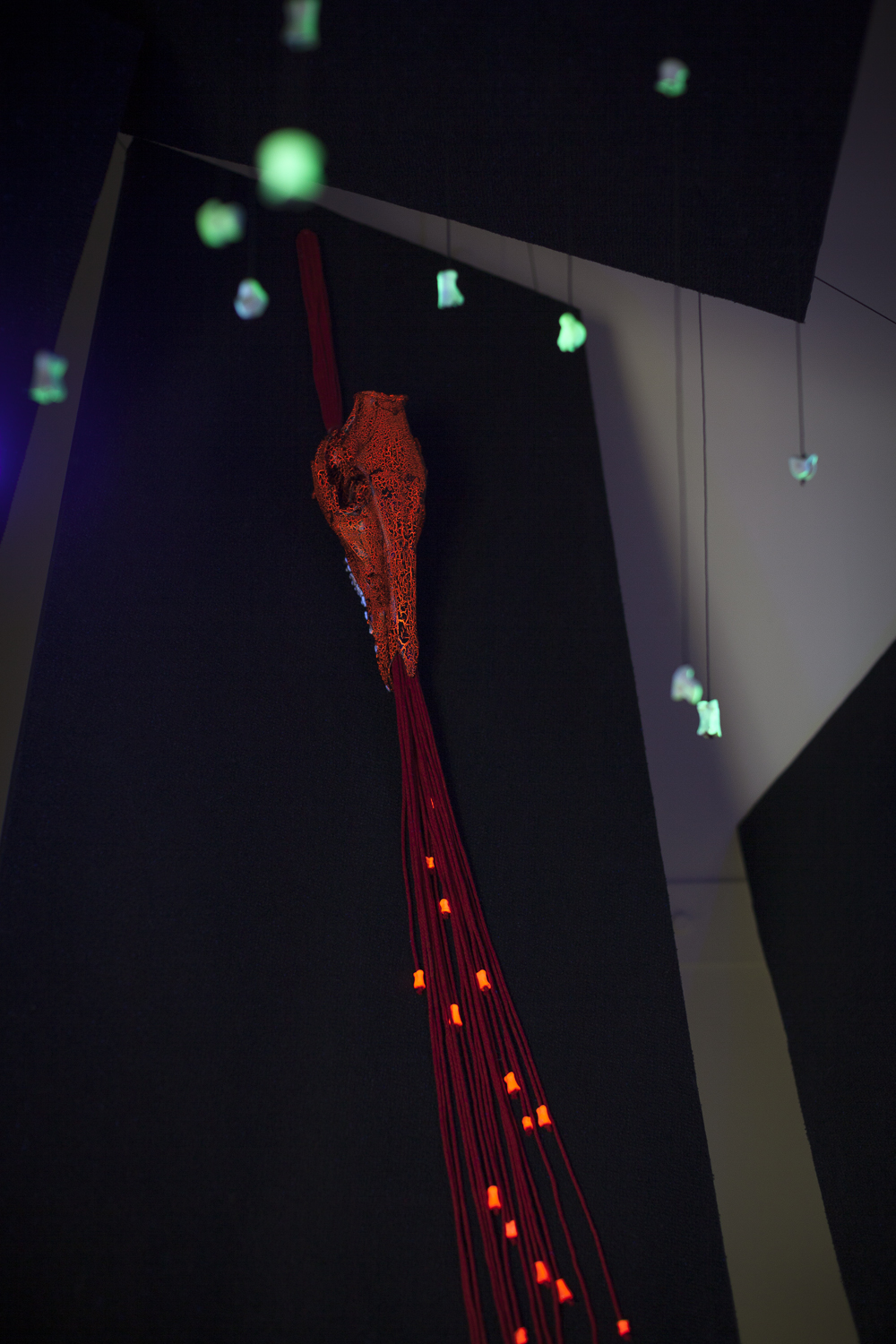
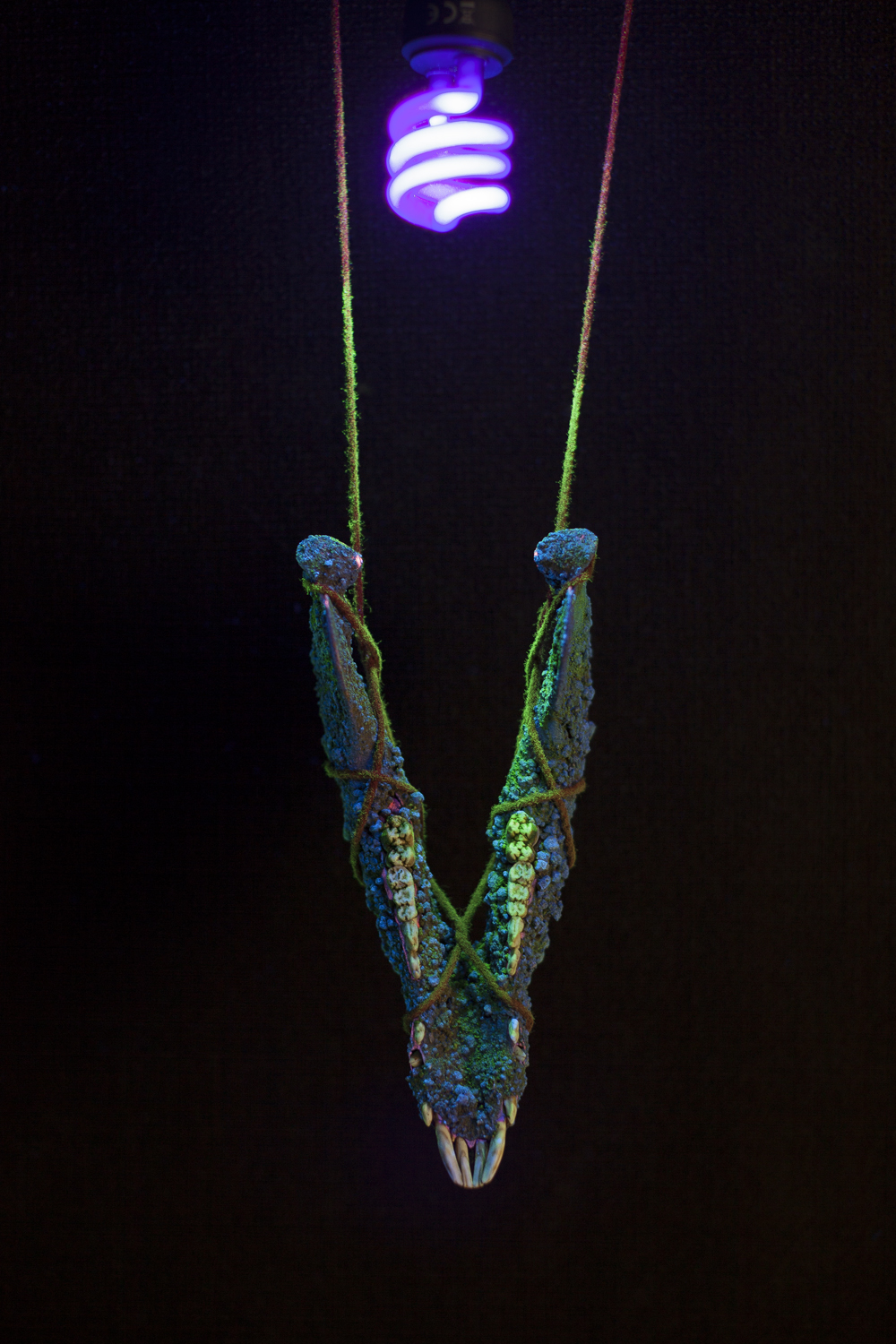
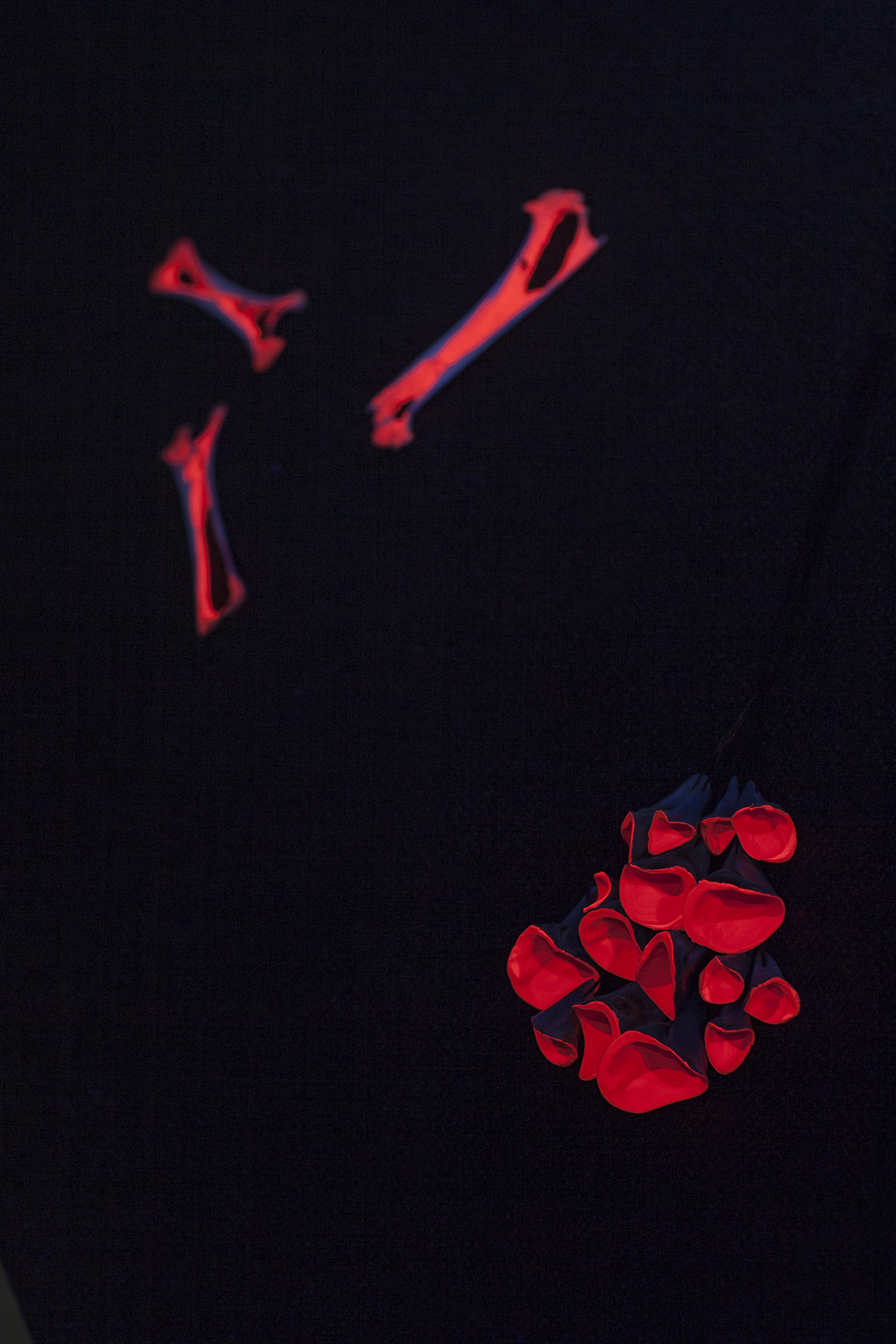
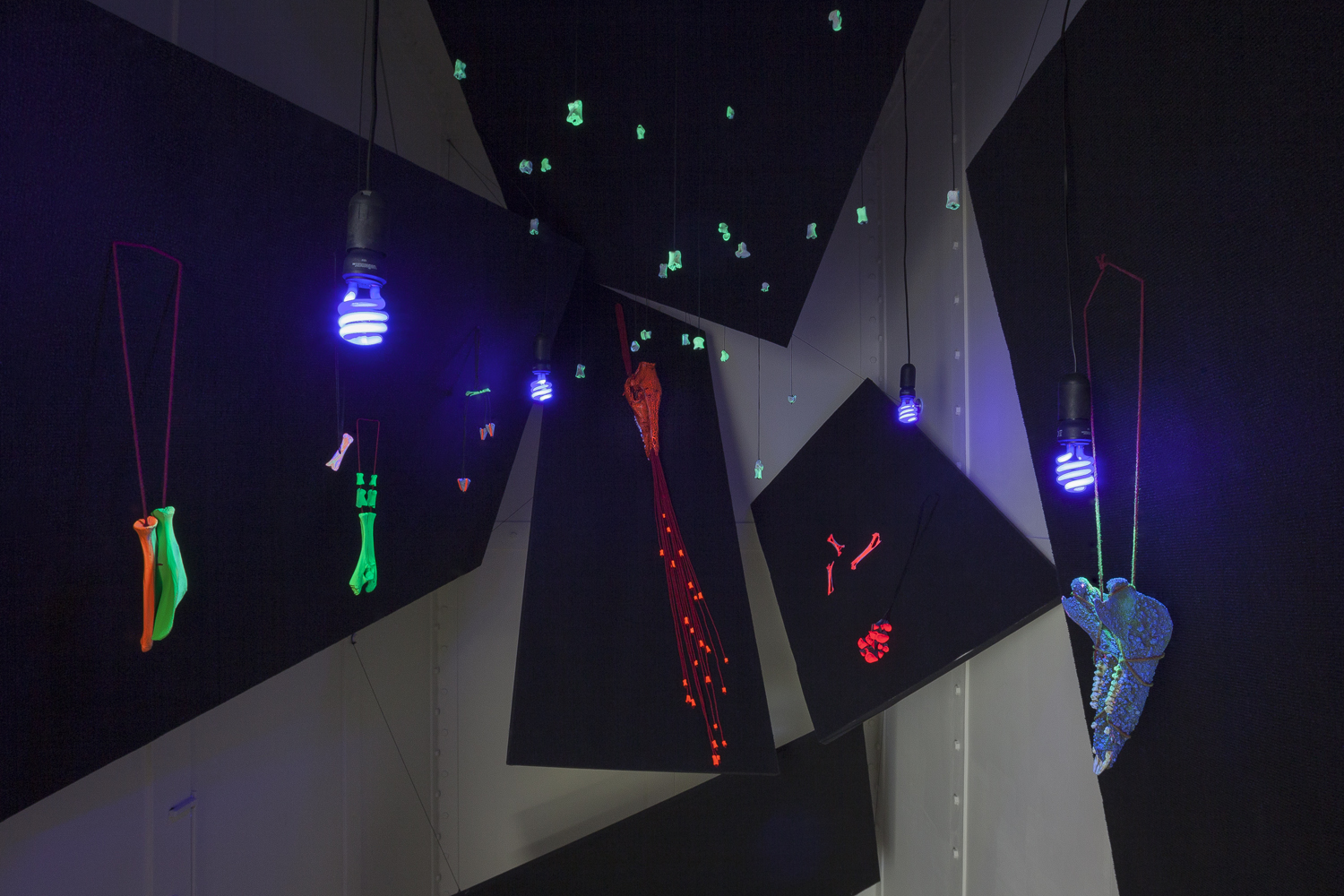
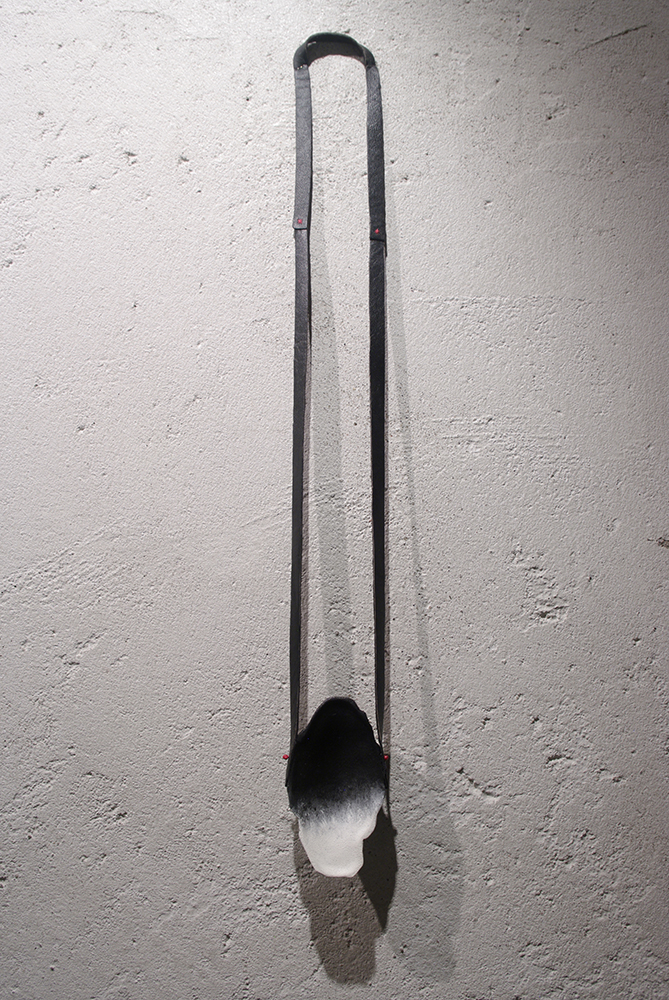
“Haakrik”, or even “aakrik”, is a dialect word used in Western-Saaremaa and means a sea brain washed away by the shore. For centuries, the coastal people have gone to the sea after a big storm, which has brought usable rage. This may be the debris, property or catch that was washed ashore by the shipwreck; as well as the flora and fauna, debris and rubbish that accompanied the waves.
Over time, the most exciting “aakrik”-s have been reshaped by the sea beyond recognition and have a colorful past behind them to tell so much about. Probably everyone has spent hours walking on the beach and hunting for these “treasures”.
The jewellery on display uses the same amount of waste accumulated over the years. The finder has his own memories of places and events about people related to these objects. Be it a handful of amber found by a child from an abandoned seal island , or a piece of barbed wire picked up by a dear friend.
In jewellery forms, these different stories blend and new ones begin…
When an artist discards a romantic-poetical point of view both to nature and human society and takes a hold of a magnifying glass and a microscope instead, a world of various patterns, textures and structures will open up. Indeed, everything seems to be possible to be reduced to regular structures: cells, tissues, leaves, scales, hair, thorns, sand … However, besides the patterns visible with the magnifying glass or with the naked eye the invisible patterns are also perceivable. The existence of such systems is revealed by language as well. In daily life, we use expressions such as pattern of thinking and social structure without being really able to touch or see them, even if it is possible to depict the concepts as images or words. Words referring to the existence of invisible patterns are an example of the human need to arrange the world. People try to systematize the invisible according to the same logic that we are used to see in nature, compared to the structure of a human being. We are complicated organisms consisting of numerous moving surfaces, while at the same time we form even more complicated structures that constitute human society.
While some people are content when understanding simple structures, other people have the necessity to reconstruct and interpret everything. Disassembling is an unavoidable part of any kind of construction process – similarly, when preparing moving surfaces for jewellery, I had to destroy solid sleek tin.
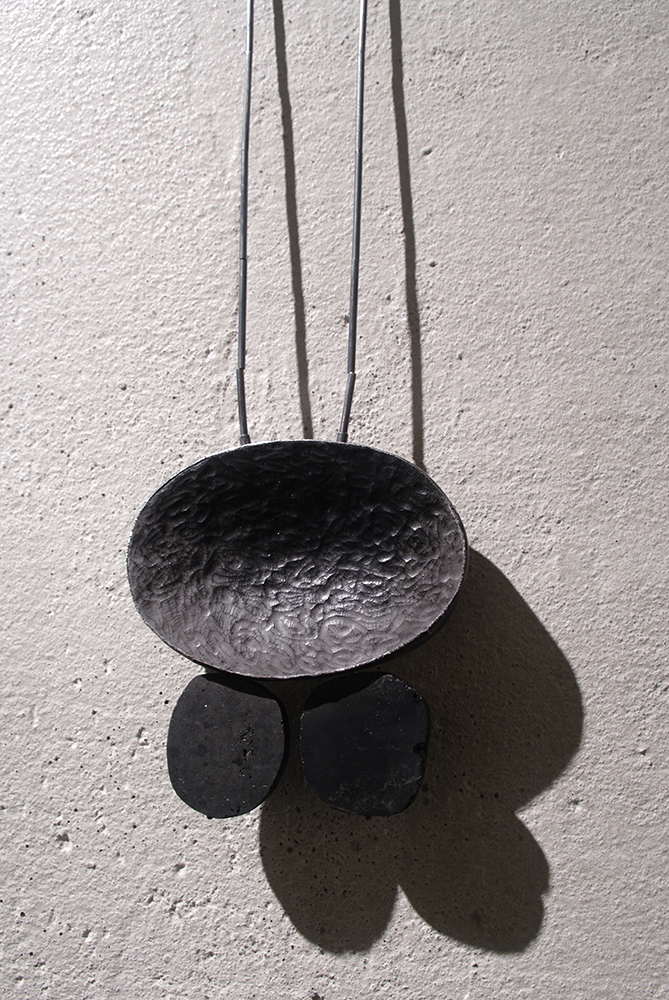
Physically we wear jewellery items on the top of our surface that makes jewellery superficial. The work exhibited at the current exposition has been inspired by textures that appear in nature. The pieces with moving surfaces have been made from metal that has been formed into wearable jewellery. Various metals have been used: iron, titanium, silver and jewellery stones. The mobility of surfaces has been achieved through the use of classic goldsmith’s techniques. All elements of exhibited jewellery have been cut out manually.
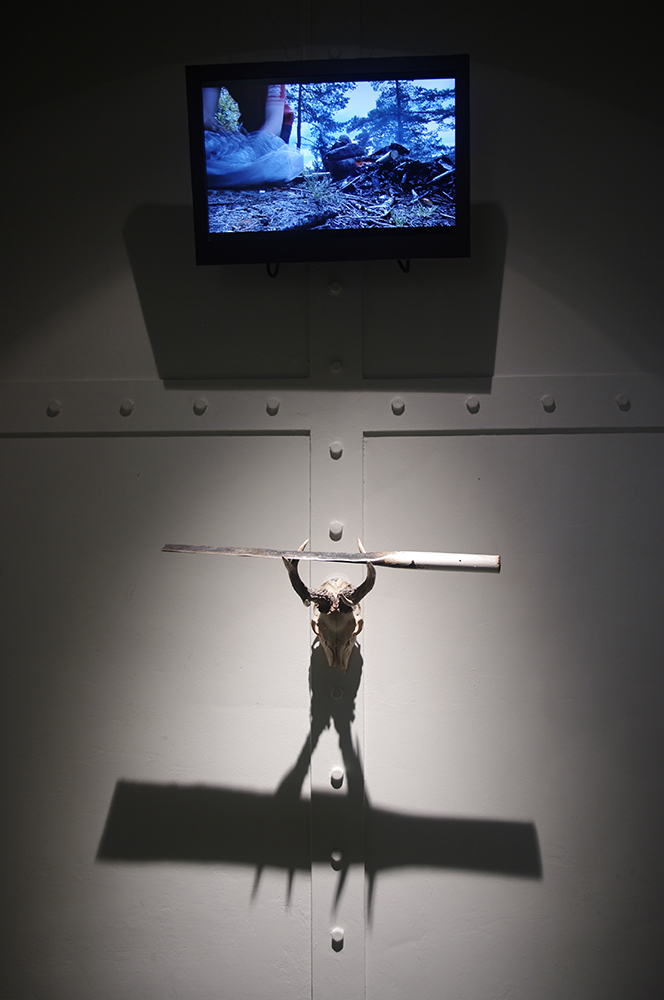
One man, one animal and helluva lot of blood and intestines. Mr. Urmas-Ott opens his fourth jewellery exhibition 58°30’26″N 22°43’37″E in A-Gallery at 6pm on March 4, 2016. The main material used for the current exhibition is the dead body of a wild boar killed in the island of Saaremaa. Exhibition will be open until March 28, 2016.
The hunter was already on his way back home when his two Siberian laika dogs smelled something and rushed into the dark night. While following their tracks, the hunter discovered that the dogs had already killed a wild boar. At the same night the meat was prepared for the exhibition and the rest of the dead body was packed into garbage bags and stored in the artist’s basement. During a month, the bloody carcass was formed into a jewellery collection.
More than once Urmas-Ott was blamed for brutal and unethical action when preparing for the exhibition. Indeed, the repugnant aspect is definitely there when it comes to the dead body on the floor. Yet, for Urmas-Ott this was a natural, a carnal phenomenon. Robustiousness lies in the fact that the work has been dirty. Scattered brains are in a worn enamel sink. Blotchy skin hanging on an apple tree while hungry crows tearing it into pieces just like in some Nordic saga.
Yes, it is dirty but not unethical. For instance, for every 10 grams of mined gold there will be 20 tons of toxic waste including mercury and cyanide whereas about 180 millions of tons of it reaches rivers, lakes and oceans every year. The civil war in the Republic of Congo is largely financed by the local gold mining industry – the war where more than 5 million people have been killed and more than 200 000 women have been raped. 600 000 illegal child labourers, 15 million miners living in poverty, hundreds of thousands of seriously ill people… In light of these facts one cannot say when there is more blood on one’s hands, comparing shiny gold jewellery to a wild animal killed for food.
Mr. Urmas-Ott Mr. Urmas-Ott is an experimental artist duo of Urmas Lüüs and Hans-Otto Ojaste. Their objective is to combine various media into a huge, living and breathing organism whose heart is made of the art of jewellery. Mr. Urmas-Ott has held three personal exhibitions (“Shelter 2415”, “Silence Between the Fall and Rise of Mankind” and “Waste of Time”) and two curatorial exhibitions (“DIY1” and “DIY2”). In 2010, Mr. Urmas-Ott was awarded Roman Tavast Young Jewellery Artist Prize and in 2012 the Prize for the Best Exhibition of the Year by A-Gallery.
Exhibition is supported by the Cultural Endowment of Estonia.
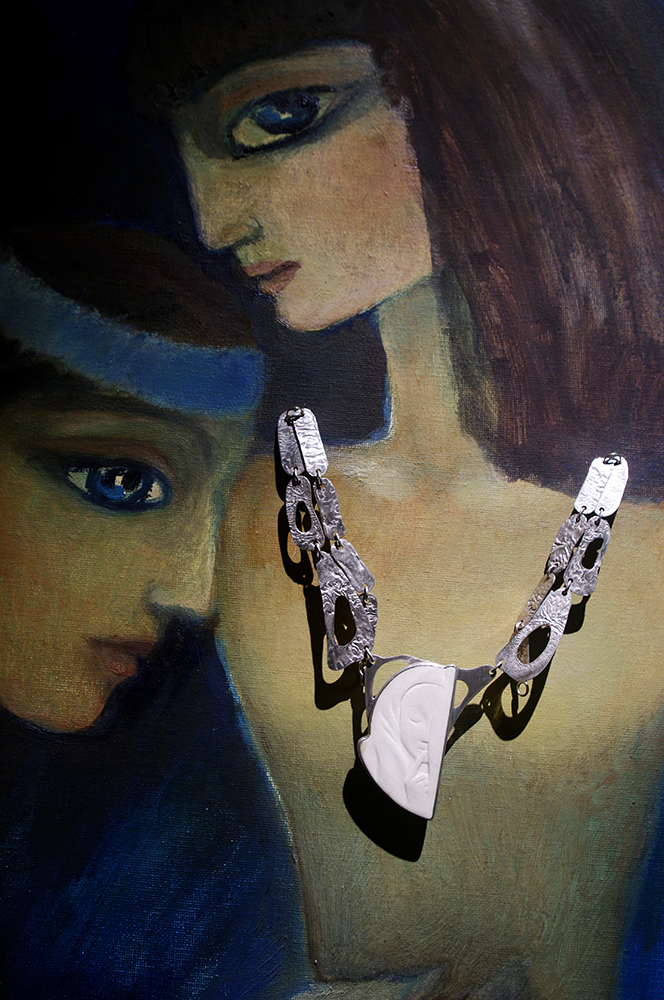
Recently, the artist Tamara Sergijenko is positioning herself at a polychrome intersection, where events that leave no one indifferent are bubbling. Contemporary features inspire the author of this exhibition to look for new ways of self-expression. Reflections on global issues lead to the origins of the artist’s civilization, which have emerged at the dawn of humanity. The unique color of the past is reflected in the author’s picturesque works, which are unexpectedly “inlaid” with silver jewellery. The viewer, entangled in the subtle “game” of conditional crossroads, becomes the author’s companion when he finds that the eternal pursuit of perfection saves mankind from self-destruction.
In the modern world order, one can often come across the traditions of ancient civilizations. One of them – creating and wearing jewelry – has not lost its relevance today. The magical properties of these stones, which have long been embedded in talismans, amulets and protective elements, gave these things a symbolic meaning. Such small decorative objects, in turn, became accumulators of faith, hope and love, which shaped and regulated the relationship between people according to the event.
Tamara Sergijenko graduated from the Estonian Academy of Arts and has participated in many exhibitions here and elsewhere: in America, England, Japan, France, Poland, Lithuania, Russia, etc. The artist has participated in professional symposia in Germany, England and Lithuania. Segijenko has also held master classes in America and Russia and has received numerous awards and diplomas from various competitions.
Tamara Sergijenko’s enamel works can be found in the Golden Book of Collectors (Les Editions Arts et Images, Paris, 1992-1993). The artist’s best works are in museums in Estonia, Russia, America and Germany, as well as in private collections.
Most of T. Sergijenko’s work is dedicated to working with enamel. She uses many different techniques. One of them is a rare window enamel today, which is practiced very little all over the world. With her works of art, Sergijenko proves his continued interest in this old technique from the point of view of both the artist and the viewer.
The exhibition is supported by the Estonian Cultural Endowment
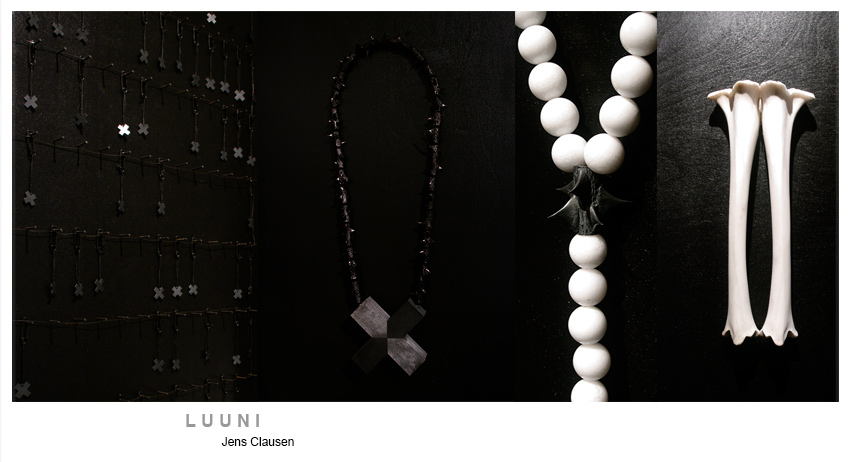
Jens A. Clausen is a jewellery artist who lives and works in Norway and Estonia. He has participated in exhibitions in Estonia since 2006 and is a member of Estonian Artists’ Association.
The works of his current exhibition have been inspired by the artist’s childhood memories, specially those related to religion and death.
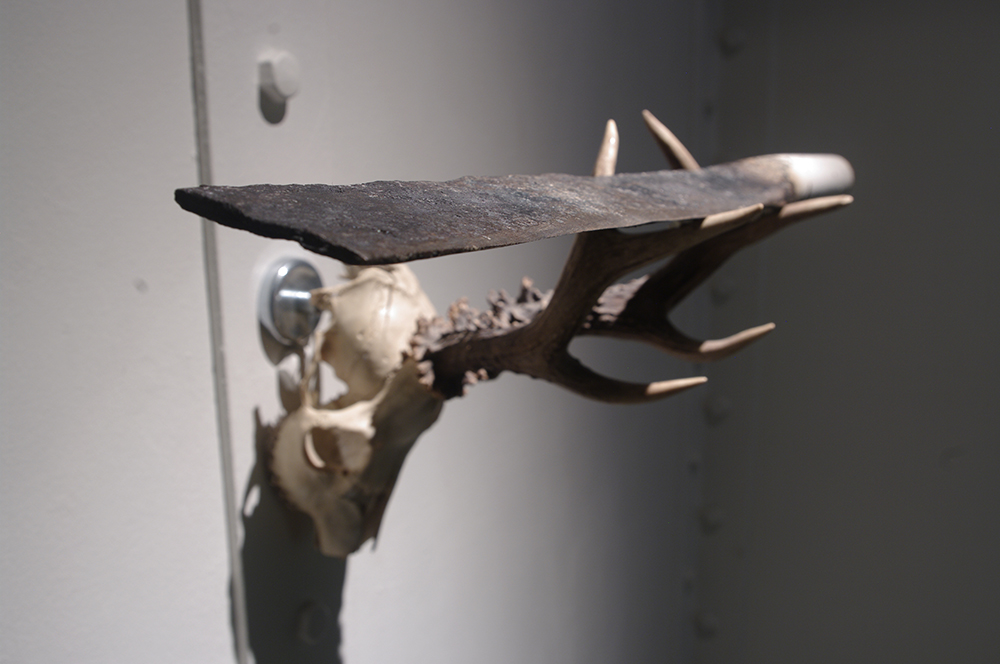
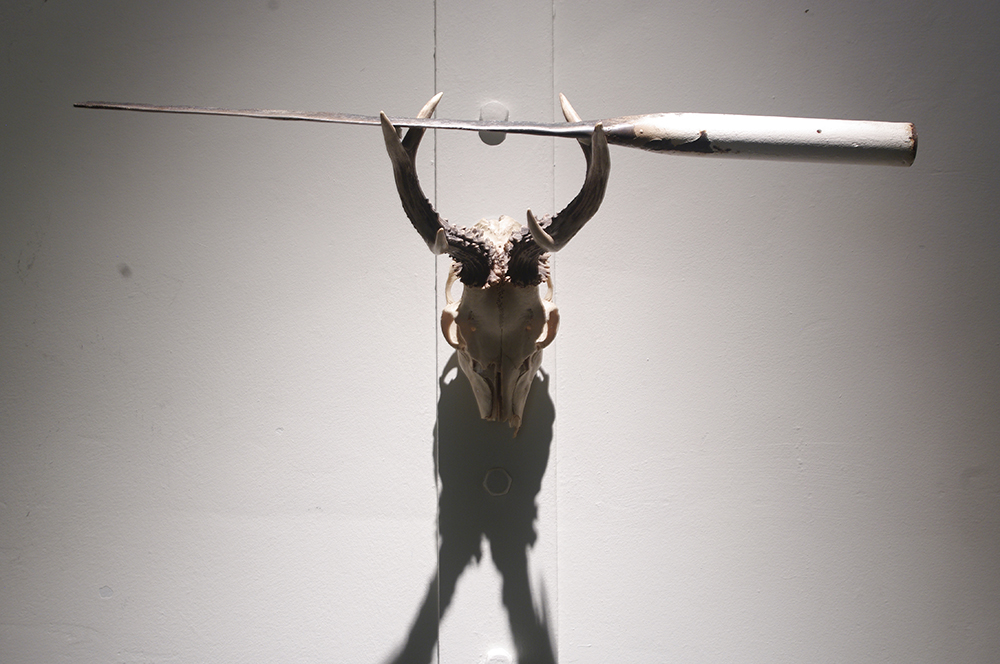
On Friday, October 16, Urmas Lüüs’ exhibition ON BLOOD AND IRON will be open at A-Gallery, reflecting on the vitality and functions of blacksmithing as an archaic form of handicraft.
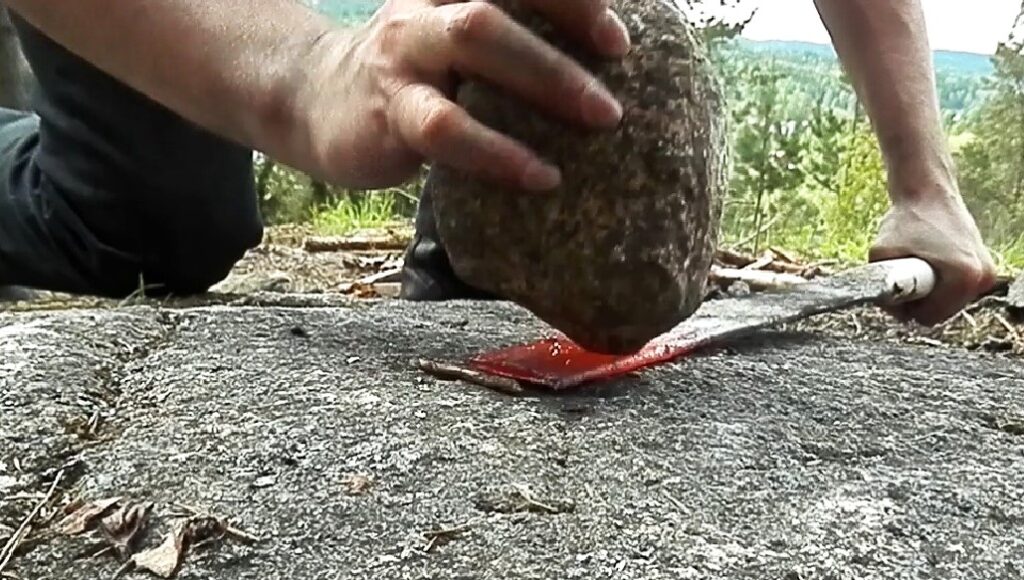
The red iron ore has been interpreted in mythological imagery as the blood of the mother earth for millennia. The first clay melting furnaces were molded with a female emblem, into whose body a fertilizing air penetrated through a phallic nozzle and slag-like slag flowed from the vulva. The stumps of iron from the furnace were formed into tools, and the blacksmiths threw things as a heart into their veins, where they became the blood that bound humanity. This blood heralded the end of Bronze Age technology and watered the flowers that were emerging on the battlefields with plenty of blood.
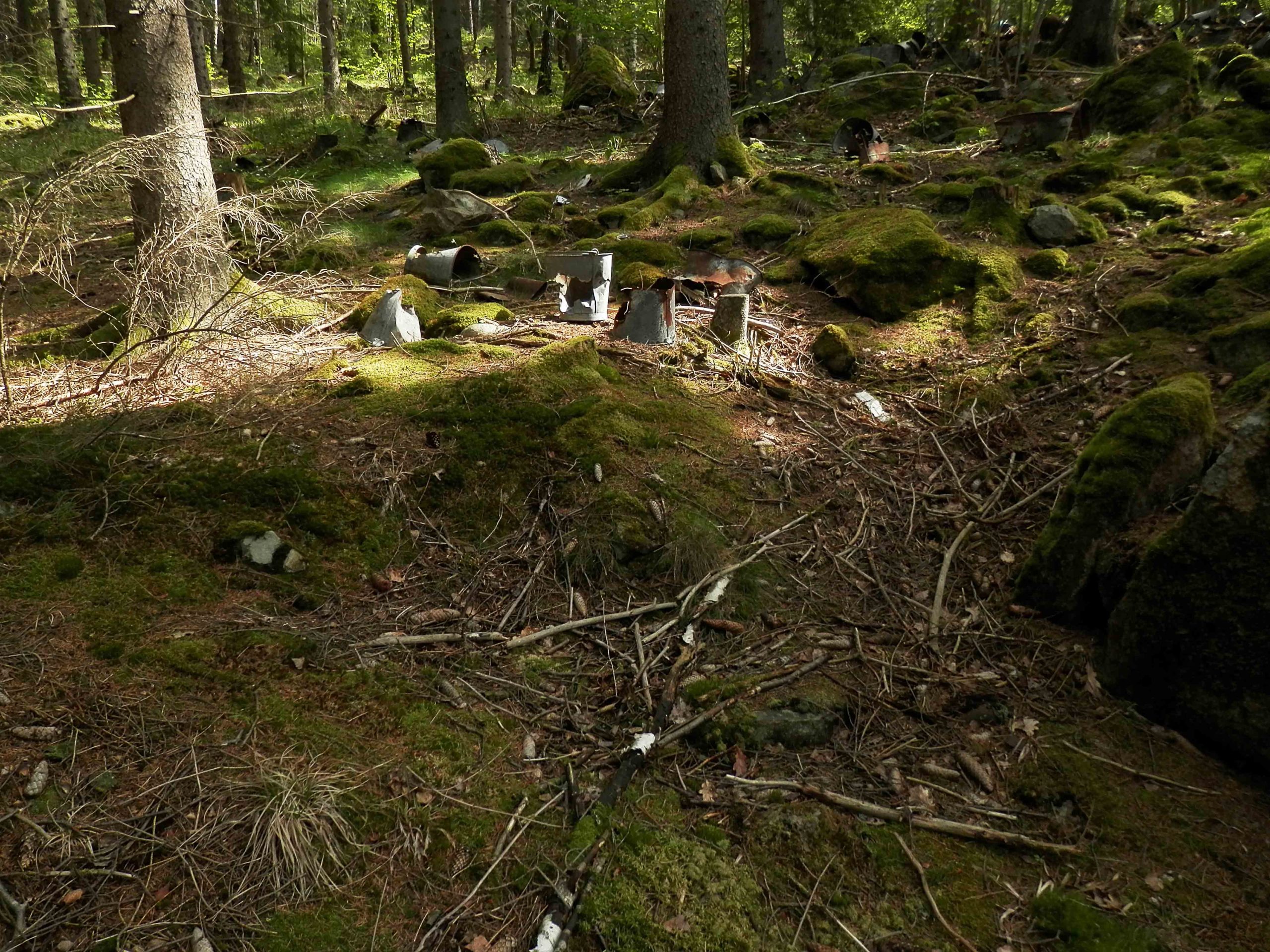
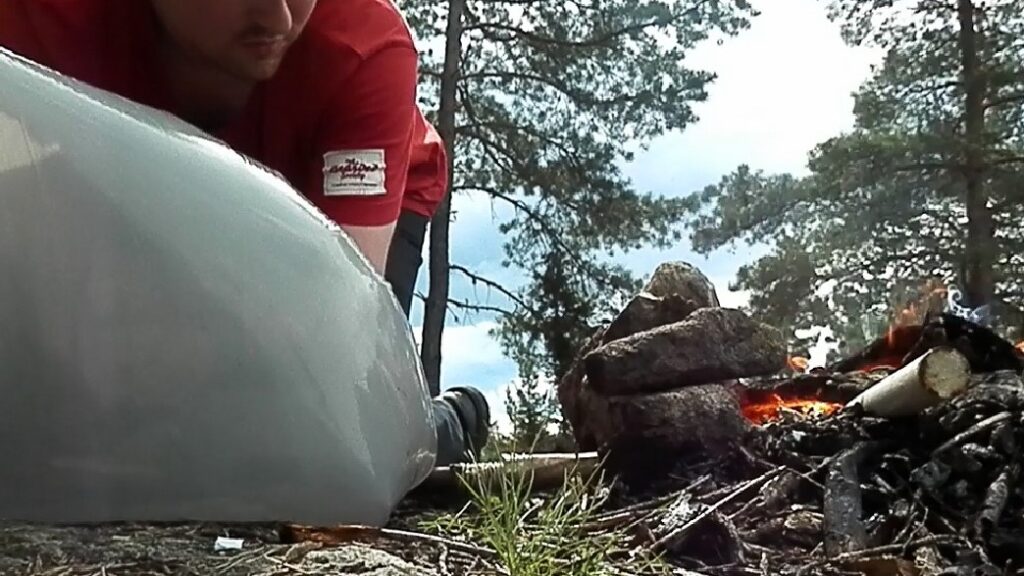
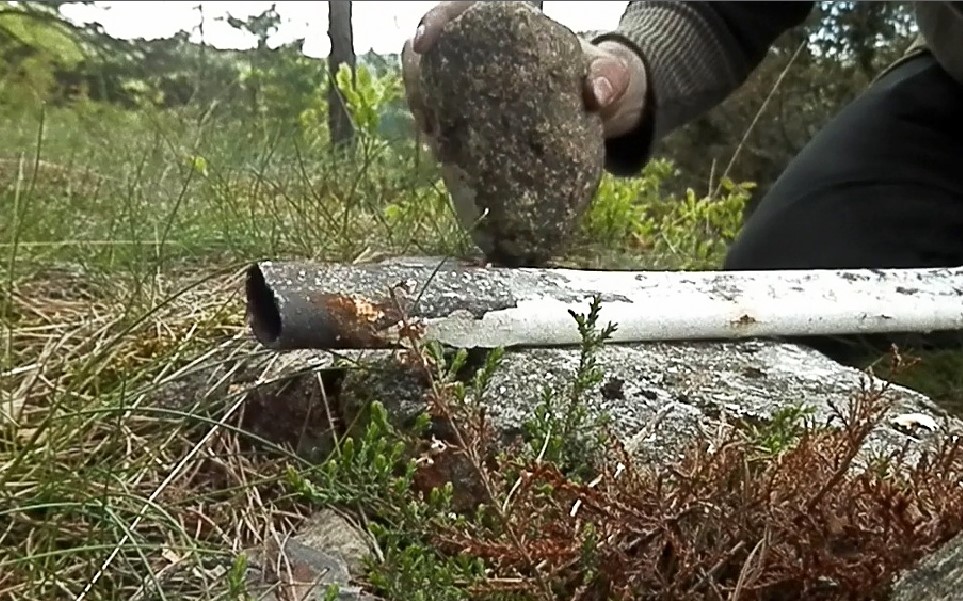
Having studied ethnographic materials, helped to carry out experimental-archeological iron smelting experiments, and weakened as a metal artist in identity crises, I felt a growing need to reflect on the nature of blacksmithing skills at the roots. I viewed blacksmithing as an elementary survival skill. I decided with two hands in my pocket to enter the forest devastated by modern negligence as a post-urban nomad and leave it with an iron sharpening tool to help me build, build and protect myself from danger. The action was an organic continuation of previous creative work in the post-catastrophic world of fiction.
Big thanks to Ott Pulst, Erle and Reimo Võsa-Tangsoo, HDK Steneby.
The rapidly changing cityscape gives impetus to our brains, causing various emotions and confusion, provoking dialogue and action. Due to lack of time, the sinusoidal model of life becomes vertical: it rises and falls at the same point. There is no horizontal movement, there is victory and loss.
VERTICAL is like a subjective monologue that emerged from the observation day after day the demolition of the Ministry of Finance building this summer through the bus window and consists of different segments of a specific demolished building and jewellery.
The exhibition is supported by the Estonian Cultural Endowment.
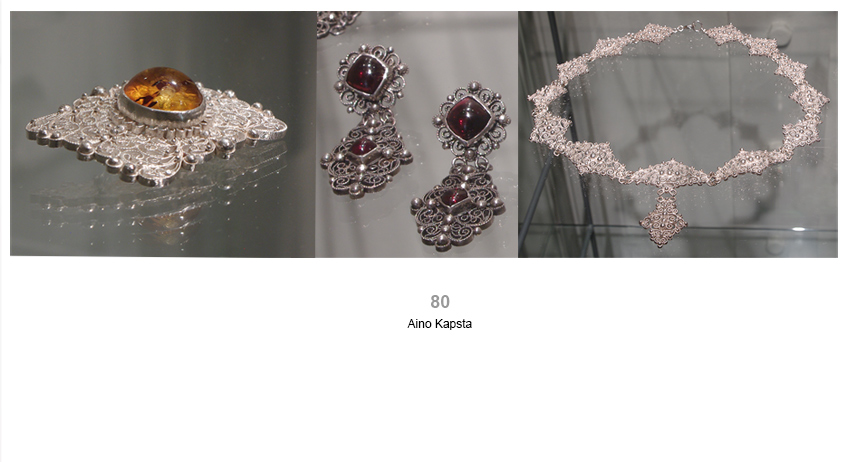
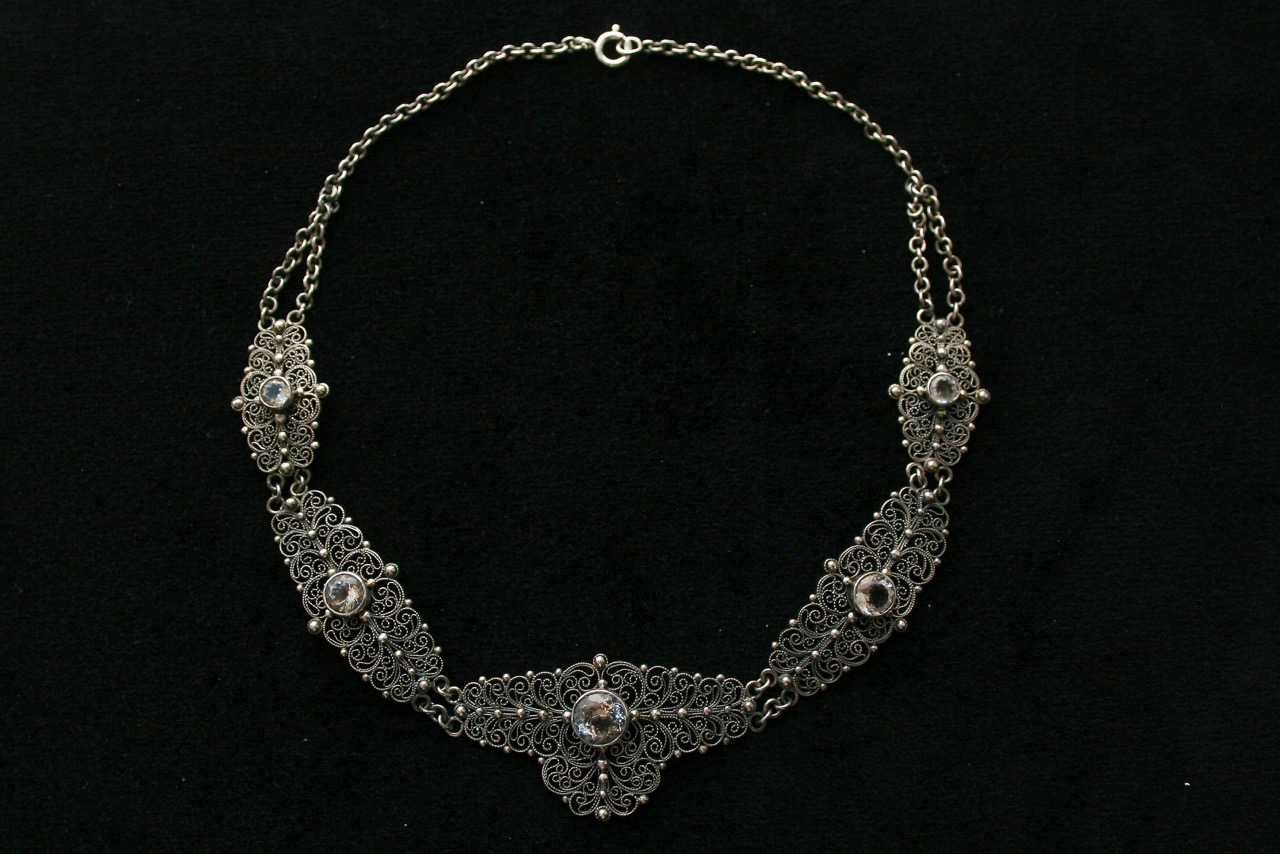
“I was born in 1935 in Saaremaa. In 1961 I graduated from SAIE with a degree in metal art and since then I have participated in exhibitions both at homeland and abroad. I have always enjoyed trying and experimenting with different materials and techniques. The memory of my youth has brought filigree technique back to my works, which, with its complexity and richness of detail, still offers creative satisfaction. And I feel that there are still many possibilities in this ancient technique. What has been done at this exhibition is calmer and more traditional than before ”. – Aino Kapsta
Olen kuust sõltuvuses. See pole midagi hullu, mulle meeldib.
Mulle meeldib teda vaadata ja ette kujutada, mis seal üleval toimub.
See, kui ma vaatan üles ja kuu on alati olemas, tekitab minus hea tunde. Ma ei tahagi teada, milles asi on.
Ma olen kuust sõltuvuses.
See tema jõud ja varjundid, tema pind ja kujundid, tema lähedus ja kaugus. Ta on nii aus ja häbelik, mõnikord nii suur ja mõnikord nii väike.
Olen kuust sõltuvuses.
Ta teeb mind rõõmsaks ja kurvaks, metsikuks ja uniseks, teeb mind tugevaks ja nõrgaks. Ta on tume või hajuv, kahvatu ja valge, ta on hele või põlev punase, roosa ja kollase tooniga.
The backbone of the jewellery exhibition VISA HING* VIII is the soul and its somewhat different meanings. Hinges are used in all work – a sturdy fastening part that allows rotational movement. Words and phrases that contain the word “soul” take on a playful and tangible form in the form of medallions. In the exhibition you can see what the “Great at heart”, “What gnaws at your soul?”, “Spiritual balance” and other souls look like.
*”Hing” in estonian means – soul, spirit, breath, hinge.
Triin Kukk will graduate from the Estonian Academy of Arts with a degree in jewellery in the spring. In 2014, she studied in exchange at Konstfack in Stockholm, and in the summer of 2015 she plans to go to Oslo for an internship.